Notice: Function _load_textdomain_just_in_time was called incorrectly. Translation loading for the twentyfifteen domain was triggered too early. This is usually an indicator for some code in the plugin or theme running too early. Translations should be loaded at the init action or later. Please see Debugging in WordPress for more information. (This message was added in version 6.7.0.) in /chroot/home/a6f7779a/9d7429a5d9.nxcli.io/html/wp-includes/functions.php on line 6170 Frank DeLeon – Page 4 – Blog and Thoughts Deprecated: Function WP_Dependencies->add_data() was called with an argument that is deprecated since version 6.9.0! IE conditional comments are ignored by all supported browsers. in /chroot/home/a6f7779a/9d7429a5d9.nxcli.io/html/wp-includes/functions.php on line 6170 Deprecated: Function WP_Dependencies->add_data() was called with an argument that is deprecated since version 6.9.0! IE conditional comments are ignored by all supported browsers. in /chroot/home/a6f7779a/9d7429a5d9.nxcli.io/html/wp-includes/functions.php on line 6170

Slowly Sliding Into the Abyss…Part 2

Slowly Sliding Into the Abyss

Part 2

Late 1962, Early 1963


Frank Delivers Bad News

As I drove home from work that night, well after midnight, I wondered how I would break the news to Sharon, and I shuddered just a bit as I tried to imagine her reaction.  Questions with no possible answers kept rolling around in my head:  How can this be happening?  Here I am, married just a few months…with a child, and another one on the way…and now I’m being sent to some remote radar site in Alaska?  What’s happening to me?  And, what will happen to us?  Where and how will Sharon and the children live while I’m away?

Panic began to creep into the pit of my stomach as my thoughts raced, and for a few seconds I lost track of where I was, or where I was going.  A car, its driver probably impatient because I had slowly decelerated on the dark sloping two-lane highway, unexpectedly roared by, passing me on my left side—angrily flashing his high beams and blowing the horn.  Shaken by his unexpected appearance I instinctively jerked my car to the right, sending the tires on the right side of the car off the road surface and onto the shoulder’s soft sandy dirt.

On the verge of losing control, my heart raced and I concentrated on being careful not to overcorrect back to the left.  Fighting my instincts that were yelling at me to get back on the road as soon as possible, I instead slowly eased the steering wheel to the left letting the right front tire bite into the asphalt.  The lumbering and swaying old Chevy jumped back into the lane, all the while narrowly missing a white luminescent highway mile marker.

Shit!  I almost rolled the damn car!  I said, almost aloud, all four wheels now fully on the road and the nose of the car pointed in the right direction.  Just what the fuck I need to do right now, I thought, a bit shakily, crash the fucking thing and kill myself!

Settling back onto the road I checked the rearview mirror and saw nothing but the blackness of the desert night.  I couldn’t believe that I hadn’t even seen that car approaching me from behind.  Worse, I hadn’t realized that I had unconsciously let my speed bleed off so much.

Just then, a creepy thought slithered into my brain:  Maybe that would be the best thing that could happen at this point.  If I’d rolled the car and died in the wreckage, Sharon and the baby would be home free. I thought.  So, let’s see; if I died, the military would take care of my burial expenses and she would get some kind of pension, or something—for how long?  Hmm.  At this point any kind of cash settlement would be good.  But, it would have to look like an accident, wouldn’t it?

My thoughts were interrupted when my Chevy’s high beam headlights reflected off of one of Winnemucca’s speed limit signs posted just outside the city limits.  Because of the wide open spaces between towns, Nevada’s speed limit on the open highways was posted as “Safe and Prudent”.  In other words, “Go as Fast as You Want”.  Winnemucca’s speed limits, posted about a half a mile outside of town, started at 55MPH, and gradually reduced down to 25MPH.  As I adjusted my speed and checked the rearview mirror again for any phantom cars lingering behind me, the morbid thoughts that I’d briefly entertained just a few seconds prior completely disappeared.

To my recollection, this was the first time ever that I’d entertained thoughts of killing myself, but it certainly would not be the last.

As I walked into our little house almost an hour after midnight, I was thankful to find that Sharon had not yet turned off the floor heater.  Pulling off my military field jacket and hanging it on the back of one of our cheap vinyl-covered kitchen chairs, I moved close to the metal heater’s glowing stone grill to soak up some of its welcome dry warmth.  Rubbing my hands together to chase the chill from my fingertips, I was relieved that the door to our bedroom was closed.  That meant that the baby had worn Sharon out and both of them were sleeping deeply.  Maybe, I thought hopefully, I could just break the news to her tomorrow.

Finally warming up a bit, I decided to get partially undressed in the front room to avoid making noise in the darkened bedroom and chancing waking up Sharon and the baby.  Just as I sat on our one arm chair and was starting to pull off one of my brogans (military boots), the bedroom door slowly and quietly opened.  My heart jumped.

Squinting and shading her eyes against the dim light coming from the kitchen and our one living room lamp, Sharon tiptoed out of the bedroom—gingerly pulling the door closed behind her.  She was wearing her favorite knee-length pale blue frilly nightgown, and had her long auburn hair piled into a messy bun on the top of her head.  Wrinkling her nose against the glare she pushed her glasses onto her face.

“Hi.” she said softly.

“Hi.” I responded.

“How was work?” she asked, as she glided across the floor to quietly sit opposite me on our small two-cushion sofa.

“Oh, you know,” I shrugged, “same as always, long, slow and boring.”

I resumed unlacing one of my brogans, and while doing so, felt an uncomfortable twinge of terror and discomfort shoot across my chest.

“Is this your second or third swing shift?  I tend to lose track.”

“No, this was my first.  I just got off days yesterday—remember?”

“Oh God.  That’s right.” She sighed deeply.  “My internal clock is so messed up.  Sorry.”

“No problem, I understand.  With the baby and all, I’m surprised either of us know which day it is.”

“Yeah…” she said, leaving her side of the conversation open and incomplete, her eyes drifting off to some point over and behind my head.

Slowly pulling my brogan off, I finally screwed up the courage and made the decision to tell her.

“Hey, look.  I need to tell you something.”

“Hmm?” she said lazily, her gaze still centered on the wall behind me.

“Well, it’s not good news.”

She slowly lowered her eyes and centered them on mine.  “Is it ever?”  She said almost inaudibly, shaking her head slowly.

“No, I guess not.  I don’t know exactly how to say what I have to say.”  I sat back into the chair, putting my brogan onto my lap.  “But I have to tell you, even though I feel that it’s just so painful.”

“OK.  Tell me.”

“Well, I was asked to meet with the station commander before I went up to the hill…and…well, he told me I would have to rotate out not later than this coming February.”

“Rotate out?  What does that mean?”  She uncrossed her legs and leaned forward, putting her elbows on her knees and resting her chin on her two balled-up fists.

“Well, you know I’ve been stationed here in Winnemucca for eighteen months already…and so, the Air Force is reassigning me.”

“Oh.”  A deep furrow formed just above her nose between her two eyes.  I would see that furrow time and again, and more often than not during the span of our short unfortunate marriage.

“Where to?”

“Alaska.”

“Alaska?”

“Yeah, someplace called Tatalina Air Force Station; it’s just outside of a town named McGrath.

“Oh.”

“And…they’re sending me alone.  I mean, no family.  It’s a remote assignment.”

“Oh.”  She looked down at the floor and clasped one hand over the other hand’s fist.  It looked very much like she was praying.

“I’m sorry,” I mumbled, “I don’t know what else to say.”  My teeth began doing a little chattering dance and I wrenched my jaw tight.

We didn’t say anything for a long while—I don’t remember breathing.  Sharon kept looking at the floor.  We remained this way—not speaking, nor looking at each other, for a very long time.

I would learn—painfully—that these types of moments would eventually become the norm in our marriage.  Although I have no doubt that she felt something akin to love for me, and I for her, it is a painful fact that we were never able to get very close to one another.  And this first severe strike to our budding relationship easily found that empty breach between us; the breach that would eventually widen, and in the end be all but impossible to close.

“I’m tired,” Sharon finally said, “the baby was fussy all day and I need to get some sleep.”

“OK, sure.  I’ll get the lights and turn off the heater.”  She was already by me and turning the knob on the door before my last words were out.

“Fine.  Don’t hurry.”

As I crawled into bed Sharon had her back to me and was curled up in a tight fetal position.  I wanted to say something to her—something to soothe her, anything to try to alleviate the somber mood that had descended upon us, but alas, nothing came to mind.

I slept very little that night; my thoughts, dark and endless, circling and chasing the sleep from inside my head.  As the freezing winter sun rose a few hours later that morning, sending its cold yellow rays knifing through the frost-edged window and spilling over our bed, I heard my young wife crying deeply—pitifully bitter tears and soft sobs slowly soaking through the thin pillow she’d wrapped around her face.  And in the light of the slowly-breaking dawn, my eyes fell sadly upon the finely-spun auburn hair curling down her delicate neck and lightly freckled back.

Comforting and soothing words remained locked behind the growing lump in my throat and my tightly-drawn lips. And when I finally found the nerve to say something, my words were cut off by the sound of a deep ragged sigh welling up deeply from Sharon’s chest.  Slowly her tortured sigh faded into nothingness, and then her soft wet voice pleaded quietly to the cold unhearing wall, “Oh God, oh…”

A “New” Car

After a few weeks of working on the hill I learned that radar operators (me) were not very well liked or respected by radar maintenance technicians.  Whereas our tech training at Keesler Air Force Base lasted about four and a half months, the maintenance techs’ training lasted a year or more and was infinitely more comprehensive.

Radar operators received very broad or general training on what made the radar tick, whereas the techs were required to know and understand the working schematic for each different search and height radar, and be able to diagnose a problem based on the symptoms displayed by broken units.

The first hint I got of the techs’ complete antipathy toward radar operators was when, after working a few weeks on the hill, I introduced myself to one while he was adjusting the CRT (cathode ray tube) on my height finder radar console.

“Hi, I’m Frank.” I said, extending my hand as he opened the access bay on the unit.  The name tag on his fatigue shirt said, ‘Rogers’.  “Hey, thanks for your help.  The radar returns were really fuzzy and starting to hurt my eyes.”

He looked up, a small screwdriver in his hand and sharply said, “Fuck you.”

“Uh, what?”  I pulled my hand back.

He peeked around the console.  “I said fuck you, scope dope.”  And he ducked his head back in.

“Hey, what’s your problem?”

“You’re my fucking problem, asshole!” He said from behind the unit.  “If you knew how to adjust your display correctly I would still be drinking coffee and playing pinochle back there!”

Although the techs also worked on the hill they had their own area well away from the dark room we worked in.

“Sorry, but I just came on shift and the display was already out of focus.  So don’t blame me.”

The tech mumbled something that I wasn’t able to totally understand.

“What?” I asked.

He pulled his head out from the access bay and said, “All you scope dopes are fucking stupid!  That’s what I said.  Did you hear that all right?”

At this point my temper was beginning to flare and I stood up, pushing my chair back.  My face burning with anger I said, “Look, you fucking jerk.  Take out your hostility on someone else.  I don’t wanna hear it!”

The sergeant in charge of the departing operators’ shift, Kazinski, was suddenly on the scene.

“Hey!  I’m talking to both you assholes!  You’re both on duty and if you persist I will bring both of you up on charges.”

Airman Rogers, having thrown his screwdriver on the floor in preparation for hand-to-hand combat, stood up and put his hands on his hips.

“Yeah?  Well, you’ll have to go through my sergeant first!  I don’t listen to fucking scope dopes, no matter how many stripes they have on their sleeves!”

Since the sergeant was in fact one of those scope dopes, he took Rogers’ comment very much to heart.  Pushing me aside, he got directly in Rogers’ face, and in a very controlled tone, growled, “OK, you are just about to totally piss me off, airman!”  Then, sensing an air of disrespect in Rogers’ cold stare, he totally lost it.  “STAND AT ATTENTION WHEN I SPEAK TO YOU, YOU MOTHERFUCKER!”  This, delivered about an inch from Rogers’ nose.

Rogers turned kinda white.

“DID YOU FUCKING HEAR ME, AIRMAN?”  Kazinski’s eyes bored into Rogers’ face.

“Yes sir.”  Rogers whispered, then he stepped back and popped to.

Sergeant Kazinski glared at Rogers for what had to be a full minute.

Finally, regaining a bit of self-control, he said, “Listen to me very carefully Airman Rogers.  I will be reporting you to your sergeant as soon as I get back down off the hill, and that should earn your ass a letter of reprimand.  So from now on, this is what I will expect from you: When you get a repair order from one of my operators, you come into our radar room, keep your yap shut, do your job, and get the fuck out of our sight as soon as possible.  Understand?”

“Yes sir.”

“Then,” Sergeant Kazinski said, in a much more soothing voice, “Do your fucking job now and disappear.”

And he did.

This, of course, was an extreme example of the techs’ dislike of us operators.  Most of them did just what the sergeant suggested: kept their mouths shut and fixed our radars.

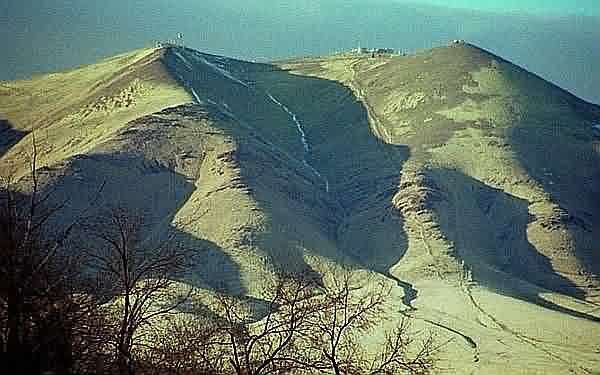
During one extremely boring weekend day shift, I had stepped out of the radar building to take in some fresh air and to scan the incredibly beautiful landscape from the top of the highest point in and around Winnemucca.  Standing on a bed of gravel that marked the farthest point one could stray before coming precariously close to the edge of the precipice, I was deep in thought when I heard someone crunching up the gravel bed behind me.  I turned quickly, afraid that one of my shift-mates might be thinking that it would be a funny idea to make like he was going to push me over the edge.  Instead, I saw an airman whom I’d previously seen hanging out with the radar techs and on occasion had worked on some of our radar units.

He was about six feet tall, pudgy, his fatigues looking a bit disheveled and hanging loosely on his rather overweight body.  The hand sewn, white cloth name tag over his left breast pocket said, “Hardy”.  His shoddy appearance pretty much summed up what most, if not all, of the radar techs looked like on any given day.

“Oh,” I said, “sorry, I didn’t hear you come up right away.”

“Oh hey!”  He said cheerfully.  “What’cha doing?”

“Nothing, just looking and enjoying Nevada’s wonderful atmosphere during my break.”

He stepped up, extending his hand.  “I’m Tom Hardy!”

“Hi, Frank DeLeón.”  I responded, meeting his hand and receiving a very hardy handshake.  (No pun intended.)  “I’m one of the…scope dopes.”

“Ah, well I don’t like to use that term.  You guys do a good job; and to tell you the truth I think I’d rather spend my time looking at a radar scope rather than working on one.  Pretty boring work…you know?”

So for the next ten, or so, minutes we chatted atop that windblown hill, and after we re-entered the radar building, went our separate ways.

A few days later, while eating my box lunch in the little break room, Tom walked in.  He greeted me cheerfully and pulled up a chair across the table from me.

“Hey Frank, what’s up?”

“Not much.  Just trying to figure out what the meat in this sandwich is.”

“Oh, ha!  I couldn’t eat that stuff.  My wife packs me a good lunch every day.”  And with that he produced the biggest lunch bag I’d ever seen.  The size of a grocery bag, he dug in and began to line up multi-colored plastic containers on the table in front of him.

“Hmm, your wife doesn’t want you to starve, does she?”

“Ha ha!  No she doesn’t.  Can you tell?”  He slapped his ample gut with both of his hands.  “Hey, aren’t you married too?”

“Yup.”

“So, your wife doesn’t pack your lunch?”

“Nah, we think it’s cheaper for me to buy a lunch from the chow hall.  A dollar goes a long way in terms of box lunches.  But, sometimes I’m not sure what I’m eating.”  We both chuckled and dug into our food, chatting easily and comfortably.

Tom was not the typical radar maintenance guy.  He was friendly, sincere, and didn’t seem to take himself too seriously.  Our lunches together became fairly regular affairs when we happened to be working the same shift, and I began to look forward to spending time and chatting with him.  During one of our conversations I found out that the house he was renting was just a couple of blocks away from the Chevron station where I was working part time.

“Maybe I’ll drop by to chat you up one of these days when you’re working there.”  He said when I told him where I worked.

“Sure, I could use the company.  It actually gets pretty monotonous there sometimes.  Stop on by if you get the chance.”

And so, one Saturday afternoon as I was responding to the hydraulic bell, thinking it was a customer, Tom rolled up in a dated little beige Nash Rambler.  I pointed to a spot next to my car, parked near a six-foot cedar border fence well away from the station’s pumps, and he pulled his little car up to the spot and came to screeching stop.

We visited for about three hours, our conversations interrupted randomly by gas-hungry customers anxious to get back on the road.  He’d been in the Air Force for over six years, and stationed at the radar station for about a year.  He was still an E-3, which in itself was odd, given his longevity in the service and his assigned career field.  Typically, a radar tech would be at least an E-5 by now.

He and his wife, Daisy, were devout Mormons with two kids and a third on the way.  He regretted re-enlisting a couple of years ago and he and his wife were looking forward to returning to Utah once this four-year stint was completed.

Although his job was fixing radar units, he confessed that his true love was working on cars.  That first day at the gas station he seemed to take a very keen interest in my 1949 Chevrolet fast back—specifically its poor state of repair.

“You know,” he said, pointing in the direction that my car was parked, “that model actually has a great engine.  It’s an in-line six that’ll just go forever.  Is it a stick?”

“No, it’s got an automatic transmission.”

“Ugh, great engine, but bad transmission.  How does it run?”

“Oh, it runs OK, actually.  The body is a wreck though.  And it needs new tires and brakes.  But the motor always starts up, regardless of the temperature.”

“That’s what I’m talking about!  It’s a workhorse!”

“Yeah, well I’m not too sure if it’ll be able to go a hundred miles non-stop before something falls off.  My mother-in-law gave us the car…we wouldn’t have transportation otherwise.”

“Why don’t you try to fix it up?”

“Well, for one…money.  Ain’t got it.”

“Crap, that shouldn’t be a problem.  Anything that car needs we can get through the JC Whitney catalog.  And, man, they’re cheap.  You know, if you let me work on your car I can help with buying the parts.”

I was astounded.  “What?”

“Sure.  How about you let me do a diagnostic on her over maybe a couple of days and figure out what she needs.  Then I can compile a list of the parts; like, what’s needed first, and the price, and then we can go from there.  What’dya think?  Wanna do that?”

“Well…I guess.  But really, I don’t have any money.  Besides, I’ve got orders to go to Alaska in February, so I need to save all I can.”

“Perfect!”  He said, enthusiastically.  “We can work on the car in the next couple of months…maybe we can use one of the bays here at the station, and we’ll have it ready to go before you leave.  Is your wife gonna stay here?”

“I don’t know for sure, but I don’t think so.  Her mom moved in to a little trailer home in Reno, and her sister lives in a one-bedroom apartment.  They sure can’t afford to have Sharon and Ricky living there too…oh, and we’re having another baby in August.”

“Oh!  So, what’s the plan?”

“We’re thinking I’ll take them to Houston to stay with my folks.  That way my mom can take care of Ricky and help when the new baby is born.”

“There you go!” Tom said, again enthusiastically.  “You don’t want, and probably can’t afford, to fly them down, right?  But if you drive down they’ll have a car to use while you’re in Alaska.”

“Listen, Tom.  Why are you so set on fixing up my car anyway?”

“I love working on cars!  And my wife won’t let me experiment with our Rambler.  Aside from the normal maintenance stuff there’s not much to fix anyway.  Besides, I need something to keep me busy on my days off.  I get bored easy.”

“Let me think about it and I’ll talk it over with my wife.”

“Great!  Let me know as soon as you can.  In the meantime, after I do a little diagnostic, I’ll start looking at the parts catalog and start getting a list ready of the most important things that I know the car will need.”

He jumped off the stool he’d been sitting on and headed out the door toward my car.  “No time to waste, so I’m gonna look at a couple things now, if you’re OK with that.”

As he busied himself crawling under and over my car the customers started pouring in.  While I was cleaning off one of my customer’s windshields I heard Tom’s car start up.  As he lurched back onto Highway 40, he waved gleefully and gave me the thumbs up.

About a week later, during one of my midnight shifts, Tom came into the radar room while I was working one of the height-finder radar positions.

“Hey, got a minute?”

“Tom, I can’t talk right now.  I have to concentrate on my display.  And if the shift sergeant sees us talking we’ll get our asses chewed out.”

“OK, I know.  This won’t take long.  Here,” he handed me a piece of paper, “take a look at this and then get back to me with your thoughts when you’re free.  It’s what I think we need to work on getting first—before anything else.  OK?  Just come on back to the maintenance section when you’re done.”

“All right.”

I stuck the folded paper in my breast pocket and got back to concentrating on my display.  A couple of hours later I was relieved from my position and headed to the break room.  Taking a seat on one of the faux leather, aluminum-frame couches, I dug into my pocket and unfolded the paper that Tom had given me.

There were only two words written on it: ‘Need body’.  What?

My curiosity stoked I got up and went to find Tom.  I had never been in the Tech Section of the building and was surprised at the complexity of the area.  Long gray metal rows of communications and electronic equipment resembling school lockers, quietly buzzing, sighing, and exhausting warm air through the slotted vents of each unit’s twin doors.

There were so many units placed in neat rows that after a few seconds of walking in between them the thought of a rat maze came to mind.  As I turned down an aisle I heard voices and headed in that direction.

A couple of turns later I came upon an open area that resembled a large rec room.  Chairs and couches were scattered willy-nilly, and to one side there was a large metal table.  Six techs, stripped down to their fatigue pants and T-shirts were sitting around the table talking energetically and slamming cards violently onto its center.

I looked around, looking for Tom, and finally spotted him on one of the couches leafing through an automotive parts catalog.

“Hey Tom!” I called out.

He looked up from the catalog, recognized me, and waved me over.

“Holy cow, man, you found me!  Have a seat.” He said, pointing to an empty cushion on the couch.  “Did you read my note?”

“You mean the two words you wrote?”

“Yeah.  No sense in getting too wordy, you know.”

“So, ‘need body’.  That’s it?”

“Yup.  The body on your car is shot.  The interior headliner is ripped all to heck.  The seat covers are shredded.  And there’s a couple of rust holes in the floor boards.  Shocks, brakes, problems all around.”

“So, a new body?  How’s that gonna happen?”

A big grin came over his pumpkin-like head.  “You’re in luck, my friend!  Yesterday, while you were home sleeping off your mid shift, I went to the junk yard at the west end of town.  And guess what I found?”

“Let me guess—a body.”

“Yes, but it gets better!  See, you’ve got a 1949, right?  And, it’s a fast back coupe, right?”

“Yeah.”

“OK, so I found a cherry 1950 Bel Air coupe body—two tone, even!  And when I say cherry, I mean CHERRY!  Listen, the paint is great…well, it’s a little oxidized and needs some rubbing out with some heavy paint compound—but you can do that—and the interior is almost showroom new.  The steering is tight, the brakes are practically new, and the floorboards are solid!  It’s great, I tell you, great!”

“How can that be?”  I said, incredulously. “It’s in a junk yard!”

“Yeah, and that’s the best part.  See, the guy who owned the car had just finished rebuilding it in Reno.  But he mainly concentrated on the car’s body work and what he neglected was to make sure the engine was sound before he started his trip.  Anyway, he was driving it to Elko and was probably pushing it real hard, when ‘BOOM’”, I jumped just a bit and the pinochle crowd paused in mid-card slam as Tom slapped the plastic sofa cushion flush with his open hand, “the engine overheated, and he threw a rod… ‘POW’…right through the side!”

“Threw a rod?”  Not being real savvy with engines I was a little confused by the term.

“Yeah!  Blew that sucker right out the side!”

“Out the side?  OK, so…?”

“So, he had it towed to the junk yard right then and there!  Didn’t even ask for any money.  Just left it there, called a cab, and left.”

“OK, all that sounds OK, but how does that help us?”

“Well, I talked to the owner of the junk yard, and all he wants is twenty-five dollars for it!  Isn’t that great?  Twenty-five dollars!”

“Well, that all sounds good, but it so happens that ten dollars is all I have to my name right now.  And that’s before we buy baby food and medicine for Ricky.  Does he want to sell it now or can he wait.”

“Man, he can wait until the cows come home; it’s us who can’t wait.  Look, time is short and we need to get this project started.  So,” he sat back, rubbing his ample belly, “I’ll tell you what: I’ll front you the money for the body and you can pay me back in five dollar increments when you can.  Look, that twenty-five-dollar investment is going to save us well over a hundred dollars in parts.”

“So, what happens after we get the body?”

“Simple!  We pull the engine out of your old fastback, which for the most part is OK, then we’ll just drop it into the Bel Air.  Of course, before that happens we’ll have to tear it down, then rebuild it with all new parts—then, drop it into the new body.  Easy!!  And another great thing is that while your fastback has that awful automatic transmission, the body at the junk yard has a manual transmission.  You know, stick!  That eliminates the need for us to rebuild the transmission on your old car.  All we need to do is get an adapter kit to allow your engine to mate with the manual transmission on the new coupe.”

“Sounds complicated and expensive.  Besides, I’ve never done that kind of mechanical work.”

“Man, I’ll do all the mechanical work!  It’s my dream come true!  We’ll completely strip the engine, throw away and replace the old worn parts, re-bore the cylinders, refit them with new sleeves, grind the valves, pop in new rings, rebuild the generator, re-core the radiator, and slap new gaskets on everything!  What a cool project!  I can’t wait to get started!”

A few days later Tom stopped by my house and asked me to accompany him to the junk yard to retrieve the Bel Air body he had set his eyes on.

“Look, I told you I don’t have twenty-five dollars!  We can’t go get it now!”

“Hey, no sweat.  I got this.”

“You’re going to front the money?”

“I told you I would.  Don’t worry, I’ll keep a list on how much you owe me.  OK?”

I reluctantly agreed, then I asked him how we were going to get it back to the gas station.  He said his little Nash would be more than capable of pulling the engineless car.  All I had to do was go sit in the Bel Air and steer.

The car was all Tom said it would be.  It was a clean 1950 Chevrolet Bel Air Coupe; solid body with no dents or scratches, but the two-tone green paint—deep emerald on the top and light pearly green on the main body—was dulled over with oxidation.  The slick whitewall tires were almost new and were well worth twenty-five dollars on their own, and the interior was perfect—looking like it had been completely replaced not too long ago.

The blown engine had been removed by the junk yard owner and cannibalized for saleable parts.  Opening the hood exposed a huge open hole surrounded by dangling cables and wires.  It troubled me to think that every one of those loose wires would eventually have to be identified and reconnected to something on the rebuilt engine.  Where Tom saw this endeavor as a grand project, I saw it as a fearful and unnerving task.

Once back at the station, Tom explained that the first thing we needed to do was to pull the engine on my fastback, tear it down, and begin its restoration.  During this conversation it dawned on me that when this stage of the project began I would be totally without transportation.

“Hey, Tom?  Uh, how am I going to get to and from work?  I won’t have a car until the engine is rebuilt and dropped into the Bel Air.”

“Oh yeah, no problem.  I talked to Daisy and we decided to let you borrow the Nash when we don’t need it.  And when we do, then either her or I will chauffer you up to the radar station.  When you’re at work Daisy can check with Sharon to see if she needs to go somewhere; then she’ll take her.  Also, they must go to the same gynecologist so they can coordinate their appointments.  Don’t worry, I’ll make it work.  We’re Mormons, and it’s in our doctrine to help and assist the needy.”  He grinned proudly.

It wasn’t so much that I was worried about Tom making everything work, it was that I’d not had a chance to completely discuss the situation with Sharon.  She knew that we were going to be fixing up the car but had no idea that we’d be completely without transportation during the repair.

“So, how long do you think it’ll take to finish this?”  I asked, a bit apprehensively.

“Well, that depends on how many parts we need to order, and how long it’ll take to get them.  Then we’ll have to see if we can get the valves ground down and the cylinders re-bored within our time frame.  The machine shop that does that might be busy, but we’ll see. I’m thinking about four to five weeks.”

“Man, that’s a long time for us to be without a car.”

“No sweat!  It’ll be OK.”

Tom’s bubbling enthusiasm did little to make me feel comfortable.  And, as expected, Sharon did not take the news about not having a car very well.

“Who is this lady that’s supposed to be taking me where I need to go, Frank?  And what’s going to happen if Ricky gets sick unexpectedly and I have to take him to the doctor?  How am I supposed to get in touch with this woman?  Huh?”

All very good questions—for which I had very few suitable answers.

“Well Sharon, we’ll try to make it work as best as we can.  Eventually we will need to have a reliable car anyway, and this is the cheapest way to get that done, so that’s a positive.  Look, we’ll hurry the repair job as much as we can.  And besides, Tom and Daisy are Mormons.  Their…uh…religion, or something, tells them to do stuff like this.  So, it’s OK.”

“Really?  So forgetting about their charity just for a minute, how are we supposed to pay for all of this?”  She asked angrily, shoving her glasses back onto her forehead for emphasis.  There was that furrow again.

“Well, I’ll work extra hours at the gas station, and maybe I can skip buying box lunches from the chow hall every once in a while.  That’ll save us a few dollars anyway.”

“So you’re going to starve yourself too?”

“It won’t be that bad.  Sometimes the chow hall sends up apples and oranges along with the box lunches, for us to snack on during our shifts, and they’re free.  I can make do with that, I guess.”

She stared at me, her hands cocked indignantly on her hips.  “This project of yours better not take long!  That’s all I have to say!”  And right on cue, Ricky, napping in the bedroom, started screaming his little guts out.  For once I was happy to hear him cry.

***

The engine was rebuilt, dropped onto its engine mounts, and reconnected to all those random cables and wires by the third day of January, 1963—about a month before I was due to be at my radar site in Alaska.  It was just past five in the evening and the leaden ambiance from the cloud-covered winter sun was just beginning to fade into icy darkness.  Soft wind gusts flurried the lightly-drifted snow that had fallen early that morning and sent it scurrying across the gas station’s concrete driveway when Tom finally turned the Bel Air’s ignition key to spark the engine back to life for the first time.

A click, a groan…then, nothing.  Again the key was turned with the same disappointing results.

“What’s wrong?”  I asked, worriedly.

“Oh, nothing.  This little heifer (one of Tom’s favorite expressions) is just being stubborn.”

Another turn of the key, and again nothing.

“OK, looks like we’re going to have to do this the hard way!”  Tom announced, to no one in particular.

“What’s the hard way?”  I asked, curiously.

He rolled out of the car.  “Get the chain from the wall in the bay and hook it up to the front bumper.  I’ll pull the Nash around.”

I sprinted into the oil change bay and pulled the chain off its storage hook on the wall.  “What’re we doing?”  I asked, as I walked back dragging the heavy chain.

“Well see,” he responded, “the pistons are so tight inside their new sleeves in the newly re-bored cylinders that the starter just isn’t strong enough allow the flywheel to turn the engine.  So, we’ll have to have the back wheels on the car provide the inertia to turn the engine for us.  So, I’m gonna pull your car until we get her up to around fifteen or twenty miles an hour. Then you’re gonna slam the transmission into second gear and pop the clutch.  That should force the engine to turn, and allow the plugs to spark.  Then, if all goes well, the engine should fire up.  When it does, we’ll have to keep it running for a couple of hours or so to make sure the cylinder walls get lubricated enough to loosen up the friction between them and the pistons.  See?  No problem.”

That’s one thing I liked about Tom—there was never a problem, and I had not the slightest idea what he’d just said.

“Hey look, I can’t just drive off and leave the station alone!”

“Oh, stop!  We’re just going down this side street for a bit.  The car should start in a jiffy and you’ll never lose sight of the station.  I promise.”

“OK…I guess.”

I got into the car, turned the ignition on, depressed the clutch, and waited for Tom’s little Nash to pull me out onto the street.  Once there, I ground the transmission into second gear.  When the speedometer reached fifteen miles an hour I engaged the clutch.

For a split second I thought the engine had exploded.  I was violently jerked back into the seat and my neck whip-lashed.  At the same instant I saw that I was rapidly catching up to Tom’s Nash; and in fact, was about to ram him from behind.

The noise coming from the engine compartment was ear splitting, and in my panic I slammed on the brakes.  That little error of mine instantly slowed my car’s forward progress and caused the chain between our two bumpers to tighten back up, threatening to rip our bumpers clean off.

Regaining my common sense, I depressed the clutch again and released the brake.  My car ceased its frontal attack on the Nash’s rear bumper and the chain between us slackened.  It was then I noticed Tom’s left arm wildly waving up and down from the driver’s side window.  Keeping the clutch depressed and releasing the transmission allowed the engine to run unimpeded, and a little pressure on the brake pedal caused the car to glide to a smooth stop behind Tom.

He jumped out of his car and did a little dance on the street before hop-skipping back to me.

“Yee-haw!!  We did it!  Hot dang, we did it!”  He yelled over the deafening sound of the engine.

“Why is it so damn loud?”  I yelled.

“Oh,” he screamed back, “that’s because we haven’t connected the exhaust manifold to the exhaust pipe or the muffler.”

“Jesus!  Shouldn’t we have done that before starting it up?”

“Well, I guess we could’ve.  But then we wouldn’t have been able to hear just how sweet that engine sounds.  Great, ain’t it?”

Well, I did think it was kinda great, but the neighbors who were pouring out of their houses and stumbling onto to their porches, probably thunderstruck and expecting to see a jet airliner crashed and burning on their street, were probably less than impressed to instead see a slightly overweight Mormon doing a Scottish jig over a slack chain strung between two old cars, and a skinny Hispanic kid standing, looking somewhat dumbfounded, with his fingers stuck in both ears.

Dinner at the Hardy’s

A week later Sharon and I again had transportation.  The car that Tom Hardy literally built from the ground up looked great and ran great.  After going through the expenses I found that I owed Tom a little over a hundred dollars for parts and services for the machine shop that had bored out the six cylinders and ground the valves.  I knew that I probably owed him at least five times that amount of money for the time and labor he put in to get the car in running condition.  My contribution to the whole project had mostly consisted of using rubbing compound and carnauba wax to rid the paint of the coat of oxidation it had accumulated while sitting in the sun in the junk dealer’s yard.  Oh yeah, and a bunch of heavy lifting.

The junk dealer on the edge of town took what was left of the old 1949 Fastback and gave me fifteen dollars.  He’d said it was only worth about ten dollars but he knew how much work we’d put into the Bel Air coupe so he kicked in an extra five.  I told Sharon that I’d probably give that money to Tom and write him an IOU for the remaining eighty-five dollars, to be paid once I started getting my paycheck in Alaska.  She agreed it would probably be the right thing to do.

We decided that we would invite the Hardys for dinner at our house, but then abruptly rethought the whole idea when we realized that there would probably not be room enough in our house for four adults (two hefty ones), and the two Hardy children.  Instead, we asked them that if we provided the food, could we cook and have dinner at their house.  Daisy was particularly thrilled at the suggestion as she’d apparently taken quite a shine to Sharon and Ricky.

The dinner was scheduled for the following Saturday, and although it was still January, the weather that weekend was unseasonably warm.  While the wives were in the kitchen getting the meal together, Tom and I sat out on his small deck drinking Cokes and watching his boys play in the yard.

“Tom,” I started out, “I don’t know what I would’ve done if you hadn’t rebuilt my car.  There’s no possible way the old Chevy would’ve made it all the way to Texas”.

“Aw, don’t mention it.  I had a great time.  I keep telling you, I love to work on cars.”

“Well, I know.  But you put in a lot of your money into the project too.  So regardless, I plan to pay you back as soon as I can.”

“Pay me back?  Are you kidding me?  You don’t owe me anything.”

“How can you say that?  You paid the machine shop, and when we ordered the parts out of the JC Whitney catalog you paid with your money orders.  I figure I owe you about a hundred bucks.”

“OK, look.  This is the way this is going to go.  You know we’re Mormon, right?”

“Yeah.”

“So, Daisy and I aren’t the greatest in practicing our faith…well, because of a lot of reasons.  But anyway, she and I had been praying over this and God finally showed us the way to atone for our failures.”

“What failures?”

“Well, you know.  Not being good Mormons and me joining the military.  Anyway, we made the decision to donate our time and sacrifice some of our money for a worthy project.  We had been trying to find something that we could do, we call it doing good deeds, that would benefit someone and at the same time humble us in the eyes of God; and so before we knew it—boom—you came along.”

“What?”

“Sure!  Don’t you see how it makes so much sense?  I got to do something that I truly love, working on cars, while at the same time I’m helping someone that really needs the help.  It was like a miracle.  Daisy and I spent hours at night in bed talking about how wonderful this experience was.  And then to top it all off, she ended up also being able to get in on the good deed by donating her time driving Sharon and Ricky to the store and stuff, and running errands.  It was a spiritual coup for both of us.  So the way I see it, you don’t owe us anything—we owe you.”

I was stunned.  Sitting there listening to Tom and watching his face light up as he talked reminded me of how some of the people in the old Pentecostal church back in Houston looked and sounded when they testified about accepting Christ as their personal savior.  I was at once grateful and humbled.

“Tom…,” I stuttered, “I don’t know.  I understand what you’ve said, but I still feel that I need to give you more than just thanks for all the work you did.”

“I’ll tell you what.  You can pay me back by driving your little family all the way down to Houston in that Bel Air and getting them there safe and sound.  That’ll be your gift to me and Daisy.  Now, not another word about this.  Let’s go see if the girls have some food ready for us.  I’m starving!”

To be continued…


Slowly Sliding Into the Abyss

Slowly Sliding Into the Abyss

1962-1963


Too Young, Too Soon, And Unspoken Words

The east and west bound traffic on Winnemucca’s Main Street, otherwise known as US 40 in those days, was brisk that weekend morning in early October of 1962.  A cold crisp breeze, having first tumbled over the snowcapped tops of Nevada’s Santa Rosa Range, then lazily rolled over the drowsy little city, was now whispering up and over the prominently-located Chevron gas station where I sat in the office nursing a warm cup of rapidly cooling cocoa.  It was 9 am, my first of three days working at the eight-pump, two-bay, full-service gas station, after having worked nine grueling back-to-back rotating shifts as a U.S. Air Force radar operator on top of Winnemucca Mountain.

As I raised the heavy ceramic mug to my lips, I noticed that my hand was trembling ever so slightly.  The shiver seemed to be originating deep in my chest—traveling through my shoulders and down into my arms and hands.  I looked at my arm and saw the skin peppered with little goose bumps. The little electric space heater under the steel desk wasn’t doing a very good job of keeping the drafty office warm.

I took a short sip and thought that my military issue olive drab wool sweater would’ve come in handy this chilly morning worn over the light-blue short-sleeved Chevron work shirt that I’d neatly tucked into my stiff blue jeans.  But putting the mug down next to the cash register, I recalled seeing Sharon get up in the middle of the night to answer Ricky’s colicky cries then returning a bit later wearing my sweater.  Because of the high cost of heating oil, we usually turned off the furnace when we went to bed every evening, and left it off until well after sunrise.

As I was leaving for work that morning I saw that Sharon had taken Ricky out of his bassinet and brought him into bed with her, tucking him close to her breast.  As I eased out of the bedroom. I saw that they were curled up, sleeping soundly—both of them tightly wrapped in my olive drab sweater.

The station’s hydraulic bell rang loudly, shocking me out of my daydream and calling my attention to a couple of cars that had peeled off Main Street’s endless stream of traffic and were now rumbling up the drive and stopping at two of our four fueling islands.

Isn’t that the way it always is?  I thought, putting the mug down and sliding off the high backless stool I’d been perched on.  They always seemed to come in pairs or in packs, but never just one car.  I braced myself for the blast of cold air as I pushed open the door and sprinted out to wait on my first customers of the day.

Since Phil Egosque’s gas station was full service, I was expected to not only fuel up the cars but check all the fluid levels—oil, radiator, windshield washer—then Windex down every window (not just the windshield) on each car.

“And if you’ve got the time,” Phil had instructed me my first day on the job, “ask the customer to open the trunk so you can check the air pressure in their spare.  Service like that’ll keep them coming back, you know.”

I always made sure that I never had time for that—unless the customer specifically asked, or if Phil just happened to be at the station balancing the books.

About fifteen minutes later, after the last car had pulled back into traffic, I eased back in to the office and drained the final dregs of my now cold cocoa.  The short burst of activity while waiting on the two cars had actually warmed me up a bit and I now felt comfortable as I resumed my vigil on top of the stool.

Glancing over to the station’s two-car maintenance bay through the glass-topped side door I noticed that sometime during my shift I would have to restock a couple of the oil can shelves.  Always something to do.  I said to myself.  Restocking or wiping down shelves or sweeping out and mopping the office or, (ugh) cleaning out the rest rooms.  I groaned softly as I visualized the condition they’d be in later on that day.

Before working at this gas station no one could have convinced me that women’s bathrooms at gas stations had to be the filthiest things existing on God’s green earth.

Oh sure, men would sometimes pee, and in their haste occasionally miss the entire urinal or toilet bowl; or at times they’d leave the disgusting remains of the greasy meals they’d hurriedly swallowed and digested while on the road—then leaving the floating heap decorously topped with humongous piles of feces-smeared tissue paper for me to flush away for them.

But women!  Well now, that was a completely different matter!

Discarded tampons: that was a subject in a class all by itself!  I would find them strewn willy-nilly all over the floor; around, but never in, the chrome trash can that was uselessly labeled ‘Sanitary Napkins and Tampons Here Please!’; in the hand basin; or gaily hung on the edges of the mirror; but most times firmly clogged in the commode causing it to overflow all over the floor.

While men sometimes missed the mark when they urinated, women seemed to have great difficulty hitting the large porcelain bowl when they defecated.  Feces on the wooden seat, on the edge of the bowl and sometimes on the floor.  And I can’t remember how many pairs of soiled panties I found, and had to dispose of, during the months of my employ at the station.

It was disgusting.

I complained endlessly to Phil, but he would just smile and ask me who I thought had cleaned the place before I was hired.

Between my two jobs I was left with precious few hours at home, and as a result Sharon and I ended up being apart much more often than we were together.  And Ricky, not a very healthy baby from the get go, suffered from extreme bouts of colic, endless rounds of head colds; and probably because we were not very experienced parents, a persistently severe case of diaper rash.

For the first two or three months after his birth, it seemed that the poor child cried non-stop; when he finally did quiet down it was because he’d all but passed out from sheer exhaustion.

During those few respites Sharon and I would end up so physically and mentally drained that we’d just sit and cherish the quiet.  Then before long, Ricky would come to and it would start all over again.

Although I thought I had it rough because of my having to work almost seven days a week at my two jobs, it was Sharon who really carried the heaviest burden.  Confined to the house for most of the day tending to the baby, the only breaks she got were spent running errands to the grocery store, the Laundromat, or the drugstore to buy medications.  And then, because she had no other choice, she was forced to take our fussy baby along, as a result making her short outings less than pleasurable.

That morning at the gas station, while waiting for the inevitable flood of gas-hungry customers to come pouring in, I began to think and take stock of the horrific situation Sharon and I presently found ourselves in.  Here we were, two young and inexperienced people, with no inkling of what life was all about, burdened with bills, very little money, an infant, and very little hope for any kind of successful future.

Sitting in the quiet little office, I looked out at the mountains and the endless crystal blue sky and tried to grasp the jumble of circumstances that had culminated in our disastrous situation.

Panic’s cold hand grabbed the pit of my stomach as I tried to envision our lives two or three years into the future.  Where would we be?  How could we possibly ever have a better life?

Even without finding answers to all my questions, I knew one thing for sure.  We were doing nothing more than existing day to day—and not doing a very good job of it at that.  But even more frustrating to me was that I realized I had no clue as to what I needed to do to provide a life worth living for my new wife and my child.  My panic gave way to a deepening sense of sorrow and my mood turned sullen.  I was hopelessly frightened and sad and needed some help.

Maybe we can talk about this, I thought.  Maybe she has some ideas about what we need to be doing to make things better for us.  I made up my mind to ask her tonight when I got home from work.

Then, the hydraulic bell rang.

That evening, after a lean dinner of canned spaghetti and fruit cocktail, and after finally putting little Ricky to sleep, I asked Sharon to join me in the kitchen for a talk.

“Don’t you want to get some sleep?”  She whispered, a look of surprise on her face as she quietly closed the bedroom door behind her.  “You look really tired, and don’t you have to open the station early tomorrow?”

“Yeah, I do, but I think it’s important we talk over a few things.”  She paused slightly, and quietly said, “OK”.

I pulled the two chairs out from under the table for us to sit on, and I thought to myself that this would be the first time that we’d ever really discussed anything of substance.

She sat down hurriedly and crossed her arms on the plastic topped table, eyeing me apprehensively.

I didn’t really know how to start, and as I struggled for the right words to begin our talk, she quickly asked, “Am I doing something wrong?”

“What?” I said, a little rattled, but mostly surprised at the question.

“Well,” she looked down and began to fiddle with her nails, “I…well…I kinda know what you’re going to say…”

“You do?” I asked incredulously, “what do you think I’m going to say?”

“Oh, you know…that I’m…” a little shudder passed through her body as if a cold wind had suddenly hit her.  “…that you’re sorry we had to get married…because…you know, I’m…not a good wife…and…not…not… (choke) …really a good mother…”

Before I could say anything, her hands flew up to her face and she hurriedly removed her little cat’s eye glasses.  Big tears rolled down her cheeks and she hastened to wipe them away, sighing deeply and quickly looking away.

“No, Sharon…no…” I mumbled, reaching out to touch her hand.  “No, that’s not what I had in mind at all.”

She turned her face back and slowly withdrew her hand from mine.  “Well…see…the baby…Ricky…,” she was now beginning to cry heavily and was having difficulty getting her words out; and as much as I wanted to say something soothing, I just couldn’t find the words.

“…the baby…, she continued, “he’s always so, so sick…and…oh…um…I know it’s because…because…I’m just no good…as a mom—I know I’m not.  And, then…as a wife…well… (sob)…God…I never learned to…cook…and…oh God, I’m so terrible!”

Those last words burst painfully out, then she put her head down into her crossed arms on the table, and cried deeply and bitterly.

I felt so helpless, useless—watching her all but implode in front of my eyes.  My throat locked up and a painful swell of emotion rolled up my chest.  My eyes stung.

I found myself reaching out and softly stroking the top of her head, not knowing what else to do. I put my arm around her shaking shoulders and whispered softly that I knew she was doing all she could.

Her head slowly came up, and she looked at me with red, tear-swollen eyes.  As her grief and sorrow pulled her mouth into a tight grimace she said, in a breaking high-pitched voice, “Oh, Frank!  I really want to be such good mom to the baby…and, a good wife to you.  And, God…I see you working so, so, hard all the time.  But, as much as I love you and the baby…I just don’t know how…how…to do this…any of this…at all…”

I felt her pain, and her love, and realized at that moment that I too loved her and the baby, very much.

Holding back my own tears, I held her tightly and whispered in her ear, “It’s OK, my love.  You’re doing OK, and I know you’re doing everything you can to make this work.  And look, regardless of what it may look like I think we’re really doing OK.”  Then, looking into her eyes, I said, “And…Sharon…I love you too.  So, how can we not be doing OK?”

“Oh Frank.” she whimpered, “You’re so sweet and you really are a good husband.  I’m sorry I’m such a mess.”

I helped her up from the table.  “Come on, let’s go to bed and get some sleep.”

She walked over to the sink and pulled a paper towel off the roll to wipe her eyes.  “Did you want to talk to me about something else?” She said, looking up at me, her bottom lip quivering.

“No.” I said.  “We’re both doing the very best we can.  And, I’m not unhappy with you or the baby.  Let’s forget about this and just keep going forward.”

As I recall that evening, I realize that it was the first time ever in our relationship that we’d ever expressed real feelings for each other.  Sadly, it would be a very long time before either of us would ever express those feelings again.

Frank and Sharon Go On Vacation

No matter how hard we tried or how much we wished, things didn’t get much better for us in the next few months.  Luckily, the winter of 1962 was a rather mild one, with only a few light to moderate snowfalls, and one memorable ice storm.

With Alberta and Sharon now married and not living at home, (Roberta, the oldest sister had been married a few years already and was living with her husband in Redwood, California), Pat decided that this would be as good a time as any to pull up stakes and move away.

During one of our very few conversations, Pat had mentioned wanting to “go back” to Reno, where she’d apparently spent some time during her younger years.  With a good recommendation from the small casino in Winnemucca where she was working as a dealer, she landed a good job at one of the better known casinos in downtown Reno.

After returning from one of her several house-hunting trips, Pat stopped by our house and told us she had decided to buy a trailer home located on the outskirts of the city.  She seemed very upbeat, and spoke excitedly about finally being able to move out of Winnemucca and settle down in a “real city”.

A few weeks after she moved out of her house and headed west, we heard from Alberta that Pat had invited all of us to visit her in her new digs—and she was even willing to front us some money for a little dinner and entertainment at her casino.  Although the trailer she’d bought was not a double-wide, she assured Alberta that there’d be plenty of room if we decided to come for a visit.

“Bernie and I can’t get off work to go,” Alberta told us when she visited and gave us the news, “but if you and Sharon want, I can watch the baby for a weekend and you guys can go.”

Since my Air Force work schedule days off had rotated to Friday, Saturday and Sunday, all I needed to do was to get Phil to agree to let me off that weekend, and we were on our way.  He was not that happy about my request, but I finally convinced him that Sharon and I really needed the time off.

So on a gray Friday morning Sharon and I made our final preparations for the one-hundred and sixty-mile drive to Reno.  We had dropped Ricky off at Alberta’s the night before and turned in early to get enough rest for the trip that morning.

As luck would have it, during the nighttime hours Winnemucca experienced a bout of freezing rain, and by the time we were ready to start our drive west a heavy snow began to fall.  Not to be deterred, I made sure we had a couple of gallons of anti-freeze stored in the trunk of our ancient 1949 Chevy in the event the radiator decided to spring an old recurring leak, and brought along pair of old fuzzy blankets in case our car heater conked out.

At about 8 am, we pulled out of our driveway and turned onto westbound US 40, for the four hour drive to Reno.  Because of our excitement about the trip, (and possibly our lack of maturity and/or experience), neither of us took into consideration several potentially disastrous factors: the mismatched tires on our car were barely roadworthy, with only minimal tread showing; we did not have, nor did we own, a set of tire chains for us to use in the event the mountainous roads near Reno might be snowed in or iced over; the windshield wipers worked very slowly when they worked at all; and perhaps the most important factor of all—because I was born and raised in Houston, I had never driven on ice or snow.

Nevertheless, balancing a hot mug of cocoa between my legs and experiencing a giddy sense of euphoria, we headed out, radio blaring—two kids, alone together for the first time in months, setting out on a great adventure.  What could possibly go wrong?

About ten miles west of Winnemucca the snow began to fall in earnest.  Since US 40 was a winding, heavily-traveled two-lane road, on a good day, as soon as we left the city limits (not too far west of Winnemucca) we got pretty much stuck behind an endless line of cars and heavy semis, undoubtedly caused by the underlying ice and rapidly-drifting snow.  The heavy slow-moving traffic actually turned out to be a blessing in disguise because it had worn two well-defined ruts in the snow and ice, and we were able to follow these without experiencing any significant traction issues.

The trouble started when my patience finally ran out.  After driving between twenty and thirty miles an hour, stuck behind a large truck for about ninety minutes, I decided that enough was enough.

Sharon had long since given up trying to look out through her side of the ice-covered windshield and had curled up with one of the fuzzy blankets to take a nap.  The radio station had faded out a few miles west of town and now all I could get was a bunch of static.  This, unbeknownst by me at that time, was probably caused by the heavy ice buildup on the radio’s antenna.

Seeing a fairly long break in the line of oncoming traffic I decided to employ one of my famous Houston-approved passing techniques.  Pumping the clutch, I jammed the shifter down to second gear and floored the accelerator while twisting the steering wheel hard to the left.  This tried and true passing technique would usually slingshot me quickly around the offending vehicle—and even afford me the opportunity to give the pokey truck driver a shot of that withering DeLeón glare as I roared past.

Nothing even close to that actually happened.

Instead of zooming triumphantly by, the old Chevy decided to perform a ragged three-hundred and sixty-degree spin to the left—while, to my astonishment, still remaining steadfastly planted in my lane behind the truck.

This violent herky-jerky maneuver sent an unprepared Sharon flying headfirst into her door, the force of her body causing it to partially unlock and open.  Her hysterical scream totally distracted me from the very important task of keeping my hands on the steering wheel.  Instead, I instinctively reached for her—with both hands.

All I succeeded in doing was grabbing a handful of fuzzy blanket and some of Sharon’s hair; all the while the car decided to execute another graceful three-hundred and sixty-degree turn, plus or minus a few degrees.

At this point I thought it best to let nature take its course and I pulled my still-screaming wife close to me and hugged her tight.  Since we had no seat belts we both slid along the bench seat, one way then the other, finally propelling headlong in the direction of the partially-open door.  In my terror I recall observing a panoramic-like view of snow, grass, and mud flashing through the gap in the door.

I don’t think I screamed, but I may have.

Coming out of its second full circle, the car decided to continue its slide backwards—leaving the truck in a position behind me, and with me now looking directly at the driver of the car that had previously been behind me.  Before I had a chance to react, I felt the rear end of the car suddenly dip low, and after a soft thud, the car came to a leisurely and graceful stop.  It was almost magical.

I struggled to untangle myself but Sharon insisted on hanging on to me and the fuzzy blanket for all she was worth.

Coming somewhat to her senses, Sharon yelled, directly into my right ear, “MY GOD, FRANK!  DID WE HIT SOMEBODY?”

“No, I don’t think we did.”

“JESUS, WHAT HAPPENED?!” My right ear began to ring.

“Sharon, if you let me go I can get out and see if there’s any damage to the car.”

“AM I BLEEDING?”

I quickly assessed her wild-eye face, “No sweetie, you’re not bleeding.  Now let me go.  I see the man from the truck I was trying to pass coming this way.”

She relaxed her death grip and I made an attempt to get back to my side of the seat.

“GOD FRANK, EVERYTHING LOOKS FUZZY!”

“Your glasses are on the floor, honey.  Now get them on, stop screaming, and let me get out so I can talk to the nice man.”

I grabbed the steering wheel and pulled myself up and towards the driver’s side door.  I was amazed to note that the car’s little engine was still running and the gear shift vibrating gently was in neutral.

I pushed the door open with my foot and tried to step out.  A rather pudgy mustachioed man wearing a heavy jacket and a Russian-style fur cap extended his hand to help me.  I hopped out onto some snow-covered grass and saw that we’d slid backwards into a shallow ditch that ran alongside the highway.

“You OK, son?”  He said, in an accent I couldn’t quite place.

“Yeah, I’m good.  You OK?”

“Me? Sure!  You’re the one who spun out behind me.  I just stopped to see if you were OK.”

“Oh, thanks.  No, I’m fine.”

“What about the little girl on the floor?”

I looked back to see Sharon scrambling around trying to find her glasses.

“Oh, she’s OK.  That’s my wife.”

“But she’s on the floor.”

“She’s looking for her glasses.”

“Oh.”

I walked around the back of the car to see if I’d done any damage to the rear bumper.

“Doesn’t look like you did anything to it.” Moustache-man said.

“No, it doesn’t.”

“We need to pull you out pretty quick, your exhaust pipe is buried in the dirt.  Wait a minute, I think I got a chain in the truck.”

“You know,” I said, waving him back, “let me try to drive it out first.”

“You can’t drive it out on this incline.  You’ll do nothing but spin the wheels and dig yourself in.”

I pulled open the front door and started to get back in.  “Let me try.  If this doesn’t work then you can pull me out.”

“OK,” he said, disapprovingly, “but you’re wasting your time.”

“What’s going on?” Sharon asked, her glasses a little off center.

“Nothing.  I’m gonna try to drive us out of here.”

“Oh, OK.”  She pulled her glasses off, and while squinting, twisted the temples to try to get them straight and bent back to normal.

“You OK now?” I asked.

“Yeah, I just couldn’t see anything and I bumped my head on the door handle.”

“OK, let me try to get us out of here.”

I depressed the clutch and pulled the shifter into first gear.

“It would work better if you use second gear instead of first!”  The man yell, observing from the top of the ditch.

“OK.”  I said, and left it in first gear.

Gunning the engine, I slowly engaged the clutch, and to my complete surprise, the car began to move slowly up and toward the road.  I followed the ruts I’d made going into the ditch and the tires held their traction.  In a few seconds we were out and up on the shoulder.

I looked in the rear view mirror as I pulled away and saw that the man had removed his fur hat and was scratching his head.  He wasn’t the only one who was surprised.  I waved.

The traffic behind me in my lane had come to a dead stop, and the traffic in the opposite lane had slowed to no more than a crawl.  I rolled my window down and waved my left arm at the traffic to make a hole.  They did, and I smoothly merged back into the westbound lane.  Accelerating through the gears I saw that I had a clear view ahead of me—all the traffic in front of the truck now long gone.

Settling in, I took one last look back and I was pleased to see that in spite of my spin into the ditch, I was now well in front of the truck that I had unsuccessfully tried to pass, and there was no traffic in front of me.  It was still snowing, but the ruts worn in the snow helped me stay relatively stable.

The rest of the trip was uneventful if not painfully slow.  The further west we traveled, the lighter the snowfall became, and eventually I caught up with the bumper-to-bumper traffic.  Now careful not to lose my patience, I stayed in the queue.  The trip, which under normal circumstances would’ve taken us about four hours, took well over nine hours to complete.

Sharon and I were pretty much a couple of basket cases when we finally arrived at Pat’s dingy little trailer.

Good News & Bad News

It was early December and we were about to spend our first Christmas together as a family. Alberta had asked if we wanted to spend the holiday with her and Bernie, but after some discussion we decided it would be best if we just spent it by ourselves.  Besides, neither of us really cared for Bernie that much.  He tended to be loud and obnoxious, and always seemed to point out how he and Alberta were not planning on having any kids until they were sure they could afford to, and how he’d never want to have to work two jobs, and so on.

“Sure don’t want my kids wondering where their next meal is gonna be coming from, or where Daddy is all the time, right Dinks?”  He’d say in a sneering superior tone.

We did, however, reluctantly accept their invitation to a small pre-Christmas dinner.  Sharon offered to bring a homemade dessert and, a little surprised at that, I wondered what she had in mind.  Turned out she could bake a pretty decent cake.

A few days before the dinner at Alberta’s I’d just come home from the gas station and was getting ready to get into the shower.

“I need to talk to you when you finish your shower, OK?”  Sharon said, a little too seriously.

“Sure,” I said, “wanna talk now?”

“No, go ahead and shower while I set the table.”

“OK.”

Sharon had moved Ricky’s bassinette out into the main room, and for once he was quiet and seemed contented.  I walked over and started making small talk to him.  When not in pain or sick with a cold he really was a precious little guy.  Thin face, bald head, and big expressive eyes.  It was easy to make him smile, and boy, could he rattle off the baby talk.

“Frank, could you hurry up and get finished?  Dinner will be done soon.”

I hated to leave the baby because it was so seldom that he was in this kind of mood.  But Sharon looked rushed and nervous.

“OK, on my way.  Bye Ricky M.”  I said, letting his hand go.  He gurgled something, kicked his legs, and grinned his little toothless grin.

***

Pulling my chair out, I sat down heavily and demanded to know what was for dinner.

“Stew.”  Sharon said, bringing the dark blue pot to the table and carefully setting it on a pot holder.  “Serve yourself,” she ordered playfully.

As I scooped out the steaming stew into my plastic bowl I asked, “So, what’cha wanna talk about?”

“Oh, it can wait.  Let’s eat.”

“OK.”

Throughout the meal she seemed distracted, her mind a thousand miles away.

After we’d finished our meal I volunteered to do the dishes.  Sharon smiled gratefully and excused herself to go change the baby and get him ready for his night bottle.

“Wanna talk now?” I asked as I poured the leftover stew into a plastic container.

“Let me do this first.  By then you’ll be done with the dishes, OK?”

“Sure.”  It seemed to me that as anxious as she was to talk earlier, she was now stalling a lot.  She quietly rolled Ricky into the darkened bedroom.

I finished the dishes and sat down in the main room to catch the evening news on our little console TV.  Sharon came out of the bedroom and proceeded to warm Ricky’s bottle.  She was quiet and pensive, staring aimlessly out the window over the sink into the cold Nevada night as the bottle warmed.

“You OK?”  I asked, getting a bit concerned.

“Oh, yeah.  Let me finish this, OK?”

“Yeah, sure.”

She hurried back into the bedroom after squirting some formula onto her wrist and determining that it was the right temperature.

About ten minutes later she came out and quietly closed the door.

“There, I think he’s down for the night.”

She sat down next to me, but kept staring at the TV.

“OK.” I said, maybe a bit impatiently.  “What’s going on.”

“Well,” she said apprehensively, “I went to the doctor today for my three-month checkup.”

“Oh yeah, that’s right.  I’d forgotten.  Everything OK?”

“Yes, everything is fine.”  She was still staring straight ahead.  “Except…”

She had my full attention now.  “Except what?”

“He confirmed what I was afraid of.”

“What?  What’s wrong?”  I said, suddenly very worried that the doctor had found something seriously wrong with her.

“I’m pregnant.” She blurted out.

“Pregnant? Pregnant?  How could you be pregnant?”

Sharon turned her head slowly, adjusted her glasses, and gave me a look that said, ‘How can you ask me that?’

I wasn’t sure what to say, and for a split second I expected her to burst out in a peal of laughter and say something like, ‘Oh my God, you should see the stupid look on your face!  I’m kidding, you idiot!’

But, she just kept looking at me.

“So, he said you’re pregnant?  Really?”

“Yes Frank, really!”

“Shit…”

And then we were both very quiet—blindly staring at the TV—neither of us knowing what else to say.

A few hours after we’d gone to sleep, I woke up when I sensed a little shaking movement in our bed.  I glanced over at Sharon in the darkness and saw her petite shoulders quivering.

I lay there for the next few hours listening to her softly cry her heart out.

***

On a cold sunny morning in January of 1963, I pulled my old Chevy into one of the parking spaces on the base in front of the Rec Room to wait with my crew for the bus to take us to the top of the mountain for the first of my three-day shifts.

My new crew chief, a technical sergeant from North Carolina, walked up to me and said, “You need to go to the commander’s office.”

“Now?”

“Yes, now.”

“What does he want?”

“That’s not my business to know.  Now get your ass in gear and report in to the commander.”

“Sure, OK, sarge.”  I turned to head to the main Quonset hut where the commander had his office.  “What if I miss the bus to the hill?”  I asked over my shoulder.

“Not my problem.  Now git!”

I walked through the door and headed up to the Duty Orderly’s desk.  I was trying to remember if I’d done something wrong last night when I’d worked the last of my three evening shifts.  I was sure I hadn’t, because if I had this new crew chief would’ve gone off on me like a rabid pit bull.  My old crew chief, Sergeant Nietzsche, had been calm and easy going, but this new guy was a loud overblown bully.

I walked up to the counter.  “Airman DeLeón reporting as ordered!” I stated to the orderly.

“Hmm, DeLeón?” He said, shuffling through a stack of papers, finally finding what he was looking for.  “Oh yeah, let me announce you to the First Sergeant first.  Wait here.”  He got up, walked over to the First Sergeant’s office door and knocked loudly, once.

“COME!”  Was the response, and the orderly walked stiffly into the office, closing the door behind him.

In a couple of minutes later, he reappeared.  “The First Sergeant will see you now.  Just walk on in and present yourself.”

“Airman DeLeón, reporting as ordered, sir!”  I stood stiffly at attention, but did not salute as the First Sergeant was an enlisted man.

“Stand at ease, airman!”  He said, without looking up from the sheaf of papers he was shuffling through.

I relaxed and waited, curiosity making me tremble a bit.

He finally looked up at me.  “Do you know how long you’ve been here, airman?”

“Here, sir?  Like, right now?”

“No!  Here, at the Winnemucca Air Force Station!”

“Well, uh…I got here June of nineteen sixty-one.  So, let’s see, that would make it about nineteen months now, sir.”

“Exactly!!  Do you know what that means, airman?”

“Well, no sir…not really.”

“It means that you’re a month overdue for your station rotation!”

“Station rotation?”

“Yes, airman!  Your tour here was slated for eighteen months, and you’ve now exceeded that by over 30 days!”

“Oh, I didn’t know that.  Sorry sir.”

“Not your problem, airman!  Probably some type of fuckup made by those idiots at the Reno headquarters!”

At this point my mind was running at full capacity trying to figure out what all this meant.  I know a few of the guys I worked with, like my buddy Jay and Sergeant Nietzsche, had suddenly received orders to transfer out, and they’d been gone within three to four weeks.  But with all that had going on in my life, I really hadn’t given much thought to my being rotated out.

“Does that mean I’m being rotated out to Reno?” I asked, cautiously.

“Oh yeah, you’ve received orders for rotation all right, but it’s not up to me to tell you where.  That’s the commander’s responsibility.  Let me go get him.”

He got up suddenly, and I popped to attention.

“At ease, airman.  I’ll be right back.”

I relaxed, and he left the office.  While he was gone I started thinking about this rotation and playing the various scenarios in my mind.  If we were to get transferred to Reno then we could live close to Pat, making Sharon maybe a little happier.  Besides, Stead Air Force Base was large and had a lot of amenities: the Base Exchange for one, where we could shop for groceries, clothes, and lots of other stuff (think Wal-Mart); a base theater, where the admission was about half of what local theaters charged; and maybe, just maybe, we could be lucky enough to get assigned to base housing.  Now, that would be so great.

“He’s ready for you, DeLeón!” the First Sergeant said loudly, startling me just a bit.

“Yes sir, thank you!”  I turned to leave his office and headed to the door marked, “Base Commander”.

“Don’t forget to salute!” The First Sergeant reminded me as I knocked once on the commander’s door.

“Airman DeLeón reporting as ordered, sir!” Ramrod straight, I popped a snappy salute.

“At ease, airman.  Have a seat.”

His rank was major, and he’d had been at the Officers’ Club a few times when I played the piano and my guitar in what seemed such a long time ago.

Looking at some papers he was holding in one hand, while the other played with the bowl of the dark brown pipe he was smoking, he finally peeked over the top and said, “So, you’re going to be leaving us, huh?”

“That’s what the First Sergeant said, sir.”

“Hmm.  Did he mention where your next assignment was going to be?”

“No sir.”

“Tatalina Air Force Station, McGrath, Alaska.  Know where that is?”

I was still trying to process the place in Alaska he’d just mentioned.  “Uh…sorry sir.  What?”

“McGrath!  McGrath, Alaska!  Do you know where that is?”

“No sir.  I think I know where Anchorage is, but not McGrath. No.”

“Well son, it’s nowhere close to Anchorage…matter of fact,” he mused as he closed his eyes to envision where this place might be, “it isn’t close to anywhere.”

He put his pipe in a little ceramic bowl shaped like a commode, then stood up and walked to a wall where a large geographical map was posted.

“McGrath, McGrath.  Let’s see.”  He rolled his finger around the large green and beige map.  “Ah!  Here it is!  Come here.”

I walked over and squinted at the little dot on the map at the end of his finger.  ‘McGrath’.  It was situated in almost exactly in the center of the state of Alaska, next to a small squiggly river running northeast to southwest.  There was nothing around this place for miles.  It seemed so desolate.

“What do you think?” The major asked.

“I don’t know.  I’m just kind of wondering what my wife will think about going there.”

“Wife?”

“Yes, sir.  I got married in June, sir.  Had a baby in September.”

“Baby?”

“Yes sir.”

He stared at me, apparently waiting for some kind of punch line.  Hearing none he motioned me back to the chair.

“Well son, this is going to be a bit of a tough go, I’m afraid.”

“How so, sir?”

“See, this assignment is for twelve months, beginning next month…February.  But the bad news is that it’s rated as a remote assignment.”

“What does that mean?” I asked, afraid that I already knew the answer.

“It means you go there for twelve months…no wife…no kid…just you.”

I felt numb, and all of a sudden I couldn’t seem to put two thoughts together in my head.  Remote!  My God, I thought finally, how did it all come down to this?

“Sir?”  I forced the word out of my mouth.

“Yes, airman?”

“What am I supposed to do with my wife and child?”

“Well, I’m assuming she’s a local girl, so maybe have her move back with her folks.  Grandparents love grandkids.”

“Oh, I don’t think we can do that.  Her mom is a single mom…and she lives in Reno now anyway.  And my parents, well they live in Texas.  I don’t know how I would get my family down there.”

“Well son, that’s going to be your problem to work out, isn’t it?”

“Yes sir, I guess.”

“OK.  Go on out and talk to the First Sergeant.  He’ll give you your orders, the paperwork you’ll need to set up your dependent pay, moving instructions, and whatever else you’ll need prior to your reassignment.  Good luck!”

“OK, thank you, sir.”  I stood and managed a not so snappy salute.

I zombie-walked back out to the foyer between the two offices, my thoughts whirling around in my head.

“Airman DeLeón!”  It was the First Sergeant.  “All the paperwork you’re gonna need is out with the orderly.  Pick’em up on your way out.”

“OK, thank you.”  I turned to leave when I realized that I hadn’t asked a very important question.

“Sergeant?”

“Yes, airman.”

“Well, I didn’t mention to the major that in addition to the baby born last September, my wife is pregnant with our second child.  That baby is due in August of this year.  When I go to Alaska, will I be able to come home for the birth of that baby?”

“Airman DeLeón!  This man’s Air Force does not exist solely to solve your fucking problems.  And, no!  Your assignment is rated as ‘remote.’  That means you’re there for the entire twelve months…no leave, no nothing!  Twelve months!”

“Yes sir, I know and I’m sorry, but when I leave, my wife will be left alone with two infants to take care of by herself.  I don’t know how she’s gonna be able to handle that.”

“Well, airman.  There’s only one thing I can tell you about that!”

“Yes, sir?”

“You should’ve kept your dick in your pants!  Now, get out of here, I have things to do and you need to go to the motor pool to have someone drive you up the hill for your shift.  Good day!”

“Good day, sir.”

I don’t actually recall my walk back to the motor pool, or the drive up to the radar site on the mountain.  What I do remember is my reporting in to my crew chief and him acting like I’d gone AWOL.

“About time you got your ass back here!  Now get into the radar room and see who needs a break.”

“Yes sir.”

“Hey, DeLeón?”  The sergeant yelled as I stared to walk away.  “Somebody fucking die, or something?”

“Sir?”

“You look like your fucking dog died!  So if he didn’t die then fucking cheer up!  I don’t need to have you dragging your sorry ass around here all fucking depressed!  You hear me?”

“Yes sir.”  I turned quickly, hoping he didn’t see my mood turn from morose to rage.  My anger told me to go back and bitch slap him, but my instincts told me that it would be much safer just to keep moving towards the radar room.

For the rest of the shift I sat quietly watching the phosphorous glow of the height finder antenna on my radar screen swing up and down, and I answered each altitude request strictly by rote.

And, until I finally got back into my car and headed home, the same two questions kept rolling around in my head: What am I going to tell Sharon, and what are we going to do about Ricky and the new baby?

To be continued……


Life in the Fast Lane – Conclusion

Life in the Fast Lane

Conclusion


Frankie Lands A Gig

“Sharon?”  I spoke her name hesitantly into the receiver, while behind me I could feel Michael’s eyes boring into my back.  “Well, yeah, I can talk for just a bit.  What’s going on?”

“Oh, nothing.  I’m just sitting at home and I started thinking about you…about what you’ve been doing, I mean.  I haven’t seen you at the dances for a while…so, you know, just wondering.”

“How did you get this number?”

“I had my mom ask some people at her work how one gets in touch with somebody at the base, and some guy gave her the central number.  So I called it then I just asked if I could talk to you.”

“Your mom works with somebody here at the base?”

“No, she’s a dealer at one of the casinos downtown, so she runs into a lot of people.  Anyway, I haven’t seen you at the dances lately.”

“The dances.  Ah yeah, well my schedule has changed and now I’m working swings on Saturday night,” I lied, “and also, I’ve been doing a little bit of baby-sitting…if you can believe that.”

“Babysitting?  What?”

***

OK, that much was true.  A few days after Judy had left town I was on the radar working a midnight shift when Sergeant Nietzsche pulled up a chair next to me.

“Hey, DeLeón, anything happening?”  He asked, just before taking a big sip from his gigantic coffee cup.

“No, it’s pretty quiet.  I’ve only had a couple of altitude requests in the last two hours, sir.”

“Hey, you can cut the ‘sir’ shit.  I’m just an enlisted guy like you who happens to have a couple of extra stripes on my sleeves.  Save that shit for the useless fucking officers.”

“Oh, okay…sir—I mean…okay.”

“So, what does a good-looking single kid like you do on your days off?”

“Oh…not much.”  I answered hesitantly, and concentrated on keeping my eyes on the radar display, just in case this was some kind of attention test.

“No, seriously,” He insisted. “Do you go out to the casinos?  Get hammered?  Stay in the barracks and read philosophy books like that crazy fuck, Cooley?  Chase the locals? What?”

“Not much, really.  I don’t have a lot of money so I kinda hang around the Rec Room and shoot pool, go to the pool, and stuff.  ”

“So you don’t have a girlfriend here or at home?  And where is that anyway?”

“No, no girlfriend anywhere,” I lied (again), “and I’m from Houston.”

“Houston, huh?  Nice town.  Well anyway, how would you like to earn some extra money?”

“Doing what?”

“Babysitting.”

OK, now that one threw me for a loop—and I turned completely away from my radar console and stared him in the face.  “Babysitting?  Really?  You’re kidding, right?”

Nietzsche broke into a big smile.  “No, really.  Look, I’ve been watching you since you got here and I think you’re a good worker.  But you don’t seem to hang around a lot of the other guys and do the stuff that they do.”

“Like what?”  I asked, puzzled.

“Like go out on your three-day break and get shit-faced every night then come back to work half hung-over.  That’s what!”

“Oh, so then you know I don’t go out and get hammered on a regular basis?  Well, you’re right; I don’t do that for sure.  I don’t have that kind of money.”

“That’s what I mean!  He said, slapping his hand on his knee.  “You’re different!”

On this count he was only partially right.  Even though I wasn’t making very much money from my paycheck, and I was still having to make monthly payments on the rings that I’d bought for Amparo, I was augmenting my meager income somewhat by playing my guitar at the Officers’ Club on my days off.  But, more about that later.

I turned back to my radar to process an altitude request from the SAGE center in Reno.  Having measured the target’s altitude and assessed the target’s flight direction, I pressed the red “SEND” button and turned back to Sergeant Nietzsche,

“Well,” I started hesitantly, “I don’t know about different.  I just don’t make a lot of money—and, you know, I’m trying to save some of it to get back home on leave maybe next year.”  (Another lie).

“OK, I can help you there!  See, my wife and I have a three-and-a-half-year-old daughter, and because of her age we can’t get out much.  We’ve tried some teen girls from town, but then I have to drive all the way down to Winnemucca to get’m, then when we get home, drive’m all the way back.  By the time I finally get home my wife’s totally out of the mood.  Know what I mean, right?”

No, I really didn’t.  “Uh, sure.”  I said, anyway.

“There ya go!  See, you’re on my crew so we have the same days off, so when me and the wife want to go out and have a little dinner and maybe do a little gambling you can come over and watch our little girl.  By the time we get home you’ve already put her to bed and she’s sleeping nice and tight.  Then after you leave my wife’s still warmed up and I can probably get me a little nooky.  See what I mean?”

I’d never seen Sergeant Nietzsche get so worked up, or so personal, before.  And although I’d never heard the word ‘nooky’, I had a pretty good idea what it meant.

I thought quickly, and for the first time ever in my life, I put on my negotiating hat.  “So…” I leaned back in my chair and crossed my legs. “If I agree to babysit, just exactly what’re you thinking about paying me?”

“So!  You’ll do it?!”

“I didn’t say I would…yet.  How much you gonna pay me?”

“OK!  Let’s see.” He kicked back in his squeaky gray rolling desk chair and looked up to the ceiling.  “I usually pay the local girls a buck fifty an hour.  What do you think?”

I thought about it for a couple of seconds, and on a whim decided to barter a bit.  “Three bucks an hour and you’re on.”

“What? Three bucks!!”  The rolling chair let out a torturous squeal as Nietzsche straightened up—his coffee making a sloshing sound in the plastic cup.  “No way, man!  That’s a fortune!”

I could see that even though at my counteroffer caused him some agitation, his eyes were saying that he was more afraid of me completely refusing and him totally losing the deal.  I looked him square in the face.  “OK, OK.  So what’s your offer then, sarge?  A buck fifty isn’t going to work.”

“Shit!”  He dropped his head, looking at the floor and for the first time I noticed the little round bald spot on the top of his head.  He looked up at me, a deep furrow now between his eyes. “OK, look.  How do I know you’ll even know what you’re doing?  What kind of experience do you have?

“Experience?  Oh, really a lot.  See, I’ve got this little brother, Ricky’s his name.  And because my mom was always sick, I had to take care of him all the time.  So I know what’s what in that department.”

“A brother?  Shit, DeLeon!  You were taking care of a boy!  And your brother, at that!  My kid’s a little girl!”

“A baby is a baby.  Same, same!  Only the plumbing is different.”  I was really feeling confident now.  “So?  What’s your offer?”

“Shit, OK!  Two and a half bucks an hour!  I can’t go higher than that!”

“Look, you asked me if I would do this—not the other way around.  But I’ll cut you some slack and agree to your offer of two-fifty an hour.”  And at that moment I became the first official male babysitter at the Winnemucca Air Force Station, and probably in the whole state of Nevada.

***

“So you’re babysitting now? Really?”  Sharon said, dubiously.  “For who?”

“My sergeant.  He lives in base housing here on the compound and he says it’s too much trouble for him to hire local girls as he has to go back and forth into town.”

“And you babysit?  When do you find time for that?  Don’t you have to work?”

“Sure.  But he’s my crew chief, so we’re on the same days off.  That makes it easy.”

“Christ!  That’s crazy.”  She said curiously.  “You sure you know what you’re doing?”

“I’ll learn.  How hard could it be?  Besides, the money’s good: Two-fifty an hour.”

“Wow, I’m impressed.  Well, anyway I haven’t seen you at the dances on Saturday for a while.  What’cha been doing…I mean, besides babysitting?”

“Oh, not much.  Just working, you know.  And…yeah, babysitting.”

“Really?  Well, I heard you’ve been dating some girl named Judy.  That’s not who you’re babysitting, is it?”

“Judy?”  I said, surprised that she knew about her.  “Judy, no she’s just a friend.  And, she happens to be just a few years older than three.”

“Well, I heard you were kinda at her house all the time.  All the time!”

“Not all the time!”  I suddenly felt defensive and a bit annoyed.  “Anyway, who’s telling you these things?”

“This is a small town, Frank, and word gets around.  Anyhow, I hear she’s stuck-up.  And a rich bitch, at that.”

Now that comment really annoyed me.  “Well, for your information she’s a really nice girl and her parents are really great.  Besides, they left Winnemucca not too long ago and moved to California.”

“Oh, you’re just a fountain of information on her, huh?”  Sharon said, just a little too catty.

“OK, look.  I gotta get back to work.”  I didn’t want to talk to her anymore so I signaled Michael to cut the connection.  He shot me the bird and smiled—large.

“Hey,” she said softly after a couple of seconds, “I’m sorry.  What you do is your own business.  Sorry.”

I was still a little angry but was able to manage a, “Oh, that’s OK, but I do have to get back to work.”

“So, before you go,” she said hurriedly, “are you planning to come to the dance this Saturday?”

“No, not this Saturday, I’m working.”  I said, “But, we’re rotating our shifts next week, and then Saturdays will be my first day off for the next cycle.  I’ll probably be able to catch a few dances then.”

“Oh, OK.”  She sounded a bit dejected, and there was a long pause before either of us spoke.

Not wanting to end our conversation on a negative note, I quickly asked, “Hey, you wanna go get a Coke sometime with me?”

“Did you get a car?”  She quickly asked.

“No, but I have a good friend who’ll lend me his wheels just about anytime I ask!”  This I said while staring directly at Michael with my eyes wide, nodding my head.  He made a couple of obscene gestures; one that included grabbing his crotch while making swirling tongue movements.

“Would that be the same car you drove down and parked at Judy’s all the time?”

The question caught me off guard and I didn’t answer.

“OK,” Sharon said quietly, “I’m sorry.”  And, after another short pause, “OK sure, we can go for a Coke or something—whenever you want…if I’m not busy.”

“Alright great, let me have your number and I’ll call you in the next couple of days.”

After the call was disconnected I asked Michael what he was doing working the switchboard.

“Sometimes I trade off with the communications guys and work some mid shifts.”

“But you work at the motor pool fixing cars.”

“Yeah, well I happen to have me one of those secondary job descriptions where most everyone has just one.  So if I ever get assigned at a large airbase, I’ll be assigned to do either one or the other, depending on their need.  But here, anything goes.”  He leaned back and gave me his trademark Cheshire cat grin.

I walked out and back to my work section wondering if Michael was putting me on.

***

My babysitting gig started with a lot of apprehension from all parties concerned.  Sergeant Nietzsche confided in me that when he told his wife about me babysitting she had expressed some pretty serious but not unexpected doubts.

To satisfy her reservations she insisted that I submit to an “interview” conducted by her alone, after which she would make the final decision as to whether or not I was experienced and trustworthy enough to be left alone with her very young daughter.

On my part, although I was anxious to make a little extra income to help finance my extracurricular activities when not working on the hill, I was also very apprehensive about taking on the responsibility of caring for an infant; particularly after I’d lied about having cared for my brother when he was an infant.

Lastly, and after due consideration (and probably a few objections from his wife), Sergeant Nietzsche requested a  renegotiation of my previously agreed to hourly pay—particularly after he told her how much he’d agreed to pay to a virtual stranger to take care of their only child.  On that issue I remained firm, knowing that I held the upper hand.  He would have to pay me what I demanded or do without a babysitter.

So a couple of days later Sergeant Nietzsche told me that he needed to have me start babysitting the following weekend, but that his wife, Cassandra, wanted to talk to me beforehand.  “You know, she wants to make sure you’re not some kind of axe murderer, or something.”  He flashed a little grin and winked.

The Nietzsches lived in one of the smaller homes on base housing, but it was still the nicest house I’d ever been in–not counting Judy’s.  Two bedrooms, a nice den, and a tidy kitchen right off a small dining room, the house was cozy and very nicely decorated.  And although the housing units were located on the south side of the base, it was still a little bit of a walk from my barracks room.

I was met at the door by both Cassandra and Sergeant Nietzsche, (“Call me “Don”.  We’re not on duty now…”), and invited to sit down in a chenille-covered Danish modern arm chair.  After bringing me a glass of iced tea, we all settled in for the interrogation.

Surprisingly Cassandra was mostly interested in hearing about my being raised in Texas.  They’d never been down south but she had always wanted to visit Texas.  “It’s so big!” She exclaimed breathlessly, “And there has to be so much to do there!”

I told her that I had no idea on that count because, besides a trip to Mexico that my mom had taken me on when I was less than five years old, I had pretty much just stayed in Houston and done nothing.

She told me she and Don were both from Ohio and had been high school sweethearts before marrying five years ago.  The baby, Candace—Candy for short—was a little over three years old, and this was the first time that she and the baby had been able to accompany Don on one of his assignments.

“And the worst one, at that!”  Don added thoughtfully.  “But at least we got base housing and don’t have to live in ‘beautiful downtown Winnemucca’ among the ‘effing’ weirdoes.”

Cassandra (“please call me Cassie…”) gave Don a quick “shush” look, and politely asked me if I wanted another glass of tea.  I declined, worried that if I had another I might have to excuse myself to empty my quickly bloating bladder.

After about an hour of idle chit-chat Cassie placed her hands on her daintily crossed legs and pursing her lips, turned to her husband: “Well then Don,” she cooed, “I think Frank (call me ‘Frank’) will do just fine.  Don’t you think?”

“Hell yes!  I told you he’s a good kid!  He works for me and he ain’t like the rest of the clowns on my crew!”

Cassie frowned at Don’s exuberance and turned back to me, one eyebrow arched.  “Well, now the only thing we need is to get Candy’s approval.”

“I’ll go get her!”  Don said, probably happier than me that the interview was finally over.  He all but jumped off the couch and blew by me heading toward a small hallway just off the living room.

“We put Candy down for her nap just before you got here,” Cassie said, “hoping we wouldn’t be interrupted.  And we weren’t, were we?”

Candy turned out to be a most delightful child.  Petite and perky, she had inherited her mother’s beautiful blue eyes and button nose, and her father’s widely expressive smile.  Incredibly intelligent even at her tender age, she seemed to have already mastered the art of politeness and graciousness, ending each request with “please” (pronounced ‘peese’), and acknowledging every granted wish with a smile-wrapped “tank you”.

Don came out carrying Candy from her pinkly feminine little bedroom.  Her blond hair was pulled back into little twin pony-tails and she was dressed in a little light blue tank-top, white shorts and little brown leather sandals.  Don put her down and she walked right up to me, extended her little hand and greeted me in a halting doll-like voice:  “Hi…mister Fank.  My name is (big breath) Candy.  How do you do!”  Her face took on a mock serious look, accentuated with a pair of pooched lips.

Our little baby handshake ended abruptly as her little hands shot down between her legs and she said hurriedly, “Daddy, oh!  I have to go potty!  You know I have to go every time after I get up from my nap!”

Don looked a little lost for a second but Cassie had already gotten up from the couch and was quickly ushering Candy back down the hallway.  Just before disappearing through the bathroom door, Candy looked over her shoulder and said breathlessly, “I’ll be back Mister Fank, don’t go!”

I smiled, genuinely impressed and told Don that I thought she was really cute.  “She kinda reminds me a little of Shirley Temple.”  I added.

“Yeah, takes after me, don’t you think?”

“Um, not really.” I said, shaking my head.

“Well, when we told her about you…that you were going to be her babysitter, the first thing she wanted to know was your name and why a man would want to babysit her.  I didn’t know what to say to her, so you may want to think of something to tell her if she asks you.”

“Sure, that’s easy: money!”  I laughed and Don smiled painfully.

After completing her trip to the bathroom, Candy came running and skipping back into the living room and took a position between the arm of my chair and my right leg—her little left arm resting on my thigh.  While her parents and I talked she would occasionally look up at me, smile, and nod her head as if in agreement to whatever it was that we were saying.

Up to that point in my life I had never been around children, and really had no idea how to deal with them on a personal level.  But just after a few minutes of having met her, Candy had already begun to steal my heart.

Dances, And Other Things

I began my babysitting for the Nietzsches the following weekend and the experience proved to be extremely beneficial for all concerned.  Caring for little Candy was pleasant beyond belief—easier and more satisfying than I’d ever dreamed it would be.  She was a little bundle of joy who acted more adult than most of the adults that I knew at that point.

On the evenings that I was asked to babysit, Cassie insisted that I skip eating at the chow hall before coming over.

“I don’t know how you can stand to eat there!”  She told me.  “It’s small, and looks dirty—and God only knows what those horrid- looking cooks are up to before they start cooking.”

As far as I was concerned, the food there was fine; much better than anything I’d ever had at home, and, although certainly not up to par with the fine restaurants at the downtown casinos, it was, after all, free.  Regardless, Cassie always made sure that there was a complete home-cooked meal in the refrigerator, or one just out of the oven waiting for me.

A couple of times Don complained to anyone who would listen, that even though they were going out to have dinner at some restaurant or casino, Cassie would always insist on preparing a full meal for me, in addition to Candy’s meal, to eat after they’d left.  Then, to boot, he would have to spend money on their own dinner and entertainment, and finally he still had to pony up for my babysitting wages.  Although all that seemed to aggravate him to no end, I had to admit it was a bit of a racket.

When it was time for dinner Candy would insist on my eating at the same time she ate hers—along with her dolls.  While I was warming up our food Candy would busy herself seating four of her dolls on the table’s side chairs then setting out her little tea set as a place setting for each one of them.  Satisfied that everything was set out correctly, she would then direct that I sit at the head of the table and her at the foot.

Before we were allowed to start eating she would insist that we say grace, and when doing so I was required to hold onto the plastic hands of the dolls on either side of me.  After grace she would instruct each doll how to eat their food and drink their tea “with manners”—like her and Fank.  She would also remind them that if they wanted to talk to me they had to address me as, “Mr. Fank the sir”.  With her little index finger wagging in their direction, she told them that she was the only one allowed to call me just plain Fank.  Thankfully the dolls never had much to say.

Her bedtime was somewhere between seven-thirty and eight o’clock, and once I’d gotten her ready for bed and changed her into her night gown it was story time.  I usually read her a selection from one of her many storybooks stashed under her little night table, and when she decided that she’d heard enough she’d make a little fake yawn and stretch her little arms over her head.

“I’m tired now, Fank.”  She’d say, feigning extreme fatigue and blinking her eyes rapidly.  “Time for me to sleep, OK?”

After tucking her in tightly she’d never let me leave her room without giving my head a big hug and planting a wet sloppy kiss on my cheek.  As I looked back at her before partially closing her door she’d always say, “Fank, tank you for taking care of me when mommy’s away at night.  I love you.”  I always told her that I loved her too.

Over the months I found that I’d grown extremely attached to Candy, so when Don told me that he’d received orders and was being transferred in a few weeks to Stead Air Force Base in Reno, I was more heartbroken than sad.  The days seemed to fly by, and on the last day that I babysat Candy, Cassie and Don asked me not to mention that I wouldn’t be babysitting her ever again.  When I asked them what they were going to say to her, they said they planned to tell Candy that I would also be transferred to Reno, but would arrive at a much later date.

The last time I saw Candy I was careful not to say goodbye.  When she asked when I was coming to see her in her new house, I just said that it would be very soon.

“OK,” she said, in her breathless little way, “but hurry, because me and my babies (her dolls) are going to miss you verrry much until we can see you again.”  Then she planted a wet sloppy kiss on my cheek and said, “I love you”.

It was hard for me not to tear up just a bit.

When I saw them the day before they left we all promised to stay in touch, and they promised to send me pictures of Candy as she grew up.

Sadly, I never heard from them ever again—but I’ve never forgotten Candy.

***

The extra money I made babysitting Candy came in very handy.  For one thing I was able to send my mother a money order to cover the cost of sending me my Gibson guitar via Greyhound shipping.  The day it arrived brought me much happiness and I spent one whole evening getting reacquainted with my old friend.

One evening, as I was in my room teaching myself a couple of Peter, Paul and Mary folk songs. I heard a knock on my door.  It turned out that a couple of guys from my work crew were on their way to the Officers’ Club when they overheard me playing as they passed my room.  After a few minutes they asked me if I wanted to come with them to the club and maybe play a few songs.

“I don’t know a lot of songs, really.”  I said, truthfully.  But they didn’t seem to care and insisted that I join them.

After a couple of minutes of urging, and the promise of a few free drinks, I agreed to join them.

When we arrived there were just a few guys hanging around the bar listening to the juke box.  One of the guys I was with said to no one in particular, “Hey, unplug that thing and let’s get us a little hootenanny going here.”

I wasn’t sure what he’d just said, but after spotting a covered-up piano sitting against the wall, I told them I needed to tune up my guitar.  Finally, all tuned up I pulled up a chair and started strumming through a few chords.

“Hey!” Someone behind me said.  “You know how to play “If I Had a Hammer”?  As luck would have it I liked that particular song so much I’d been learning the chords for a couple of weeks.

“Yeah, well I know the chord structure, but I’m not too sure of all the lyrics.”

“No sweat!” One of the guys from my barracks chimed in.  “Start it up and we’ll all join in.  Among all of us we’ll figure out the words.  And if we don’t, who gives a shit!”  Everyone whooped and cheered on that so I looked down and formed a C chord.

And so with a little flourish I proceeded to strum through the first two intro bars of C, Em, F, & G, and launched into the first verse.  Before I knew it the whole group was singing and clapping, and we had us a grand old hootenanny going!

A couple of songs later I was handed a beer, then another; pretty soon I realized that the more beer I consumed, the better I played and the better we all sounded.

That evening was the start of a lot of good times and did a lot to boost my self-confidence and break up my loneliness.  We’d gather a few nights a week at the club and play and sing a lot of the folk songs that were beginning to take hold in the music world.  Since I’d heard, or knew of, very few non-religious songs while in Houston, just about every song that was popular and well-known to most of my colleagues was completely new to me.  I found that folk and country music, for the most part, was fairly simple, chord-wise.  Many popular songs consisted of a plain three- or four-chord progression and were done in three-four or four-four time.  In no time at all my repertoire had grown and I found myself doing more and more solos, with the group just listening and swaying to the beat.  The music probably just transported them back home to their pre-Air Force days.

One evening, while tuning my guitar to the club’s piano, I started sounding out chords to a couple of songs I sang and played on the guitar.  I remembered those evenings back in Houston at church when I would pound out a few “coritos” for the congregation on the piano.  So I just began to transpose some of the songs’ chord structure to the keys on the piano—sounding bass with my left hand and full chords with my right—and before I knew it I was banging out stuff like Jerry Lee Lewis’s, “Whole Lotta Shaking Goin’ On”, Fats Domino’s, “Blueberry Hill”, and The Kingsmen’s, “Louie Louie”.

The extra income also made it a little easier for me to spend more time with Sharon, which later ended up causing us both a boatload of problems.  I had resumed going to the Town Hall dances, and with my newly-acquired dancing skills was able to pretty much dance with Sharon the whole night.  But after some time we found that although the dances were fun, we both wanted to spend more time alone with each other.

When I couldn’t borrow Michael’s car to go into town, I found I could now afford to use a taxi for transportation.  A pickup and return at the base, using the same car and driver, cost two dollars round trip, or three dollars if I used one taxi to drive me into town and another to bring me back to the base.  With this newfound mode of transportation, I began to spend more time at Sharon’s house—usually in the evenings when her mom was at work.

One evening, while I was at Sharon’s house, I heard a loud knock at the door.  Sharon answered, then quickly turned to me.

“It’s Michael, and he’s here in an Air Force jeep!”

What?!

I got up quickly from the couch and sprinted to the door.  There was Michael, in uniform.

“Hey Frank!  Come on man, you’re needed back at the base!  Come on!!  We gotta go!!”

I didn’t know what to think or what else to say, so I followed Michael, who by now was back at the jeep.  On the way back to the base I kept asking him if we’d been put on alert, because we’d been briefed earlier in the week that relations between Russia and the U.S. had been deteriorating.  Michael would only tell me that the lieutenant on duty had asked that I be returned to the base as soon as possible.

We flew through the front gate and pulled up in front of the Officers’ Club.

“What are we doing here?” I asked, slightly confused.

“This is where the lieutenant said to bring you.”

He jumped out of the jeep and waited for me to come around the front of the vehicle.

“Come on man!  Hurry!”

We jogged to the front door and entered the darkened club.  I spotted the duty lieutenant standing by the bar with the base commander next to him.

“Well,” the lieutenant said to Michael. “I see you found him.”

“Yes sir, I did.  He wasn’t too hard to find.”

I stood there, not knowing what to do when the commander walked around and approached me.

“Well, airman DeLeón, I’m told you play a pretty mean piano.”

“Wha…What?” I stuttered.

He pointed to the area where the piano was normally stowed.  It was now uncovered and pulled away from the wall.  There was a set of drums set up and a couple of guitars on their stands behind two large amplifiers.

“See,” the commander continued, “we commissioned this band to play for us this weekend and it seems their piano player took ill and didn’t show up.  I asked around and a couple of the guys, particularly your pal Michael here, told me that you would be happy to volunteer your services.”

“I, uh, so that’s why I was brought back here…sir?  To play the piano?”

“Yup.  Now get your ass behind that thing and let’s get some music going.”

I was shocked, confused and angry.  Some guy in a gold sequined jacket walked up to me.  “So, you need our set list?”

“What?  What’s that?”

“Our set list!  The songs we’re going to play.  You know!”

“No, I don’t know.  And, I’m not a professional musician.”

“Hey, neither are we.  I’m a trucker when I’m not playing gigs and the rest of my guys are carpenters and mechanics.  Anyway, just follow along—you’ll do fine.”

When I pulled the bench out from the piano everyone in the club, which was unusually packed, applauded.  I broke out in a little sweat.

“So, since I can’t pay you—that would be illegal—I’ll keep your glass filled with whatever you’re drinking.”  The lieutenant said, startling me a bit.

“Uh, I don’t know.”  I saw he had a glass in his hand.  “What’re you drinking?”

“Scotch and water.  Cutty Sark scotch.  A real man’s drink.”

“OK, that’ll be fine.”  I’d never tasted scotch in my life and my first mouthful almost made me gag.  But as with most liquor, after the third one, the Curry Sark was sliding down my throat effortlessly.  From that night on, Cutty Sark scotch would be my drink of choice for many years.

Sometime later the base commander relented and instructed the bartenders that anytime I played the guitar or the piano at the club, in addition to free drinks, they should also give me a fiver.  Many mornings I woke up to a raging hangover but that crumpled up five- dollar bill in my pocket always made me feel better.

A few months later Sharon’s mother met me at the door of her house as I arrived to visit Sharon.

“You kids really did it now, didn’t you?”  She said, after having taken a large drag off her Kool menthol cigarette.

“Did what?”  I asked.

“You went and got Sharon pregnant, that’s what!”

All feeling went out of my body and my mind stopped.

“Alright, don’t just stand there like a dope.  Come on in and we’ll see how we can rectify this situation.”

She spun on her heel and went inside the house, leaving me on the porch to ponder my situation.

September 29, 1962

Three months had passed since Sharon and I were married and moved into the little home near downtown Winnemucca.  And although I was still pulling those grueling nine days on and three days off shifts on top of the mountain, I was now also working almost full time at a Chevron station owned by one of the town’s prominent Basques, Philip Egosque.

Now heavily pregnant and a few days past her expected delivery date, Sharon had been ordered by her doctor to take daily walks to help position the baby correctly for its birth.  It was during one of these walks about a mile from home, on a warm windless evening, that Sharon’s water suddenly and unexpectedly broke.

We’re Having a Baby!

“We’ve got to go home now!”  I said to Sharon, a bit frantic.  “Can you still walk OK?”

“Yes,” she answered, looking down between her legs at the growing puddle of liquid on the sidewalk, “but I don’t think I want to walk all the way home with this stuff running down my legs.  Besides, a lot of it is getting into my shoes.”

“Are you in pain?”

“Not really, but the baby does seem a bit restless in there.”

“Maybe I should flag down a cab.  Can you wait here?”

“Yeah, if I can lean against this wall I should be OK.”

The wall was the eastside wall of The Star casino, and there was usually a cab or two parked in the front ready to chauffeur a winning gambler to the next casino, or a losing one home.

I trotted around to the front of the building, and as luck would have it there were no cabs parked at the cab stand.  Now what?

Hurrying back to where she was still standing uncomfortably, Sharon was holding her shoes in her hands—flimsy little slip-ons that afforded her swollen feet the freedom they needed.

“Sorry, there’s no cabs at the taxi stand.”  I said, breathlessly.

“Great!  Now what do we do?”

“We’ll just have to walk back home, I guess.  Just leave your shoes off and lean on me.”

She pushed herself off the wall and put her arm around my shoulders.

“OK,” I said.  “Easy does it.”

Normally a very petite and small-boned girl, she was now almost obscenely bloated, and even walking slowly caused her great discomfort.  We’d walked (more like hobbled) about a block when a car, approaching us from behind, slowed down and stopped.

“Is she OK?”  The woman driving yelled out the window.

“Well,” I responded, a little out of breath, “we’re about to have a baby!  Her water broke back there and we’re trying to get home.”

“Shouldn’t she be going to the hospital?”  The woman asked, now showing a bit more concern as she kept pace with her car.

Sharon spoke up.  “No, I need to get home first to get my suitcase so I’ll have what I need after the baby comes.”

The woman slammed on the brakes, threw the car into Park, and came rushing out.

“Jesus, girl!” she said, grabbing Sharon’s other shoulder to help support her.  “Let’s get you to my car and I’ll give you a ride back to your house.  But then you really need to get to an emergency room—soon!”

Between the two of us we trundled her into the back seat, and I, with Sharon’s slightly soggy shoes still in hand, jumped into the right front seat.

“OK, now where to?”

“Straight until the end of the block, then left.”

In a few minutes we were back at our little house and I was pulling Sharon’s pre-packed suitcase out from under the bed.

She pulled something out from the dresser and barricaded herself in our small bathroom.

“Hey! Are you OK?  We have to leave right away!”  I yelled through the door.

“Just take the suitcase out to the car and put it in the trunk!” She yelled back.  “I have to change first—and besides there’s still some stuff running out.”

I didn’t want to ask what that meant, so I hurried out to the old Chevy and threw the suitcase in the trunk.

As I hurried back into the house Sharon came waddling out of the bathroom, holding herself upright by sliding along the wall.

“Jesus, Sharon!” I said, now truly concerned. “You can hardly stand!”

“Well, I just got a real sharp cramp and I feel like I have to poop!” She said, pausing slightly and looking a little bit embarrassed.

I wasn’t sure pooping was on the agenda when giving birth so I hurried to grab her arm and guide her out the front door and to the car.

“Ow, ow, ow!” she exclaimed as I positioned her onto the raggedy bench seat.

“Oh my God!  Is it coming out?”

“No dammit, you’re squeezing my arm too tightly!” She groaned as she tried in vain to swing her swollen legs into the car.

“Oh, sorry.  Here let me get your legs in.”

“God, Frank!  I feel like some kind of invalid!”

“No, no, no!  You’re just having a baby, that’s all!”

“Well, no shit!  That’s all?” She spewed that out sarcastically.

Finally getting all of her onto the seat, I slammed the creaky door and hurried around to the driver’s side.  I prayed that the car would start, and wondered if maybe I should call on Jesus’s holy blood for help, just to be safe—like my mother used to do every time she got into dad’s car.  As I turned the key I decided that I would do just that—but silently.

The winded little six-cylinder engine turned over painfully a couple of times then caught, sending a shudder through the whole body of the car.

“What?” Sharon asked, as I put the car into reverse.

“What, what?” I asked, looking back over my shoulder guiding the car out of the driveway.

“What did you say about blood?”

“Blood?”

“Yeah, you said ‘blood’ something just now.”

I did?  “Oh, no! Not ‘blood’!”  I thought quickly, then said, “I said ‘flood’!  I said I hope the engine doesn’t flood!”

“Oh.  It sure sounded like you said something about ‘blood’ and ‘Jesus’.

“That’s silly!  Why would I say ‘blood’ or ‘Jesus’?  I said, pulling out into the street.

“Well, that’s what I was wondering.”

Concentrating on the road I said, “That’s crazy.”  But, I thought, it did work!

***

Guiding the car out onto the main road I tried to gather my thoughts and remember just exactly where the hospital was.

“OK, we’ll be there in just a couple of minutes.” I said to Sharon in my most calming tone of voice.

“Well, let’s stop at Alberta’s first so I can tell her the good news!”

Alberta was Sharon’s elder sister and had recently married Bernie, her long-time boyfriend.  They lived in a second floor apartment on the other side of town and in a completely opposite direction from where the hospital was located.

“Alberta?  Really? Alberta?”

“Yeah, you know.  My sister.”

“I know who Alberta is, Sharon!!  We can’t go see her now.  You’re, you’re…about to burst!!”

“Oh, I am not!  Stop exaggerating!  Now that I’m in the car and not leaking anymore, I’m feeling pretty good.”

I didn’t know what to say to that, so I just closed my mouth and shook my head.

“Don’t tell me you forgot where she lives?” Sharon calmly said, as she pointed out the window with her right hand as she held her humongous belly steady with her left.

“No!  For God’s sake, Sharon!  I know where she lives!  I just can’t believe you really want me to take you there before we go to the hospital!”

“Sure, why not.  It’ll just take a couple of minutes anyway. Then we can go to the hospital.  Take the next right over there.”

And so we did go see Alberta…and Bernie.  I parked the car in the apartment’s parking lot, being careful to leave it running, and went up the steps to the second floor.  I knocked on the door, then heard a chain drop, and the door peeked open.

“Oh, hi Frank!”  Alberta said cheerfully.  “What are you doing here?”

“Well, sorry for the bother.” I started to say. “But, Sharon…”

“Hey Dinks!”  Sharon yelled over my left shoulder. “Guess what?  I’m about to pop!”  (“Dinks” was Alberta’s family nickname).

Startled, I looked to my left to see Sharon standing there, both hands holding up her belly, grinning crazily.

“Jesus girl!  Come on in before you drop the kid on the floor!”  Alberta stepped to one side and gestured grandly for us to enter.

Somewhat regaining my composure, I yelled, “Sharon!!  What the hell are doing here?  You’re supposed to be in the car!  And…did you just climb all those steps!!”

“Sure, silly.  What?  Do you think I flew up here?”

“Hey Bernie!” Alberta yelled back into the apartment. “Come here!  Sharon’s here and she’s about to pop, but I think it’s probably Frank who’s gonna have a baby!”

“NO!” I blurted out.  “We need to go!  Now!!”  And with that I grabbed Sharon’s arm and turned her in the direction of the stairs.

“Ow,” Sharon complained, “OK, don’t pull me so hard!”

As we gingerly navigated the stairs back down to the parking lot I heard Alberta yell, “Hey, ya’ll come back when you can stay longer!”  Then she laughed loudly.

“Crazy Dinks!” Sharon said, as I pushed her legs back into the car.

“Sorry, but I don’t think Dinks is the crazy one here.”  Putting the car in gear, I tried to remember where the hospital was.

***

Thirty-five minutes after Sharon was wheeled out of the check-in area and taken in the direction of the delivery room, I heard a loud and elongated pain-filled cry.  After a few seconds of curious quiet, I heard the distinct sound of a baby crying uncontrollably.

At 9:37pm, on September 29, 1962, Ricky Mitchell DeLeón, was born.

Life in the Fast Lane…part 2

Life in the Fast Lane

Part Two

Late Summer, 1961

Judy T. (The Dancing Queen)

I began to look forward to the dances at the Town Hall on Saturday nights and attended them when my schedule permitted.  Most of the time I rode down and back with Jay, but a few times, when he got “lucky”, I found myself walking the three, or so, miles back to the radar station alone.  Luckily, I never had to walk all the way back because inevitably someone from the base would be driving up the highway, recognize that I was an airman, and offer me a ride.

As much as I enjoyed the dances, and in particular dancing and chatting with Sharon, I was beginning to feel a bit paranoid because of my inability to fast dance.  Not that I was some kind of slow dance guru, but I found that hardly anyone, boy or girl, knew how to properly slow dance anyway.  No foxtrot, waltz, or rhumba for this group—we just slogged along to the dominant beat of the song, shuffling and trying to keep our feet off our partners’ toes.

Whenever a fast song came on, I retreated to the sidelines to watch the “pros” jitter-bug their way around the floor.  As hard as I tried to concentrate on the dance moves, I could never figure out what they were doing with their feet; and all the spinning around did nothing but confuse me further.

A few times, as I watched the couples fast dance to Little Richard and Chubby Checker, a couple of guys asked Sharon to fast dance.  Of course she accepted, and watching her glide around, occasionally dipping gracefully under her partner’s outstretched arm, made me feel clumsy and inept.  I stood there, glaring down at my clunky military dress oxfords, wishing that I could somehow make them move in jitterbug fashion.

It was one lazy Sunday afternoon and I was sleeping late, having finished one of my grueling nine day in a row work schedules, when I decided to walk over to the base swimming pool and lounge around a bit.  Probably the nicest recreational amenity that we had on our little base, it was located right behind the Officer’s Club, sized to Olympic standards, and was surrounded by a tall cedar fence.  Best of all, during certain weekends in the summer months, the base would allow civilian guests use of the pool and its facilities—namely, the Officers’ Club and its very cheap drink and food menu.  The bartenders were restricted from selling any kind of alcoholic beverages to minors, so if the customer wasn’t readily recognized, or looked too young, he/she would be required to show some kind of identification prior to being served.

The legal drinking age in Nevada was twenty-one, but those of us assigned to the radar station who were underage (I was nineteen), could drink to our heart’s content without fear of getting into trouble.  The base was federal property so the base commander set and enforced the rules.  Besides, beer at the club was twenty-five cents and cocktails fifty-cents, compared to the downtown casino prices of seventy-five cents for domestic, and a dollar plus, respectively.  A nice little perk to make up for all of the base’s many shortcomings.

Since there was only one public pool in the city, usually overpopulated with screaming kids, over-protected mothers, and petulant preteens, our base’s civilian guest weekends meant our pool would be filled with a rather nice cross-section of the local female teen population.  On these special days, those of us who didn’t have the money to afford girl-watching in downtown Winnemucca could just lounge by the pool, a cheap beer in hand, and lust over the young half-naked local teen talent.  Although there were some families in attendance, most of the visitors were single females eager to meet or just flirt with the modest and diverse population of single airmen stationed there.

On this particular afternoon, after a trip to the chow hall for lunch, I changed into my newly purchased swim trunks, grabbed a clean towel, and sauntered over to the pool to check out the action.   After taking a brief dip in the icy water I ordered a can of Schlitz from the bartending sergeant at the club’s take-out window and picked out a vacant vinyl recliner where I could air dry my skinny frame.

Nursing my beer carefully, I had just begun to check out the sights when out of nowhere a buxom red-headed girl in a black two-piece came splashing her way to the edge of the pool directly in front of me.  Squealing and flailing about, she appeared to be in a great hurry to get out of the water—her clumsy efforts doing more to splash cold water on me than helping her exit the pool.

“Hey!”  She said excitedly, extending a well-freckled arm in my direction.  “Give me a hand, will you?”

Having already hurriedly gotten out of my chair to avoid the cold water, I looked around to see if it was me she was talking to but saw no one behind me.

“Me?”  I asked.

“Yes, you!  Hurry!”

As I reached out with my non-Schlitz hand for her extended arm I noticed another girl, a trim little brunette, swimming frantically in her direction—giggling maniacally and making more of a splashing motion than actually trying to swim.

My first attempt to grab her hand fell short a few inches, and she fell back into the pool with a soft splash.  Apparently losing confidence in my helping her get out, she put her head down and attempted to hoist herself up and out of the water by pulling herself up to the edge with her hands, then swinging a leg up onto the pool’s edge.  This clumsy attempt did nothing but cause her to lose her balance again and tumble backwards back into the water.

Quickly resurfacing, she shook the water out of her eyes, looked quickly behind her and realized that her antagonist was just about on her.

She screamed!

“Help me get out, dammit!”  She shrieked, half laughing, again shooting the freckled arm out of the water.

Setting my Schlitz down next to my recliner this time, I quickly grabbed her hand and yanked her up and out just as the other girl made a final, arms out, porpoise-like leap—narrowly missing the redhead’s ankle.

They both screamed in unison: the pursuer in frustration, and her quarry in surprised relief.

“Goddammit, Judy!  Get back in here!  No fair getting help!”  The brunette yelled, spitting out a mouthful of water.  “You’re cheating!”

“Too bad!”  Judy, mocked.  “I got rescued!  Game over!!”

In the excitement of the moment, Judy ended up tightly pressed onto my body with her free arm wrapped around my neck.  Rivulets of cold water dripped off her hair and trickled down my stomach and legs.

Oblivious, she turned to face me and said, “Thanks, good looking!”  And I noticed that she was breathing extraordinarily hard.

Embarrassed, I stepped back and pulled her arm from around my neck.

“Oh, you’re…you’re welcome.”  I said politely, feeling slightly uncomfortable.

By now the brunette had climbed out of the pool and playfully smacked Judy on the butt.

“Cheating bitch!

“Ow! Nah-huh!  I was out of the water!  You missed me!”  Judy said, one hand over her chest and breathing deeply—trying to catch her breath.

“Whatever!”

I looked around for my recliner and saw that it had tipped over—my towel, now sopping wet, on the cement floor.  I righted the chair and pulled it back to where it was when the excitement began.

“Oh, I’m sorry, looks like your towel got all wet.”  Judy said.

Bending to retrieve the Schlitz can, I said, “That’s OK, at least my beer didn’t spill.”

We sort of stood there, all three of us, looking at each other for a few seconds.  Finally, the brunette spoke up.  “Well Judy!  Aren’t you going to introduce me to your…hero?”

Judy looked at me, then to her friend.  “Well if I knew who the hell he was I would.”

They looked at each other in mock surprise and again burst out laughing.

I spoke up.  “No really, we don’t know each other.”

“Seriously Judy?”  The brunette chided playfully.  “You just go up to some strange guy with your boobs almost hanging out and yell at him to yank you out of the pool?”

“Yes I did.  And I ended up beating your ass, didn’t I?”  Judy responded, in a “neener-neener” tone of voice while quickly checking to see if everything up top was well tucked in.  Then turning back to me, she said, “Hi, my name’s Judy.  What’s yours?”

“Frank.”

“Hi Frank.  She’s Cindy.  She’s not really my friend, but she is a pain in the ass!”

“Hey!”  The brunette said, squeezing water from her curly brown hair.  “Don’t listen to her!  Hi Frank.”

Judy was not a small girl, but neither was she large.  About five-five or six, maybe a hundred and twenty or thirty well-distributed pounds, she was broad-shouldered, and no one would ever describe her as being petite.  Her skin was very light and generously sprinkled with freckles that matched her darkish red hair.  Her oval face framed gorgeous green eyes topped with pale to almost non-existent eyebrows and lashes; separated by a medium wide, gently sloping nose.  Full pinkish lips shielding beautiful white teeth hovered above a finely rounded chin deeply accented with a really cute dimple.  She was not beautiful, but she was extremely attractive and radiated a robust sexual magnetism.

“There,” Judy said.  “Now we’re all introduced.”

I started to offer Judy my recliner, then noticed that there was a vacant one a few feet away.

“You care to join me?”  I brazenly asked, looking at both girls and pointing at the empty seat.  “Sorry, there’s only one,” I said, “but I guess you can share.”

“Sure, why not?”  Judy gaily said, “Hey, can you go get us a beer?”  She said, dragging the recliner over next to mine.  “The guy in the window asked me for my military ID, and, you know, we’re not military, as you probably already guessed.”

“Well,” I answered a bit nervously, “I can only get one.  If I ask for two, he’ll want to know who I’m buying the other one for.  We’re not supposed to buy booze for civilians.”

This was partially true; but what was really true was that I only had money enough for one more beer.

“OK, that’ll work for me.  Cindy!  You’ll just have to do without.”

“No, Ju-Ju, we’re sharing—just like the chair!”

As I dug the last coins out of the little pocket in my trunks I gazed over my shoulder and asked, “You guys are eighteen, aren’t you?”

Judy peeled her speckled green eyes wide and said coyly, “Uh-huh, I sure am, honey.”  Then pointing her finger at my face and striking a Marilyn Monroe type pose, said, “And you, are Elvis Presley’s brother, right?”

Both girls looked quickly at each other—mouths wide open, then suddenly burst out in an almost coordinated peal of laughter, hugging each other tightly while jumping around like a couple of mad kangaroos.

“OK,” I said, smiling, “Fine, I’ll go get the beer.”

I don’t think either of them heard, or cared to hear, what I said.

***

We sat there and talked for about an hour until Judy, complaining that she was getting sunburned, suggested we move over to a now empty umbrella-covered table.  We’d long since drained our beers, and I’d already refused, at least twice, to go get us fresh ones.  Cindy excused herself to go to the ladies’ room and never returned.  After a while I spotted her at a table on the other side of the pool talking to Jay and a couple of other guys.

“Looks like your friend found some company.” I said to Judy.

She glanced over to where I was looking.  “Yeah, good for her.  I think she has a crush on that guy ever since she first saw him over at one of those Town Hall dances.”

“Really?” I said, a little surprised.  “I’ve never seen either one of you there.”

“Oh, I don’t go there.  My parents refuse to let me go.  Says those dances are cheap entertainment for loose girls and horny guys.  Oh…!”  A freckled hand popped up to cover her lips.  “Sorry.”

“Oh, that’s OK.  But don’t you think that’s a bit harsh?”

“I don’t really know.  Why? Have you been to one?”

“Well, yeah.  I usually go if I’m not working.  I ride down with Jay or a couple of other guys.  After all, you know, there’s not much else to do in Winnemucca.”

“You must like to dance a lot.”

“Not really.  I don’t know how to dance.  Properly, that is.”

“Seriously?  But you go to the dances anyway?”

“Well, I just ask the girls (girl) to dance on slow songs.”

“So you know how to slow dance, then?”

“Well….no.  I just kinda shuffle along.  And, I usually just dance with…uh…just a couple of girls (lie), and only to slow songs.”

“So, you don’t jitter-bug or do the swing or anything?”

“Nope.”

That was when Cindy came bounding back over.

“Hey girl, we gotta go!”

“Oh crap!  What time is it?” Judy asked me.

Of course I didn’t own a watch, but there was a big white oval clock (military issue, of course) over the order window of the club.

“Looks like almost four.”  I said.

With that, Judy got up and wrapped her beach towel around her waist.

“We gotta run, son.” She said with a little chuckle. “It was fun talking to you.”

“Yeah, same here.” I responded, also getting up.  “And nice meeting you too, Cindy.”

“Sure, me too.” She said.  “Your friend Jay is soooo cute!  Put in a good word for me, OK?”

“Yeah, sure.”  I said, not really meaning it.  “How’re you getting home?”

“I got a car, but I’m gotta call my mom from the bar inside the club and tell her we’re on our way home.”

“Oh,” I said.  “You have your parents’ car then.”

“Nope, got my own.”

“Yeah,” Cindy chimed in. “A new one too!”

I was impressed.

They looked around to make sure they had all their stuff, then Judy looked up and asked, “Hey, do you want to call me sometime?  You don’t have a girl, or something like that, do you?”

“No.  I mean, yes.  I mean, I’d like to talk to you again, and no, I don’t have a girlfriend.”  But, I am engaged, I thought.

“Super!  Can you remember my number?”

“Sure.”

And, that was that.  After reciting her phone number twice, to make sure I got it, she and Cindy bounded off towards the back entrance to the Officers’ Club.  As they went through the door Judy turned and waved.

***

A few days later I walked into the Rec Room and saw that there were only a few guys loitering about and the public use phone was totally free for once.  I suddenly thought about calling Amparo.  I knew that I needed to communicate with her, and tell her that this long distance relationship (engagement) was not going to work out for either of us.  I should just come clean and tell her that because of my weak will and lack of courage I had been talked into proposing marriage to her before leaving for my first military assignment.

I unconsciously pulled a cue off the wall rack and started randomly shooting balls on the vacant pool table.

But how to do that?  By letter?  By phone?  I had no idea.  My mind pictured her sitting back there in Texas wondering when she was going to hear from me made my stomach feel queasy and my conscience overload with guilt.  I should tell her that I really liked her a lot, but love?  I should tell her a lot—but I just couldn’t.  The more I thought the worse my guilt felt.

Suddenly, the thought of Judy popped into my head.

Hey! I thought.  I could call her and see what she’s doing.  She did, after all, give me her number.  I reached into my wallet and pulled out the piece of paper I’d written her number on after I got back to my room the day we met.

This did wonders—pushing all thoughts about Amparo away.  I remember thinking, no, promising myself: Tomorrow for sure I’d sit right down and write her a letter.  I could even start the letter at work, during one of my breaks.  Or, heck, I could even call her when I got off my shift.  I was sure she’d be so happy to hear from me that she’d forgive me for not contacting her sooner.  Yeah, that’s what I’ll do.

Picking up the heavy black receiver I selected “nine” on the rotary dial and waited for the constant hum of an outside line.  As I dialed Judy’s number any thoughts about Amparo were now headed to the deepest recesses of my brain.  Out of sight, out of mind.

***

“Hello?”  Not Judy.

“Uh, yes.  Hello.  Is…Judy home?”

“Who is this?”  Not annoyed, just curious.  A teacher’s voice.

“Oh, this is Frank.  I met Judy at the base pool the other day.”

“Oh, Frank!  Yes, she spoke to us about you!”  (She did?)  “Yes, she’s home.  Would you like to speak to her?”

“Yes, please.”

“Sure.  Hold the line please.”  (So polite.)

“Sure, thank you.”

I heard the receiver clunk, then a faraway voice: “Judy!  Judy?  Phone.”

A few seconds went by.  “Hullo?”  Younger voice, very curious.

“Hi, it’s Frank!”

“Frank?”

“Yeah, from the pool.  Uh, I mean the base.  You know, the base pool.”

“Oh, Frank!  Sure!  Hey, how are you?”

We spoke for over an hour that first day.  She peppered me with rat-a-tat questions about how it was living in Houston (she’d been born in Oakland, California, but her folks moved to Winnemucca when she was still a baby), asking about my parents, why I joined the Air Force, and how I ended up assigned at the little radar station.  She asked if I had brothers or sisters, and when I planned to go home to visit.  I deftly avoided answering that particular question.

She’d been born late in her parents’ life, and the birth had been complicated and difficult for her mother.  She guessed that was the reason she didn’t have any brothers or sisters.

“But really, I like being an only child because I get pretty much anything I want.”  She giggled.  “But, I’m not spoiled—no, just you know, privileged.”  This nugget of information delivered with a cute little chuckle at the end.

And privileged she was.  On her seventeenth birthday a few months ago her parents had presented her with a brand new dark blue Chrysler 300 four door sedan.  I couldn’t even imagine what receiving a gift like that might’ve felt like.

She continued to ask about my life in Houston and I spared her my experiences with the Pentecostal church, simply explaining that my parents were quite religious and spent a lot of their time in the church.

“So, you’re religious too then?” She asked, guardedly.

“No, not at all.  I mostly attended church because going gave me the opportunity to play my guitar.”

“Ah, you play guitar, but you can’t dance.  Interesting.  If you want to learn how to dance I can teach you—if you teach me how to play guitar.”

“Really?”

“Sure.  Oh, you don’t have a girlfriend do you?  I don’t want some girl coming over here and starting something because she thinks I’m trying to steal her guy.”

“No.” I lied.  “No, I don’t.”

“So you don’t have some steady girl that you see at the Town Hall dances, or maybe someone waiting for you back in Houston?”

Boy, I thought, this girl is some kind of psychic.  “No.  Well, I mean, I do dance with this one girl at the Town Hall, but it’s mostly because she’s about the only one that can follow my slow dance technique.”

“Technique!  Ha, so you have a technique?”

“Yeah, my technique is try not to step on her feet…too much.”

“Ha, I get it.”

“But as far as teaching you how to play guitar, I don’t know if I can; I’ve never taught anyone.”

“I was just kidding about that.  So hey, what do you say?  Wanna learn how to jitter-bug?  Or do the stroll?  How about the twist?”

And so the die was cast with that phone call and my dance lessons were on the way.  A few days later—thoughts of Amparo and Sharon temporarily put aside—I borrowed Michael’s car and drove down to Judy’s on a warm and sunny afternoon.

Judy had suggested that this would be the best time of day since her mom was usually off to one of her sewing circles (I had no idea what that was), or shopping—and her dad was, of course, at work.  Further, if her mom did happen to come home she wouldn’t suspect there was any hanky-panky going on.

“Not that there would be anyway, right?”  Judy offered up quickly.

“No, of course not!”  I answered just as quickly.

So for the next three or four weeks I drove down to Judy’s house a couple of days a week, and began my dance lessons.

Judy had a brand new portable record player, which when not in use, folded up to look like a small briefcase.  Now I was truly impressed.

“My dad bought this for me in California last year for my birthday.  Isn’t it cute?”

Although able to play 78’s and 33’s, the little player did most of its work with Judy’s record collection of 45rpm records; the majority of which consisted of Elvis Presley songs.

At the beginning of the first lesson she asked me just how much fast dancing I could do.  I told her none at all.  To satisfy herself she thumbed through the stack of 45rpm records and finally settled on one.

“This should be a good one to start with.  It’s one of my favorites.”

“What is it?” I asked.

“Oh, I know you know it.  It’s called, “Little Sister.”

In truth, I didn’t know it.  Since I’d left home I hadn’t had too much time to catch up on what was popular on the radio.  And, at the Town Hall dances the music just started playing with no introduction; and the acoustics were so bad, with the high ceiling and all, that we were lucky to just to be able to sense the beat.

Judy moved a coffee table away from the front of a sofa and pushed the two overstuffed chairs against the wall.  She carefully rolled the small oval rug that had been under the table into a tube and set it on the sofa.  The floor was highly polished hardwood.

“OK, now let’s get those shoes off and we’ll do this in our socks.” She said, daintily pulling her white and black saddle shoes off her feet.  “It’ll be easier to move around and we won’t mar up mom’s floor.”

I sat on the sofa and pulled off my dress oxfords; hoping I’d remembered to put on a decent pair of socks.  I had.

She started with the basics: performing the steps by herself—showing me how each foot moved in rhythm to the beat.

“One-two, three/four!  One-two, three/four!  One-two, three/four!  One-two, three/four!  See?”

“Uh, kinda.”

“On the ‘one’ you rock on the left foot; the ‘two’ on the right foot; then the three-four it’s a quick left-right.  Get it?  Also, you step back on the ‘three’, and your partner does the same.  When you’re holding hands it’ll feel like you’re pulling against each other.  Just remember, you start on your left foot, but she starts on her right—so when you finish the four count you’re back where you started.  Easy, right?”

It was easy enough watching and seeing how the pattern of footwork was developing, but I also noticed that there was a lot of body movement above and below the waist.  It seemed like her hips were on a couple of hinges.

After she demonstrated three or four times by herself she pulled the needle off the record and started the song all over again.

“OK, time for you to show me what you can do.”  She reached out for my hands.  “Also, you don’t grab the girl’s hand—just her fingertips.”

I felt like I was completely off balance for the first few minutes.  Then, as the song kept playing over and over I started to remember my military marching.  There too had been a pattern—and I’d gotten used to that pretty fast.  I concentrated on the four steps, keeping my head down and my eyes on my feet.  After about the sixth time the song played my mind had mastered my legs and feet.  Now about that body sway.

We met at her house on an average of two to three afternoons a week for our hourly dance lessons during that late summer.  I never knew I could get so sick of any one song in my whole life.

“We have to keep playing this same song until you’re good enough to do the steps without thinking about them.  Then when you’re good enough we’ll play another song.”

I looked longingly at the stack of records and yearned to hear another song…any song.

“OK, again!” She commanded.

***

 A couple of weeks later and I felt I was fairly proficient in performing a generic jitter-bug.  To my grateful surprise Judy finally relented and took the poor overworked Elvis record off the turntable.

“You like the Diamonds?”  She asked, as she ruffled through the jacketed 45s.

“Yeah, I do.”

She pulled one of the disks out, put it on the turntable and gently lowered the needle.

It was one of songs that had rocketed the Diamonds to the top of the hit parade a couple of years earlier: “Little Darlin’”

The beat was still in four-four time, but the rhythm was just a tad slower.

We glided around the shiny floor in smooth coordination and my confidence soared.

“OK,” she said suddenly, “we’re now going to do a cross-over.  Ready?”

On the four beat, and as we came together, instead of continuing with the sequence, she raised her right hand—taking my left hand with it—and spun under my outstretched arm.  The spin took her through the next three beats and she ended up facing me, ready for a new four count.

“Wow! You’re a natural!” She said, a little out of breath.  “Let’s do another!”

I wasn’t sure what had just happened.

And, so it went.  For the rest of the hour she showed me how to do a reverse cross-over, a double cross-over, and a cool rock-back step.

Near the end of our lesson Judy’s mother walked through the door carrying a couple of grocery bags.

“You kids still at it?”

“Hi mom!  Yeah, Frank’s really getting it!”

“Hello,” I said softly.  “Now that we’re dancing to another song I feel better.”

She smiled and walked through the living room and into the kitchen.

“Why don’t you kids take a break and go somewhere to get a coke, or something?  Judy, have you taken Frank out in your new car?”  This, coming from the kitchen as she was transferring stuff from the bags to the refrigerator.

“Really mom?”

She stepped in to the living room drying her hands on a dishcloth.  “Sure, why not?  Be back in time for dinner though.”

Then, she looked at me.  “Frank, would you like to have dinner with us tonight?”

I didn’t know what to say, but I finally mumbled, “Sure, that would be great.  Thanks.”

I wondered what they were having for evening chow back at the base.

***

Judy’s Chrysler was painted a beautiful light powder blue with a white top, and the interior was wrapped in sumptuous dark blue leather, trimmed in an almost overabundance of chrome.  The split front seats were separated by a wide leather arm rest, and the back bench seat could probably easily accommodate the entire Pittsburg Steelers’ front offensive line.

As Judy backed the car out of the garage I noted the enormous tail fins cradling a chrome accented continental kit and marveled at the length and breadth of the behemoth.  The 413 CID Golden Lion V8 engine growled menacing as Judy gingerly coaxed the monster out to the end of the driveway.

Judy would wasn’t a small or petite girl, but as she sat in the front seat, both hands gripping the oversized crystal blue steering wheel, blowing stray strands of wavy bright red hair out of her blue eyes, she seemed almost pixyish.

“Hey,” she yelled through the panoramic passenger side window, “jump in and let’s go grab a couple of cokes and cruise the strip.”

As we slid by the neatly kept homes in her neighborhood I snuggled up close to the door and hung my right arm and elbow out of the window.  Leg room so spacious that I had no trouble casually crossing my right leg over my left, and when I glanced over it seemed that Judy was sitting at least five feet away from me.

“Wow,” I marveled, “this is such a big car.”

“Yes, it is.” She said, smiling as she glanced up at the rear view mirror.

“Why did your parents get you such a big car?”

“It’s what I wanted.  They actually wanted to get me a little Ford Thunderbird but I don’t care for sports cars.  I prefer to have a lot of room.”

“Well, you got the room, that’s for sure.”

We went to the local drive-in restaurant and ordered Cokes.  I felt especially chivalrous because for once I had a couple of five dollar bills in my wallet and was able to pay for the Cokes (cherry for Judy) and fries.

Although she was certainly physically attractive, extremely intelligent, had a crazy sense of humor, and was of course, a great dancer, I found that I just couldn’t bring myself to think of her as girlfriend material.  She had an infectious laugh that curled her freckled nose and sometimes sent her into short hiccuping spasms, but I found that I just loved being around her in a strictly platonic sense.

Sometimes after my dance lessons and before I’d climb into Michael’s old car for the short drive back to the base, we’d sit on her porch and just talk.  In those few weeks I learned more about her than I’d ever learned about any one human being.  She was extremely candid about her upbringing and her hopes for the future; and it surprised me when she went into detail about her parents’ relationship.

One particular afternoon while sitting on the front steps I noticed a rather gangly Daddy Long Legs spider making its way up the side of my pants leg.  I gently grabbed it by its spindly legs and quickly brought it up to show Judy.

“Look!” I said as I dangled the spider mere inches from her face.  She turned quickly and focused on the spider, who was trying its best to push its way out of my grip with its remaining free legs.  Judy’s eyes almost popped wide open and she let out a ghastly scream that I’m sure carried at least a couple of blocks.

In a split second she’d leaped up from the steps and retreated onto the porch—all the while wailing that ear splitting squeal and fists knuckled up to the sides of her face.  Thinking her reaction was fake and a little over dramatic, I stood up holding the spider at arm’s length and pushed it a few inches away from her retreating face.

She suddenly ceased screaming, and while backed up against the front door, both hands flew down and she started clutching her chest through her blouse.  Her scream dissolved into a semi-gurgling sound and her usually pale complexion took on a purplish hue.

“JUDY!!  JUDY!!”  Her mother screamed from inside the house.  “BABY, I’M COMING!!”

Suddenly realizing that my waving the spider in front of Judy’s face had not elicited the intended result, I quickly threw the equally terrified arachnid out over the porch and into the flower bed.

In a flash the screen door flew open and Judy’s mother grabbed her as she was slowing sliding down the wall and onto the porch—hands still clutching her chest.

“JUDY, BABY WHAT IS IT?” Her mother implored, gently pulling Judy’s hands off her chest.  “Can you breathe, baby?  Does it hurt?”  She asked as Judy completed her slow slide and sat down heavily on the porch.  Her complexion was now a definite shade between pale blue with a purple tint.

“SPIDER!”  Judy gurgled out, as a thin line of spittle crept out of the side of her mouth.

“Spider?  What spider?” Her mother said rapidly looking around.

“Frank…had…a spider…”  Judy said between raggedly choking breaths.

“HE HAD WHAT??”  Judy’s mom turned and threw me a most vicious stare.  “You had a spider?”

“Yes…yes ma’am.  It was just a Daddy Long Legs…you know, harmless.”  I sputtered.

“You asshole!”  Mom spit out.

She helped Judy to her feet, and with one arm tightly wrapped around her back, ushered her through the door.  I meekly followed a few steps behind.

“I’m sorry,” I said quietly as Judy sat down on the sofa, a bit of color slowly chasing the blue tint away. “It was just a joke.”

Her mother turned and froze me with her stare.  “Joke?  You little jerk, you could’ve killed her!  She has a congenital heart condition and can’t take shocks like that to her system!”

“Oh, I didn’t know.”

“Well mister, now you do!!”

Mumbling some more words of apology, and ascertaining from her mom that Judy was going to be OK, I slinked out of the house and headed back to the base.

After that episode our relationship changed just a little bit.  I noticed that Judy was not as easy going as before, and actually showed a little apprehension whenever we were together.

Our dance lessons tapered off, Judy begging off every once in a while by saying she didn’t feel good.  It was not a real consequence to me because I felt that I’d gone as far as I could in the fast dance department.

One afternoon a few weeks later I was in the barracks trying to decide whether or not to write to Amparo to break the news that I just couldn’t see us getting married.  Feelings of dread washed over me that helped me decide that this was not going to be the day that I would write that letter.  I walked out of my room and headed up to the Rec Room.

Seeing that the public phone was not being used I thought that maybe I would just call Judy to help distract me for a while.  She sounded happy to hear from me and pretty soon asked if I wanted to come over to practice dancing, but I declined, saying that I really didn’t feel like it.

She hesitated a bit but then said it was probably for the best.

Then, the bombshell.

“You know, my folks put our house up for sale today.”

I remember thinking that maybe I misheard what she’d said.

“What did you just say?”

“My folks are selling our house.  The realtor came today and put a sign up in our front yard.”

“Why are you selling your house?”

“We’re moving.”

“You buying another house?”

“Well, yeah.  But not here.  We’re moving to San Jose.”

Even though I hadn’t really developed any deep feelings for Judy I still felt a sudden pang of sorrow in my chest.

“San Jose?  You mean, like in California?”

“Yeah, my dad got offered a management position with the company.”

“But, what about his gas stations here?”

“The company is buying them out and putting them under some kind of lease management.  I don’t really understand the deal, and my dad said I didn’t really have to know any details.”

“Well,” I said, still a bit shaken, “you’ll still be here a while until your house sells, right?”

“Not really.  We’re leaving in a couple of weeks.  The company owns a couple of executive apartments in San Jose, and we’ll stay in one of them until we can buy a new house.”

“So, you’re just gonna leave your house here with the ‘for sale’ sign in the yard?”

“Yeah, kind of.  The company is buying the house from us…well, I guess they already did, so they’re the ones selling it now.”

“Wow!”  That was all I could manage to say.

“Are you gonna miss me when I’m gone?”

Of course I wanted to say yes, but the question sounded more like a plea than an interrogatory.  I decided to take more of an impersonal air.

“Well of course!  Who am I going to find to keep teaching me how to dance?”

“Oh…you don’t need any more lessons.  I just thought…”  She paused, then didn’t say anything else.

“Oh, hey,” I said quickly, “you’re gonna love California!  Think of the beaches, the warm sunny weather, and the big city.”

“San Jose’s not on the coast, it’s close to the mountains.  It’s cold there, and it’s not a big city.”  Now she sounded downright melancholy.

I really didn’t know what else to say so I quickly made up a lie, telling her I had to get ready to go to work, but promising her that I’d call her again the next day.

I didn’t.

A few days later while I was working a swing shift, 4 p.m. until 12 a.m., and was on the radar position, Sergeant Nietzsche came up behind me.  “Hey, someone wants you on the telephone.  Says it’s important.  I’ll get someone to relieve you.”

I didn’t know there was an outside line at the facility on top of the mountain as no one had ever talked about it.

“A phone call for me?”

“Yeah.  Some female.”  Judy’s face popped into my mind and I suddenly felt apprehensive.

I got relieved off my position and headed out of the control room when I realized I had no idea where the phone was.  I looked around for the sergeant and found him just outside.

“Excuse me, sir.  Where’s the phone?”  He looked a little annoyed.

“You don’t know where the phone is?”

“No sir.”

Pointing impatiently, he gestured toward the hallway leading to the front exit.  “I can’t believe you don’t know where the fucking phone is.  OK, head that way until you see a door on the right that says ‘Switching Room’.  Knock on the door and you’ll be let in.  Think you can do that?”

“Yes sir.”  I took off in the direction he pointed.  As I walked I started thinking of alternatives. Could something have happened to my mom or dad—or maybe my brother?  Could it be Amparo had gotten desperate and somehow found the phone number to the radar station?  That thought made my bowels jump.

I turned a corner and looked up the long hallway with the exit door at the end.  About three quarters of the way down I saw a wooden sign sticking out from the wall over a door:  “Switching Room & Communications”

Knocking tentatively a couple of times I waited for a response.  The doorknob turned and the door opened.  Michael’s cheery face peeked around the door.  He was wearing a telephone operator’s headset.

“Hey brother!  Get your ass in here and take this call I got on hold for you.”

“Michael?”

“None other.  Come on in, amigo you’re letting all my cool ambiance leak out.”

“What are you doing here?”  I asked, as I stepped into the small dimly lit room.

“I’m working, fool!  Here!” He pointed to a black desk phone on a small round table. “I’ll route the call there.  Let it ring once and you’re on.”

He walked back to a switchboard, plugged his headset back in to a panel, and flipped a red toggle switch.  The desk phone let out a weak tinny ring.

“You’re on!”  Michael said, flashing his usual toothy grin.

I picked up the receiver.  “Hello?”

“Hi.  Uh, Frank?”

I had expected Judy to be on the other end; but, instead…the voice was soft, almost whisper-like—petite.

“Yes?”  I paused for what seemed to be an eternity, thoughts running through my head like wildfire.

“Hi.  Can you talk?  It’s Sharon.”

To be continued….

Life in The Fast Lane

Life in the Fast Lane
Part One

June 2, 1962

The church on the west side of town was so very different from those which I had attended back home in Texas. Though small, it was bright and airy—its interior warmed and bleached brilliantly by the radiant Nevada sunshine pouring freely through the dozens of tall and narrow clear glass windows lining each of its side walls.

At the far back end of the structure rose a semi-circular double-tiered altar, split in half by a twelve-foot wooden crucifix from which an almost lifelike Jesus figure hung painfully—scarlet colored blood streaming vividly from his thorn-crowned head. Head drooped and lolling left, arms spread wide, the sculptured figure radiated the very agony that He surely must’ve experienced two thousand years ago.

About ten feet in front of Jesus the church’s builders had erected an ornate pulpit, swathed in heavy purple and white velvet cloth and topped with an exquisite gold colored oblong lighting fixture. This would surely ease the effort of reading of the typically small text printed in the large gilded bible that always seemed to be set open and marked with a shiny silver fabric bookmark.

Above Jesus’s head the ceiling consisted almost entirely of a giant skylight. Even on cloudy days the light would pour in, washing over the entire altar and casting a slowly moving shadow of Christ on the cross over the pulpit and the first few rows of the church. At night, large soft colored flood lights, mounted on either side of the giant skylights, would cast an eerie glow over Him, accentuating the dark shadows under his tortured brow and turning his stained beige loin cloth a brilliant white.

A small choir box, stained a dark cherry, sat on one side of the altar against the wall, and a medium sized organ on the other. On Sundays the purple-robed youth choir would raise their voices, harmonizing in somewhat ragged time with the blue-haired lady seated at the pipe organ, furiously pumping the foot pedals and occasionally raising a thin blue-veined arm in a desperate effort to keep the bright-eyed choir in time.

It was here, on a cloudy Saturday afternoon that I, and a pretty, just beginning to show, seventeen-year-old girl named Sharon Lee, stood before a benevolent looking gray-haired Episcopalian minister, and took the sacred vows of marriage.

I, in my only pair of black dress slacks, a newly bought white shirt, borrowed black tie, and light gray sports jacket; and, she, in a knee-length frilly white chiffon dress, barely concealing the small bump growing high in her belly, stood stock still while the reverend reminded the audience why we were all gathered there today.

Holding her trembling and slightly moist left hand in my right, I nervously repeated the words that I had rehearsed the night before: pledging my love, promising to keep and to hold until death do us part, forever and ever. Then, it was her turn to do the same.

***

Her mother had tried very hard to talk me out of marrying her youngest daughter. Although she never shared any of her personal history with me it wasn’t difficult to see that she’d not had an easy life; under the present circumstances she probably envisioned a similar fate for Sharon as well.

A heavily addicted chain smoker, Pat was of medium height and her skin glowed with a gypsy dark complexion. She wore her beauty salon darkened and permed hair long, and on her finely chiseled nose rested a pair of really exaggerated cat’s-eye eyeglasses. Deeply grooved stress lines radiated outward from her eyes, and a network of tiny vertical smoker’s wrinkles surrounded her heavily painted lips. Although probably pushing forty she preferred dressing in skirts and dresses much better suited to someone twenty years younger.

When she spoke, her words rattled out in nicotine-laced raspy baritone sentences; and if the conversation made her laugh, she would usually end up hysterically waving one hand back and forth while the other hand tried in vain to stifle a hacking and wheezy phlegm-filled cough.

She was twice divorced. Walter, an insurance salesman living in San Francisco had been her first husband and had fathered her three daughters. Hugh, her second husband, lived just outside of Winnemucca, and that marriage had produced yet another daughter named Brenda. Pat, probably overwhelmed with the thought of being a single parent to four daughters, had relinquished custody of Brenda to Hugh.

Coincidentally, and as a result of a few non-marital liaisons after his divorce from Pat, Hugh ended up fathering two more children—both boys—and now, all of them lived on his dot of dusty land just north of Winnemucca. Tall and lanky, he was handy mechanically and a fair carpenter, and apparently made a fairly decent living repairing homes and farm machinery for some of the surrounding ranchers.

Pat’s reaction to the news that Sharon was pregnant was unexpectedly calm. “You’re both so young,” she noted, exhaling a long thoughtful stream of cigarette smoke. “But you know, I have some friends in Reno that can make the problem go away, and nobody will ever know. Why complicate your situation any more than it already is, right?

“Um, I don’t know…” I sputtered, “We really never talked about that…”

Look, if you agree” she reasoned, sitting back in her chair and taking a long thoughtful drag before continuing, “we can easily take care of this problem. Then you can go your way and she can go hers—but you can’t ever see her again. Understand?”

“Well, I don’t…”

“Well, if it’s money you’re worried about don’t sweat it. We can come up with what’s needed.”

“No, it’s not that. I just don’t know if it’s what we should be doing—that’s all.”

“Oh, it’s the right thing all right. And, it’s the best thing for both of you. You’re on a year and a half assignment here, right?” I nodded. “OK, so before you know it you’ll be transferred out and you can go on with your life like nothing happened. When we get back from Reno Sharon will be back to normal in no time and she can go on with her life. See? Better for all.”

She made it sound so easy: Agree, and Sharon’s permanently out of my life; no problems, no responsibility.

I looked to Sharon to see what she was going to say. Head down, she seemed to be in a trance.

“No, I just don’t think it’s really the right thing to do.” I said, finally speaking up. “I’m not really willing to walk away from this, because by doing so I’ll be agreeing to take an innocent child’s life just for the sake of my own convenience. Besides, Sharon’s never even suggested an abortion.”

“Oh God, Frank! She doesn’t know what she wants! She’s obviously conflicted and confused about the whole thing. But look, seriously, let’s just do what’s going to be good for everyone.” She was raising her voice a bit now, “Besides, if you get married, what will you live on? Your Air Force salary? And, how will you two be able to care for a little kid on top of that, for God’s sake? Hell, you’re both kids yourselves!” Worked up into a mini-frenzy she put her hand to her mouth and went into a protracted coughing fit.

“Maybe.” I said, when she had finally quit coughing. “But I just don’t feel right about her getting an abortion!”

“My God,” she said with some exasperation, “don’t tell me you’re religious!”

“No, no, not at all!”

“Well, because…” she paused to take a lengthy drag on her cigarette, “Sharon told me your parents were some kind of holy rollers.”

“Well, yes.”

And of course, because of my past history she was assuming that my objection was based on religious grounds. But she was wrong.

Given all the time I’d spent in church for the past five or six years I had never been fully (or even partially) converted; nor had I developed a sense of scorn for sin or sinners. And abortion? Well, I’d never even given the word a single thought. And why would I? The closest I’d come to having sex was with a girl I’d met here in Winnemucca before I met Sharon, and that ended up being nothing but some heavy petting.

Now, I found myself faced with the dilemma of agreeing to an abortion. But there was just something in my heart that told me it was the wrong thing to do. Further, I had a bad feeling that if I agreed I wouldn’t be able to live with myself knowing that I’d shirked a major responsibility. Further, and much more serious, I suddenly felt horribly guilty that if I agreed to this I would in fact be agreeing to the termination of an innocent child who I’d helped create, solely for the sake of my own convenience. That just seemed so cruel and avaricious.

So, I found that the more she talked, the more I found myself repulsed with Pat’s casual attitude about abortion. In fact, the more she explained how easy it would be for all of us once the act was completed, the more disgusted I got. Why, I asked myself, should I be able to walk away from my mistake simply by casually agreeing to the taking of this child’s life? It just didn’t feel right, and that’s when I decided that I would never give my consent.

So, I stubbornly stood my ground.

“No, Pat.” I told her firmly. “I can’t, and I won’t agree to that—regardless of the outcome. Sharon and I did what we did, and now we’re going to have to live with the consequences. For me, it’s all about accepting responsibility for our actions and moving on with our lives. We’ll just have to get married and make the best of it. We should be thinking about what’s best for the child, and not what’s necessarily best for us.”

Coming slightly unglued, Pat retorted, “Really, Frank? Well, understand this,” pointing rapidly at me with her lit cigarette clenched between her index and middle nicotine stained fingers. “She’s my daughter, and if I want to I can just take her to the doc and get it done, by God! With, or without your approval!

I sat frozen, unable to bring up any more words.

She sat back in her chair and seemed to regain her composure a bit.

“Look,” she tried to reason, “I’m just trying to look out for her future—and yours too. She’s too young to start raising a child! And so are you! Neither of you have a clue about being parents.”

I found my tongue. “Yes Pat, that’s true,” I said, sadly, “but I won’t ever agree to her having an abortion—and I’ll do everything in my power to stop you from making that happen.”

Turning to her cowering daughter, she said, “Sharon! Are you listening? Don’t you have anything to say about this?”
Sharon shook her head slowly and whispered softly, “Mom, I’m sorry, but I agree with what Frank says.”

And that was that.

Practically speaking, and for the most part, Pat was right. We had no business agreeing to marry, much less committing to raising a child. Sharon, was just barely out of high school, and me having just uncomfortably extricated myself from an engagement with a girl I hardly knew, had no clue on what it was to be a husband and a father. Worse, I really hadn’t even had the chance to figure out what I wanted out of life.

Here I’d been out from under my parents’ control for less than two years just getting started, and had already managed to completely screw up not only my life, but the life of two innocent girls.

In the end, Pat surrendered, finally saying that she’d help us in any way she could.

At that moment she could not begin to know just how much help we would end up needing.

***

Although the church could easily hold up to a hundred people, the attendance that day was barely a dozen, at best. Sharon’s best friend, Cheryl, a good natured, thin and wispy, green-eyed blonde, was bridesmaid; Paul, a fellow airman from Oregon, whose favorite past time was reading philosophy and taking naps, was best man; Roberta and Alberta—Sharon’s older sisters, along with their respective husbands, were there; albeit, in uneasy attendance. Finally, Pat’s ex-husband, Hugh, and Sharon’s half-sister, Brenda—both of whom I did not know well at all, were there too.

About a month earlier, Pat had asked me if I could help her retrieve a dresser from her ex-husband’s house just outside of Winnemucca. That was the first time I’d actually met Hugh, Brenda, and her half-brothers. Living a few miles north, and pretty much out in the desert and sage brush, their house, and the land it was on, reminded me of those 1930’s “dust bowl” farm houses in north Texas and southern Oklahoma during the depression.

Brenda was thin and dark haired, with large expressive blue-green eyes, fair skin; and shared none of Sharon’s, nor her sisters’, facial features. And, she had a really wacky sense of humor.

The wedding ceremony was mercifully short, and in no time it was time to kiss the bride and stroll out of the church into the warm, dry, Nevada air—smiling nervously and accepting forced wishes of good luck and congratulations.

The small wedding reception was held at the home of one of Pat’s acquaintances; hers, a bit too small and a bit too dingy. The small cake and some tasteless boxed vanilla ice cream was soon gone, and the wedding guests broke off into their respective familial groups to chat and gossip.

Pat, wearing a much too fancy blue-green cocktail dress, sat mostly alone, chain smoking anxiously on filtered Kool cigarettes, occasionally removing her black-rimmed cat’s eyes eyeglasses and wiping them off with the hem of her dress.

Sharon and her two sisters retreated to the kitchen to talk—probably about how great our future looked—and I sat alone in a slightly ragged overstuffed chair. Besides Sharon and her sisters, I didn’t know anyone else very well, having only met most of them a few days before the wedding.

Paul had quickly returned to the radar station, making some weak excuse about having to work someone’s night shift and therefore, not being able to attend our reception; which in truth, more closely resembled a funeral wake.

Cheryl, apparently feeling sorry for me, came over after a while and sat on the arm of my chair making cheery small talk. A few minutes later Brenda popped up, dragging a kitchen chair behind her, plopped down and introduced herself.

“Looks like we’re kin now, huh, brother?” Her large blue eyes twinkling.

“Yup, I guess.”

“Good! So, let’s get to know you a little better. What do you like to drink? And I don’t mean Coke.”

“Um, I don’t really have a favorite. Well, maybe scotch, I guess.”

“There you go! We got ourselves something in common right off the bat! I love scotch!”

“Oh…that’s nice.” And, that’s as much as I could say about that.

“So tell me how and when you guys met.” Brenda asked, pulling her chair up close. “Nobody seems to know, and if they do, they ain’t telling me.”

Jay and the Town Hall

“Hey, we’re one guy short for basketball. You play?”

It was a lazy Saturday afternoon and I was on my second day off. Lounging on the tattered couch in the rec room, I was leafing through a dog-eared copy of Life magazine while trying to watch a baseball game on the little black and white TV mounted crookedly on the wall.

“Huh? Sorry, me?” I asked, looking away from the set and saw a tall muscular guy standing just off to my left.

“Yeah, you. You play basketball?”

“Uh, yeah.”

“Good. You up for a shirts and skins game down at the town hall?”

“Where?”

“The Town Hall…downtown in Winnemucca. There’s a gym down there that we can reserve sometimes on Saturday. I got it from one to four today. But, we need one more for a five on five.”

“I don’t have a car.”

“No sweat. I got one and Michael from the motor pool’s got another.”

“OK. But I need to go back to my room to get my gym shoes and put on some shorts.”

“Right! Hurry! We’re leaving in about ten minutes. We’ll be out in front of the rec room, OK?”

“Sure!”

I put the magazine down and quickly got up off the couch.

“By the way, my name’s Jay.” He said, putting out his hand. “I work in radar maintenance, and I’ve seen you up on the hill a couple of times.”

“Frank, scope dope.” I replied, meeting his outstretched hand with mine.

Jay was an all-American type of guy: Tall, fair, great looking, with intense blue eyes and a neatly trimmed flattop haircut. He had to have been some kind of popular jock back in his high school, and probably had girls hanging off him all the time.

“Be right back!” I said, and all but ran back to the barracks.

It had been quite a while since I’d done any kind of physical activity so I found myself pretty excited to get in on a game of basketball. It seemed I’d been spending most of my time here working, eating, sleeping, and learning which booze made me throw up the most.

As I was changing into my shorts and gym shoes I noticed just how out of shape I’d gotten. I was breathing hard as I got to my room, and just bending over to tie my shoes made me see stars.

We piled into the two cars and headed off the radar station toward downtown Winnemucca. We parked adjacent to a rather old, but stately-looking building, situated on what could be described as a town square. Park benches, diagonal sidewalks and some pretty large evergreen-type trees surrounded the single-story structure.

Jay led the way as we entered a large set of double doors and turned left in the small lobby towards a flight of stairs heading down to the basement level. Double swinging doors opened up and exposed a rather nice, if not dated, hardwood basketball court. Low, six-level old wooden bleachers sat on either side of the court, and the whole place smelled like varnish, rancid furniture oil, and dust.

After the game, which I spent mostly on the floor—a victim of some rather vicious picks and well placed forearms—I decided to do a little exploring while the rest of the guys went in search of a soft drink machine.

On the main level, aside from some deserted-looking offices, there was another very large open room. It resembled the downstairs basketball court, but the shiny wooden floor but did not sport any markings; nor were there any bleachers or goals. Instead, on either end there were small structures that looked like portable bars. I later found out my guess was right on.

“This here’s where they hold the weekly dances!” Jay said.

I jumped a bit, not expecting anyone to be behind me.

“Oh, yeah. What dances?”

“Haven’t you been to one yet?”

“No.”

“Man, you gotta come. There’s one every Saturday—so tonight’s the night. You coming?”

“No, I don’t think so. I don’t have any money. Besides, how would I get here and back?”

“No sweat, man.” Jay said, mopping off his forehead with his balled up t-shirt. “If you’re game you can hitch a ride with me. But if I score you may have to walk back to the station.”

“How much does it cost?” I asked, curious now.

“Nothing! Well, if you meet someone you may have to buy them a coke or something. That’s if you wanna be nice.”

“Who comes here?”

“Oh well, mostly town chicks that don’t have anywhere else to go. Most are pretty homely, but every once in a while there’s one that’s not too bad.”

I turned to walk back outside. “Look, Jay. Can I talk to you about this after we get back to the station? You know, like in private?”

“Sure man! I can swing by your room after I shower, on my way to chow.”

“OK. That’ll work, see you then.”

About an hour later Jay came by my room and filled me in on the doings at the Winnemucca Town Hall Dance. There was a dollar admission, but the Air Force guys were allowed in free as long as you showed proper ID.

The activities started at six, but no one actually showed up until after seven. There was no band, just an old jukebox that had been rigged to play song after song. Some old retired guy owned it, and had it on loan to the city on the condition that they maintain it and keep it stocked with all the latest hits. There were two bars, one bar on either side of the dance floor, but drinks were limited to Coke, 7UP, and root beers. They were a nickel each, and were served in paper cups.

The dances were held to provide some type of social entertainment to the young people of the town, but usually only the fourteen to sixteen age group attended; those above or below apparently had better things to do on Saturday nights.

But, by far the weirdest thing I learned was the proper procedure to get on the dance floor with a partner. No couples were allowed to come in together; that is, boys and girls came in separately. Once inside, the boys populated one side of the dance floor (standing against the wall or sitting on rickety metal chairs), and the girls did the same on the opposite side.

When a song started, only the boys were allowed to journey across the floor to ask a girl of his choosing for a dance. Refusing a dance invitation was not allowed. Once asked, the girl had to accept, then like it or not, off she went to dance her little feet off.

There were adult chaperones scattered around the hall to ensure no hanky-panky occurred while doing the twist, I guess.
The dances ended promptly at ten, and the entire building was to be cleared no later than ten-thirty. Plus, there were always a couple of local police cars in attendance just to make sure everyone was civil and on their way home.

“OK,” Jay said, “I know it sounds stupid, but it’s a good way to get to meet some of the local talent. We Air Force guys are not particularly trusted by the locals; probably because they know most of us have been to real cities before and they’re afraid we might contaminate their little girls’ minds and/or bodies.”

“What if a guy doesn’t know how to dance?” I asked abruptly.

“What guy?”

“Any guy.”

“We all know how to dance!”

“Not me.”

“What!?” His eyes bugged out. “You’re shitting me, right?”

“No.”

“You really don’t know how to dance?”

“No. I never learned.”

Jay stared at me, mouth half open—trying to decide if I was pulling his leg or not. He finally decided I wasn’t.

“Shit.” He mumbled, and looked away. “Well, too bad partner, I’m not teaching your ass how to dance. I watched you play basketball today, and you really suck.”

“I don’t think I’m that bad…at basketball, I mean. I just don’t run too fast. But for sure I can’t dance. Never tried to. Never done it.”

“You’re from Houston, right? They do dance down there, don’t they? Shit, I’m from bum-fuck Egypt and I know how to dance.”

“My parents were very religious and I spent all my time in church. No dancing there. Hell, I’ve never even been on a date.”

“You…what? Fuck! OK, now you’re scaring me! You are one weird dude!”

“Sorry.”

“Alright, look. Just don’t ask any of the girls to dance the fast songs. You gotta know some shit to dance to those. Wait for a slow song. Then, you put your right hand on her waist and hold her right hand with your left up high. Then…well…walk to the rhythm of the music. Most of these chicks can’t do a slow dance for shit anyway, so they’ll just probably follow you around.”

“Can’t I just stand against the wall and watch?”

“Well, you can for a while—but then one of the chaperones will probably come and ask you why you’re not dancing. They expect their little darlings to be asked to dance…even the ugly ones.”

“Oh.”

“You know,” he said, blinking rapidly and getting a twinkle in his eye, “that’s probably your best bet. Hang around for a couple of songs and keep an eye on me, then do what I do. But, try to find one of the homeliest chicks to ask to dance first. They usually don’t get asked much so she’ll be so god-dammed happy she probably won’t notice you suck.”

And so, a plan was formed; and a few months later, after having taken some informal dance lessons from a local girl, Judy, whom I’d started seeing informally after meeting her at the base pool, I became a regular at the Winnemucca Dance Hall.

I had stuck with Jay’s advice and gained a bit of confidence on the dance floor by asking mostly girls who weren’t getting asked to dance by anyone else. Most didn’t know much more than I did, but a couple put me through a veritable wringer by dancing circles around me.

A few Saturdays in, I noticed a thin, pale, brunette—shyly looking at the floor every time a song started up. There was something about her that told me I should ask her to dance. For sure, she didn’t fit my normal profile; she was pretty, petite, and had a really cute smile. I couldn’t remember seeing her before but I was sure no one had asked her to dance that evening.

As I was trying to convince my feet to start walking in her direction the warm moist air in the hall was suddenly filled with the melodious tones of The Platters, singing, “Smoke Gets in Your Eyes”. A slow song, and in four-four time! Taking a deep breath, I found my confidence and strode assertively across the dance floor. Just as I approached her she looked up quickly—and her smile quickly disappearing, put a hand up to her chest and mouthed, “Me?”

Halfway through our dance I gently pulled my head back, looked down at her, and said, “Hi, my name is Frank.”

She looked up at me and with a little shudder softly said, “Sharon, my name’s Sharon.”

We danced the song out and I escorted her back to her place against the wall.

“Could I ask you to dance again?” I asked politely before I left.

“Oh,” she whispered, “if you really want to. I’d like that.”

Our Life Together Begins

Some of the guests curiously inquired about the little furnished house that Sharon and I had rented on the edge of town: three rooms—a living room/kitchen combination, a bedroom, and a bathroom with a stand-up shower. I told them about the part-time job I had landed at Phil’s Chevron Gas Station on Highway 40, and just a few blocks away from our little rental. Walking distance. When I wasn’t working at the radar station I would be pulling shifts at the gas station.

They carefully probed as to how I was going to get to and from the radar station, and I satisfied their curiosity by telling them how Pat had generously donated Hugh’s 1949 Chevrolet fastback to us (as a wedding present) for transportation. The car’s interior was ripped to shreds, but the engine was strong and the tires held air. They chuckled tensely, shooting glances in Hugh’s direction as he sat pensively on a kitchen chair, gangly legs crossed, dressed in his best coveralls with an ancient Sherlock Holmes-style smoking pipe dangling loosely from his mostly toothless mouth.

Too soon for most, but an eternity to me, the festivities were over and Sharon and I were driven away by Pat and the sisters to our little hovel of a house with the beat-up Chevy sitting crookedly in the dirt driveway.

As the cars backed out of the driveway—really just two dirt ruts in the small front lawn—Sharon and I stood on the front steps of the house and waved goodbye to my new family. I unlocked the front door and we stepped in to the tiny front room.

Earlier that morning I had moved what few clothes I had from my room in the barracks and hung them on one side of the only closet in the house. Sharon’s clothes were already hung up and I surmised that we’d have no trouble with only one closet in the house.

She quickly retreated through the bedroom door on her way to the bathroom, and I sat down on our one living room chair and turned on the little black and white television that was resting on a metal TV tray. I adjusted the tin-foiled rabbit ears and pretended to watch whatever it was that was on.

I heard the toilet flush and I wondered if I should undress in the bathroom when it was my turn.

Sharon came out, now out of her little white wedding dress, wearing a plaid blouse over a pair of jeans.

“Hi.” She said, standing in the bedroom doorway, looking at me tentatively and wringing her hands.

“Hi.” I responded. “I guess I’ll get out of these clothes and put on some jeans too. OK?”

“Sure. What’cha watching?”

“I don’t know. Something.” I got up. “Here, sit down. I’ll go change.”

“OK. I put my dress on the bed. I’ll hang it up later.”

“Oh, OK. After I change do you want to do anything?”

“Well, if you want, maybe we could go for a little walk while it’s still light. It’s a pretty evening.”

And, that’s what we did. Locking the door behind us, we set out in the direction of town…hand in hand. We marked off a route through and around the little town that would end up taking us about an hour to navigate.

We spoke very little that evening, but I know that we must’ve shared the same fear: that ugly fear of the unknown and what was going to happen to us in the next few months.

About four months later, while on our now regular walk around town, Sharon suddenly squeezed my hand tightly and made a little whining sound.

I looked down and saw her looking at a growing puddle on the sidewalk between her feet.

“My God Sharon, did you just pee yourself?”

“No Frank. My water just broke.”

To be continued….

Harsh Realities 2

Harsh Realities 2

That Sinking Feeling

The words: ‘I wouldn’t know what to say’; had just spilled out after Michael asked me if I’d written to Amparo—and it was true.  I really didn’t know what to say, or think, about this whole situation with Amparo.

Ever since arriving in Winnemucca I had been wrestling with my conscience about this engagement thing and wondering how in the world I ended up getting trapped into this situation.  Before I’d been talked into buying a set of wedding rings, I had never even considered marrying anyone—had never even remotely thought about it!  Now here I was, more than fifteen-hundred miles from my home with absolutely no plans for my future except that now I had a fiancé waiting for me to return and marry her and become her husband.  Husband…  The word sounded foreign and had absolutely no meaning to me.

“So…what are you gonna do?”  Michael asked, startling me slightly and pulling me temporarily out of my funk.

“I don’t know.” I sighed.

“Well shit man, you gotta write her, right?  You can’t just go on and do nothing.  Maybe you can just tell her you thought about and decided it was all a mistake.  Then you can just say you’re sorry.  Oh, and you’ll want to get that ring back.”

“You know…I really don’t want to think about it right now.  I’ll figure something out later on.”

“OK man, it’s your funeral; just trying to help.”

“Yeah, I guess it is.”

Michael shrugged and drained his shot glass, washing the whiskey down with a couple of sips from his water glass.

I stared down at what was now my third shot of Jack Daniels and wondered if I could down it all in one slug.  I was feeling what seemed to be a snug halo of warmth surrounding my face and sensed a soft pleasant hum buzzing somewhere in the back of my head.  I raised the glass to my lips and tipped it back quickly—feeling the cool liquid hotness slide over my tongue and down my throat.  A long draw of tepid water flushed the growing bitterness away and I suddenly felt a fuzzy giggle rise up from my chest.

“What?” Michael exclaimed, obviously surprised at my sudden change of mood.

“Oh, nothing.” I mumbled.  “Just starting to feel good, that’s all.”

“Well, for a guy who’s standing on the fucking gallows with a rope around his neck you’re pretty mellow.”

“What? Oh! Ha! I get it.”  A mental picture of me waiting for the trap door to be sprung by my mother materialized in my mind.  “Yeah, she really put me there, didn’t she?”

“Who?”

“You know.  Her!”

“What the fuck you talking about, man?”

“Hey Sid!” I called out, a bit too loudly.  “How ‘bout another one of these.”

“Whoa partner!” Michael said.  “That’s my dime you’re riding on.  I’m supposed to be offering!”

“Hey, I’ll pay you back!  What’s these costing me anyway?”

Sid stepped up and filled my shot glass from the square black-labeled bottle.  “Don’t worry boy, this here nigger’s good for it.  And, if he’s not, I am.  Drink up!”

“Hey, fuck you Sid!”  Michael growled.

“Best you’ll ever have, and you know it!”  In one smooth motion, Sid slid the bottle from my shot glass to Michael’s, topping it off without losing a drop.  “On the house, from the resident white cracker.”

“That’s more like it–as much as I spend in this dump every week.”  Michael’s voice now softer now, with a hint of grin.

Without another thought, I brought the small gold-rimmed glass up to my mouth and quickly drained the dark brown liquor.  Smooth and warm, with not even a bite, I tipped my head back to let the smoky liquid settle into my ever-warming tummy.  I slammed the glass down and decided to not chase it with water.  I look to my right to see Michael grinning at me a bit, and I noticed that the room seemed to spin just a bit.

“You OK, buddy?” Michael asked, cocking his head slightly.

“Yeah, sure.  Feel good…” I replied, suddenly feeling laid back.  “Why?”

“Well for one, you’ve got a big shit-eating grin all over your face.”

“I do?”

“Yeah…you do.  Let’s have one more then we’ll get back to the base.”

“Works for me.”

I recall having just a little bit of trouble sliding off the stool as Michael was settling up with Sid.  My legs had grown heavy and the entire bar seemed to be slowly rotating one way then back the other.  I walked slowly to the door and was surprised to see that the afternoon had cooled considerably and the day’s brightness had dulled to a pleasantly muted hue.

Taking a deep gulp of Winnemucca’s dry desert air, and exhaling slowly, I again tasted the aged whiskey’s sweetly smooth and smoky essence caress my nasal passages on its way out.  Glancing around I noticed the starkly stoic gray mountain in the distance—the odd white radome capping its highest peak like a colorless cherry on a dirt gray ice cream sundae.

In the stillness of the moment, a pulsing rush of anticipation rumbled deep inside my core and a wispy mental picture of Amparo’s face pushed itself ghost-like into my thoughts.  I held my breath and imagined her again on that porch the day I’d given her the ring:  pale pink lips frozen between sweet happiness and bitter sorrow, her delicate shoulders slightly trembling and tears slowly streaming down her cheeks.  An urgent yearning gripped me and I found myself desperately wanting to reach out—pulling her close and holding her as I had never done before; and probably as I should have done on that day many miles ago.  My throat tightened, my eyes stung, and I felt my hands ball into fists.

“Hey!  You ready?”  Michael’s cheery voice violently pulled me back to the door of the ancient dusty bar.

“Huh, oh yeah,” I croaked, as I was rudely yanked back to reality.  “Just waiting on you.”

He brushed by me, all but gliding on the pebbled sidewalk, heading towards the Star’s rear parking lot.  “Come on,” he said, “I’ll get you back in time for evening chow.”

True to my military training, I fell in lockstep but wondered why my legs felt loose and rubbery.

“You know,” Michael said as he started the old Chevy, “it’s none of my business—and if it were me I’d tell you to fuck off—but, you really need to actually talk to that girl back home.”

“Yeah, I know.”  I said sullenly.

“Seriously man, write her and tell her how you feel.”

“Yeah, I will.”  My reply not even convincing me.

“Uh, look—again, not really my business, but how do you feel about her anyway?”

“I don’t know.”

“Well, that sucks.”  Michael said quietly as we spun out of the parking lot.

“Yeah, it does.”  My voice trailing off.

We rode in silence for the next three miles, the flat gray tumbleweed-dotted landscape passing silently as I stared vacantly out the window.

Pulling into the makeshift carport Michael shut off the wheezing engine.  I opened the door and all but fell out of the passenger side.  Making an exaggerated effort to maintain my balance I held tightly to the door and said, “Hey, thanks for this afternoon.  I’ll pay you back, I promise.”

“Sure.  Next one’s on you bud.  Hope you get paid pretty soon!”  Big smile, lots of white teeth.

Struggling to get my bearings, I pointed myself in the direction of the barracks building and pushed off at a rather unsteady gait.

I remember thinking that I had never really noticed how uneven the sidewalk leading to my barracks was.

***

I was surprised when I awoke later on that evening to find that I’d fallen asleep on my bunk fully clothed.  Lying there crossways—left foot on the floor—shoeless—and the other foot, with shoe still half on, hanging off the end of the bed.  A dull throbbing pulse was beating a slow but painful cadence deep inside my brain and my mouth felt like it had been stuffed with extra-dry cotton balls.

The small room was dark, save for a dim luminescent glow coming from the numbers on the face of the cheap wind-up alarm clock resting prominently on the tiny military issue tin dresser behind my head.  Wondering what time it was, I swung my right leg off the bed and onto the floor in an attempt to look behind me and was greeted with a violent explosion of pain blowing forward from my lower neck to the inside of my forehead.  Squeezing my eyes tightly against the sudden ache behind them, a blast of brightly-colored stars exploded in the blackness and my stomach did a slow rolling somersault.

I sat tentatively, butt on the sharp edge of the mattress with my head in my hands, my stomach still undulating uneasily and rested my head slowly onto my hands, elbows perched on my knees.  I didn’t feel well, but wasn’t quite sure what the problem was.  Every time I lifted my head to gauge the distance from my bed to the door I felt the room spin a bit and I was having trouble focusing on any one object.  I couldn’t understand why my stomach felt like I’d just gotten off a rough riding roller coaster.

Finally, my instincts told me that I had to get up and make my way to the latrine (urinals and toilets).  With a gargantuan effort, I pushed myself off the bed and shakily headed for the door, reeling slightly but grabbing the small doorknob just before I lurched headfirst onto the floor.

Stepping out into the long and brightly-lit hallway, I was suddenly not sure which direction the latrine was.  Leaning clumsily on the doorframe I thought I heard someone down the hall and behind me say something.  I knew that if I tried to turn around to respond I’d probably fall, so I leaned forward and pushed myself in the direction where I hoped the latrine was.

Half walking and stumbling, I kept my head down and hurried as fast as I could move, knowing that I was now seconds from throwing up.  I needed to find a commode fast!  Voices behind me were getting louder and closer but I paid them no heed—intent on reaching the latrine before my throat unlocked and released the terrible mounting pressure high up in my esophagus.

My bare feet slapping cool tile told me I had finally reached the latrine and I quickly looked up to zero in on a commode.  About twenty feet in front of me, lined up like miniature white ceramic thrones, I spied them.  Just then, a forceful abdominal spasm froze me in place and a gurgling wave of nausea pushed violently upward through my body.

Hands grabbed my shoulders from behind, and spun me to the left and down onto the cold checkered tile floor.  Another set of hands grabbed my neck and shoved my head into a white oblong enclosure reeking powerfully of mint.  As I tried to focus, my stomach convulsed and I projectile vomited into the white porcelain thing.

Frankie, meet Mr. Urinal.

***

I don’t think I’ve ever been that sick in my life, and although I knew that the liquor that I’d consumed had something to do with it I still couldn’t understand how I could feel that bad in such a short time.  I remember imploring God that if He helped ease the pain and discomfort just for a little bit I would never drink again.  Further, I implored, I would look for a little church in Winnemucca as soon as I could and attend a service to ask forgiveness.  This would mark the first of many wretched supplications and false promises that I would make over the years while experiencing the vile after effects of liquor overload.

After about fifteen minutes of experiencing the painful process of trying to empty an already empty stomach, (commonly called “the dry heaves”), I was helped to my feet by my unknown benefactors, dragged for a few feet, and unceremoniously dumped onto the floor of the communal shower.  Suddenly, sharp needles of ice cold water pummeled me from head to foot; and although shockingly cold the stinging shower helped me regain some of my fogged over senses.

I stood up unsteadily, water now banging my face and head, and blindly searched for the faucet to turn off the painful needles.  I looked around trying to remember if I’d brought a towel with me.  I hadn’t.

Leaning against the cold tile wall I looked down to assess my state of dress.  Thankfully, I was only wearing my white military issue boxer shorts, which were drenched and clinging wetly to my skinny midsection.

Pushing myself away from the wall I shakily plotted a route out of the communal shower and headed to the exit door.

“Hey chico,” a voice cheerily coming from the direction of the wash basins, “feeling a little bit better?”

Thinking the question was serious, I tried to get my foggy mind to form an answer…

“He don’t fucking look like he feels better!”  Another deeper voice chimed in, ending with a throaty chuckle.

Afraid that turning my head to find my tormentors would summon another painful bout of dry heaves, I stared straight ahead, eyes glued to the doorway and stumbled out into the hallway.

Laughter echoed behind me as I headed back to my room careening off the walls.


***

I woke up Sunday morning to a pounding headache and a most disgusting taste in my mouth.  Laying quietly in my bunk I slowly glanced down to the floor and saw a pair of wrinkled boxer shorts that appeared to be turned inside out.  Tentatively I pulled the thin sheet up to glance down at myself and discovered that I’d apparently gone to sleep completely naked.  Closing my eyes and forcing myself to concentrate, I gradually and painfully attempted to recalled the foggy events from the night before.

I felt a deep embarrassment, but I still didn’t completely understand why I had gotten so violently ill.  I knew it must’ve had something to do with the alcohol that I’d consumed, but since I’d never drank before I wasn’t sure that it had been the sole cause.  I was confused and felt oddly empty and weak.

As I lay there thinking about what had happened to me, my thoughts gradually turned to Amparo.  As I pictured her on her porch the last time I saw her a deep dread began to creep into my already stressed-out mind and a slight tremble passed through my body.  I couldn’t put a name to the dark feelings that were beginning to churn through my mind, and I surely had no idea that I was in the throes of a full-fledged anxiety attack.

I’d been in Winnemucca a few days and knew that by now I should’ve already written her at least one letter—but I just couldn’t come up with what I should say to her.  Even at this early stage of my enlistment I knew that my life had taken an extremely radical turn; a turn that I barely understood and knew would be difficult, if not impossible, to explain to anyone who had known me previously.

Although I was no longer under my parents’ or the church’s suffocating control, and was free to live my life as I pleased, there still remained one little thread of connectivity that my mother had so deftly bound to me.  Amparo.

Closing my eyes tightly I choked off a rising tide of panic—and the question that would torture me endlessly kept swirling in my brain: how could I have possibly agreed to marry someone…anyone?  My God, how?

I had absolutely no concept of what marriage was.  Hell, I had no concept of what living alone was supposed to feel like!  Since leaving basic training a little over a month ago I’d entered a routine where I had pretty much control of every detail of my daily life.  I was just learning to live independently, and now in the near future—maybe even next year, I had committed myself to live the rest of my life with some girl I hardly knew.  The concept was so gigantic to me that I couldn’t even picture what that would be like.  I felt myself begin to tremble.

I played the scenario in my mind repeatedly.  I had only wanted to take my mother to lunch, and somehow she had talked me into buying a set of wedding rings.  (Did she really talk me into it, or did I suddenly think it was a good idea?)  Lord, I was so confused.

Maybe if I wrote a letter to Amparo, (I thought desperately), and explain to her that all this was really a big mistake.  That I really hadn’t meant it!  (No!  That would be so mean.)

Should I tell her that I don’t think I love her?  Would that be true?  Do I?  How do I find out if I do love her?  How do I find out if I don’t?  I like her a lot.  How much like equals love?  How can I convey that in Spanish?  Wait, I should write it in English.  She is, after all, a high school graduate.

OK, a letter’s no good.  I should just call her and talk this out.  (But, could I afford the long distance charges?  Would her parents accept a collect call?)  Does she love me?  God, what if she tells me she does and she can’t live without me?  Then what?

I was really shaking now.

I sat up suddenly—the effort sending undulating waves of pain through my head and causing my stomach to do a frightening flip-flop.  Dropping my aching head into my hands I tried to force myself to push all thoughts of Amparo out of my mind.  I looked up at the little alarm clock on the table at the end of my bed: one o’clock!  Hell, if I hurried I could still make noon chow, and being Sunday it would be steak day!  Yeah!  I can think about all this later after I eat; but now I need a shower—a proper one.

Standing up a bit unsteadily, I reached for the small cabinet where I stored my underwear and pulled out a clean pair of boxers.  Holding on to the bedpost I slipped into my shorts while grabbing a fresh bath towel from the lower shelf.  Gingerly stepping around the trashed boxers, still lying on the floor, I eased out into the hallway hoping I wouldn’t run into any wise-assed protagonists on my way to the community showers.  A soggy memory of my having taken this little trip a few hours ago popped into my aching head, but at least this time I wasn’t bouncing off the walls.

Procrastination 101

I began my radar training about a week after my arrival at the radar station, and had been assigned to a crew of six airmen supervised by a staff sergeant named Nietzsche.  Although only an E-5, he lived on station in one of the few homes designated for senior staff with his wife and two-year-old daughter.  In addition to Sergeant Nietzsche and two other staff sergeants, the station’s officer corps consisted of the base commander, a major; two captains, a first lieutenant, a tech sergeant (E-6), and a master sergeant (E-8).  They all lived in station housing, as there were more vacant units than there were officers and non-coms.

Single junior airmen like me lived in Quonset hut units, which were partitioned into single and double rooms on either end, with the latrine and shower facilities in the middle of the structure.  If you happened to be a married junior airman, you had to find living quarters in Winnemucca itself.  A housing stipend was added to your monthly paycheck for rent and utility expenses, but of course, every property owner in town knew exactly how much the stipend was and adjusted the rent on their properties accordingly.

My job as a height-finder radar operator turned out to be insanely boring.  It consisted of my staring at two synchronized radar screens for hours on end.  Whenever the SAGE (Semi-Automatic Ground Environment) Center’s master computer in Reno detected an aircraft that for some reason was not on its flight planned route or altitude, it sent an electronic signal to my console.  The suspect target would then show up on one screen as a vertical line and on the other as a horizontal line.  My job then was to move an electronically generated curser by rolling a track ball with the palm of my hand and dissect the vertical target in half with the electronic cursor.  Once the cursor was positioned correctly, I would lock it in by punching an amber button on the console—then electronically send the data by pushing a green “SEND” button within five seconds.  This would transmit the target’s altitude and geographical position to Reno’s computer—helping it match up this data with a possible aircraft on a pre-filed flight planned route.  If the data didn’t match any known aircraft, intercept fighters would be sent up to investigate.

It was boring beyond comprehension!  Altitude requests would average two to three an hour; and all the while I was required to “maintain a steady vigil” by keeping my eyes on the scope and nowhere else.  After a short thirty-minute break, I was back at it.  Lunch, commonly called chow—whether it was noon, evening or morning—was forty-five minutes long and because there were no kitchen facilities anywhere in the center, our meals consisted of box lunches packed with dry sandwiches that had ridden with us on the ride up the mountain.

However, the worst thing of all were the shifts that we had to work. My schedule was commonly called a “nine and three”:  Nine consecutive days on duty, with three days off.  The nine duty days were divided up this way: three evening shifts (4pm-12am); three day shifts (8am-4pm); and, three midnight shifts (12am-8am).

By the time my days off came around I was so tired I would typically spend my entire first day off in bed.  The next two days would blur by with trips to the chow hall, the mailroom (looking wistfully at my empty mail slot), and the recreation building—referred to as the “rec room”.  There, I’d lounge on the cheap plastic-covered couches and chairs, watching the small black and white television set hanging on the wall, or observing the endless games of eight-ball being played on the pair of decades-old pool tables.

Days stretched into weeks, weeks into months, and still I could not find it in myself to write—anyone.  Phone calls were pretty much out of the question, mostly because there was only one general use phone in the rec room, and it was almost always in use.  Further, there was absolutely no expectation of privacy for anyone.  Those who bravely attempted to carry on a telephone conversation with anyone, parents included, could expect to be verbally harassed by the ever-eavesdropping crowd of pool-playing or chair-lounging kibitzers.

Crude comments like, “Tell her you love her Billy…as much as you love your palm!”; “Mommy, I miss you and I wanna come home!  Please!!”;  “Come on Ronnie, quit talking to that bitch and finish doing me!” (All delivered in a high-pitched warbling squeal)—convinced me that I would not be calling home anytime soon.  At least not from here.

One Saturday afternoon, on my second day off, I decided to stop by the mailroom on my way to noon chow.  I’d slept through breakfast so I hurried so as not to miss lunch.  Approaching my assigned mailbox I glanced at it casually and saw what appeared to be an envelope resting diagonally behind the small glass window.  My heart jumped and my stomach tightened.

Spinning the tiny combination lock tentatively, I quickly opened the door and found an envelope with colorful red, white, and blue borders.

PAR AVION”, the bold red lettering on the envelope’s face announced.  Wow!  I thought.  It came via airmail!  Must be important!

I saw my name and the radar station’s address written in my mother’s childlike cursive.

My lower abdomen tensed with a sharp stab of anxious anticipation as I held the thick envelope in my hands and tried to imagine what the letter said.

With all thought of food now completely gone, I walked rapidly back to my room tightly gripping the letter, and dreading what I might find when I finally screwed up the courage to open the envelope.  I sat heavily on the edge of my bed and turned the envelope over and over in my hands before finally ripping the edge off.  I slowly extracted its neatly folded contents.

It turned out to be two letters.  One was written by my mother on a couple of sheets of my leftover three hole loose leaf paper was folded first lengthwise then over itself twice.  A second letter written on thin, lightly lined, onionskin-like stationery was neatly tucked inside my mother’s letter.  It was one sheet, folded carefully over itself, with its message written in small tortured script.

I put the two letters down on the mattress next to me and busied myself looking at the envelope’s postmark, printed and smeared messily over the four two cent stamps my mother had glued haphazardly in the upper right hand corner.  It had taken four days for the letter to get to me and I wondered what kind of airplane took that long to fly from Texas to Nevada.

I knew I was stalling, but I had to.  I didn’t want to read the words that my mother and Amparo had written in their letters; their mere presence there on my bed was making me feel as if I were smothering in a cloud of fear, anxiety, and regret.  I felt trapped and helpless.

The regret I felt for not having communicated at least once since I’d arrived four months prior was suddenly enormous.  But what would I have said anyway?  I had no words for my predicament­­, and if I didn’t understand it myself, how could I explain it to anyone else?

Standing up and pretending to straighten out the little table that served as my desk, I saw that my hands were shaking.  Frightened, I bolted from my room, slamming the door behind me as I all but ran to the rec center, thinking that maybe the chaotic atmosphere there would help clear my head enough so that maybe later on I could return to face the words that I surely knew were in those letters.  I was relieved to find the place crowded, loud and boisterous.  With all the chairs and couches occupied, I found an empty space and I scrunched down on the floor, my back to a wall. Concentrating on the boisterous group currently arguing over the validity of a called pool shot on the billiards table in front of me, I tried to put all thoughts about the letter out of my mind.

Later that night, when almost everyone had cleared out of the rec room, I reluctantly got up and began the long slow walk back to my dorm.  I entered my dark little twelve by twelve room, and flipping on the light switch spied the two letters, still where I left them on the bed.  Knowing that I would have to read them read eventually, I reached down with a sigh and a feeling of impending doom, and scooped them up.   Pulling out the chair to my small writing table, I tossed them onto the table.  Which one should I read first?  Without giving further thought to the issue, I decided that maybe I should read my mother’s first, since it seemed to be the longest one and probably the least painful.

My hands, with just the slightest hint of a tremble, unfolded her letter and I began to read.


The Letters

Mom


October 10, 1961

Hi Mijito,

How are you?  Me and your daddy are ok.  He’s still working during the week and trying to go to church most of the evenings and on the weekends (Saturday & Sundays).  We miss you mijito, and your brother does too.  I keep looking at the mailbox every day hoping to get a letter from you but I guess you are very busy with the air force.  I know your job is very important and you have to help keep the country safe.  I know.  They are lucky to have you because you are very smart.  Even your daddy says so.

Last Sunday we went to the church in El Campo and then we went to have lunch with Amparo’s family.  They miss you too.  A lot.  She told us she has not heard from you either and wonders what is going on.  Can you write to me and tell me?  I told her you are very busy and maybe don’t have time to write.  She agreed and knows you are doing very important work for the government.  She misses you.  She cried a little.  Pobrecita.  (Poor little one).

So I told her to write you a little letter and I would try to find the air force address where you are living and working.  Then I can send her letter with mine.  She really misses you, because when I told her this she stood up quickly and said she was going to write you a letter right away.  Did you give her your address?  We don’t have it either.  But I called the Air Force after I found the number in the phone book, and a very nice man looked up your base in Nevada and gave me this address.  I hope you get this letter OK.

I told him I was worried because no one had heard from you and we thought something may have happened.  He told me not to worry because sometimes the soldiers get very busy and don’t have time to write.  That made me feel a little better but I’m still worried.

If you want to you can call us COLLECT!  Your father said it would be OK.  OK?

Well, I guess this is all.  I’m putting Amparo’s letter in with mine so you can read it too.  I will put extra stamps on the envelope so it will be sure to get to you.  Also, I went to the post office and bought some airmail envelopes so the letters will get to you sooner.  It will cost more (the mailman said it would) but that’s OK.

Bueno mijito, please take care of yourself.  You are a military man now and I know you face dangers every day.  I am praying for you and I asked all the church members in all the churches to pray for you too.  That should do it.

We love you and we miss you.

Mom

PS. Oh, your dad says he loves you too and said to tell you to write to us and Amparo. She will be your wife soon you know.


Amparo

October 8

Dearest Frankie,

Your mother said I could write you this letter because no one has heard from you since I last saw you here in my house.  I am worried, but everyone tells me not to because maybe your letters got lost.  But I think maybe you’re mad at me for some reason.  I hope not.

Everyday I look at the beautiful ring that you gave me and I dream about how nice it will be when we are married.  I can’t wait.  Can you tell me when you think you can come home?  I want to make plans for our wedding but it’s hard not knowing when it’s going to happen. 

I wish I had a picture of you because I want to see you so bad.  Your mother said she would bring me one next time they come to our church to visit.  I hope so.  I was going to send you a picture of me with this letter but I don’t know if you want to see me.  So when you write please tell me if you want a picture.

I hope I didn’t do something to make you not like me.  At night I can’t sleep sometimes because I’m thinking if I did something wrong.  Did I?  If I did please tell me and forgive me.  I never had a boyfriend before or someone I like so much so maybe I don’t know how to act.  When we get married I will try very hard not to make you mad.

Your mother told me to write a short letter so I am going to have to stop writing now because they are ready to go home.  I have so many things I want to tell you and so many questions I want to ask.  But I will have to wait until you write me.  Oh, you know you can call me too.  I hope you remember my phone number.  Since you’re so far away I think it will be long distance.  If you don’t have the money, please call anyway.  Your mother said it would be a collect call but my papa will pay when the bill comes.

OK, I will stop writing now.  I miss you and I love you.  I hope you love me too, you never told me if you did.

(I don’t know if you know my postal address but you can send your letter to Sanchez, General Delivery, El Campo, 34, Texas.)

Love,

Amparo

***

I was devastated.  Sitting alone in my room, my head swirling with thoughts and doubts, and my heart beating rapidly.  My eyes, blinking rapidly, were stingingly on the verge of tears.  What had I done to Amparo?  Questions darted in and out of my mind, but for sure, I had no answers.

Refolding the letters and slipping them back into the envelope I stood up and wondered what I could/should do.  I undressed down to my skivvies, and after a trip to the latrine, decided that I should get some sleep.  It was a very long time before I finally slipped the knots of apprehension, discomfort, and embarrassment, and settled in for a night of worrisome dreams and restless sleep.

The next day I penned a quick letter to my mother—being careful not to mention anything about Amparo.  I mentioned that I had been very busy with work (partially true), and promised to write more often.

It would be another month before I got the courage to write to Amparo.  After much procrastination, I forced myself to sit down and pen this message:

November 12, 1961

Dear Amparo,

Hope this letter finds you in good health.  I know it’s taken me a long time to write this letter and I ask you to forgive my thoughtlessness.  Time has a habit of getting away from me here in Nevada.

My work is fine and I’m learning a lot about radar that I didn’t learn in tech school.  The weather here is turning very cold, but it’s dry—not at all like Texas.  I’m told snow will be falling soon.  That should be an adventure for me.

I wish I could fill you in on when I’ll be coming back to Texas but I don’t know.  My assignment here is for 18 months and, although I earn leave time, I don’t make enough money to bear the cost of transportation to Houston and back.

Sometimes I get lonely and sometimes I wish I could talk to you or my parents on the phone but there is only one general use phone here at the station and it is always in use.  You have to put your name on a list to use the phone to call home.  Most of the other guys here go downtown and use the public phone booths, but I don’t have any way of getting into town.  I don’t have a car.

Well, I guess this is all.  Say hello to your parents.

Sincerely,

Frank

***

I read my letter over several times before I sealing it and walking it over to the orderly room to buy postage and drop it in the outgoing mailbag.  I knew it sounded impersonal and detached, but it was the best I could do.  Several times, while writing it, I told myself to say that none of this was ever going to work out.  That there would be no wedding, because I didn’t want to marry anyone!  And, even though I had no idea how I felt about her I decided that I couldn’t just write it out; that that type of news was best delivered in person.  So, I fooled myself into believing that someday soon I would travel down to Houston and give her the bad news in person.

I knew the ring had been a bad idea; an idea that I felt had been forced on me because I was too weak and cowardly to stand my ground and tell my mother that it was not what I wanted to do.  But too late now.

Even now, my cowardice was in full display.  I’d completely avoided any mention of affection or commitment, and instead had composed a missive full of insipid generalities.  Even so, it had taken me most of the day to pen that letter and get it mailed.

Stepping out of the orderly room I stood in the dark blustery desert air, and zipping up my field jacket against the biting wind, wondered what I should do now.  I dreaded going back to my room and wasn’t in the mood for a game of pool or TV watching in the rec room.

Just then, I heard the muted strains of the officers’ club jukebox over the whine of the wind.  It had been a few weeks since I’d been in there—needing at least a couple of dollars to buy table time with a beer.  Checking my wallet, I found that I still had a few one dollar bills, and there was a bit of change in my pocket, so, head down braced against the wind, I walked off in the direction of the club.

As I pulled up a round seated wooden bar stool, the bartender—a staff sergeant who was a cook in the chow hall—stepped up, and while wiping the bar in front of me asked,  “What’ll you have?”

“I don’t know,” I responded truthfully, “what do you suggest?”

“Oh, that depends on your mood, I guess.”

“Melancholy.”

“Oh, that serious, huh?  I would guess woman trouble,” he surmised, with a little sideways grin.

I shrugged.

“Well now,” he said cheerily, “I suggest we lighten your mood by taking you on a trip around the world.  What say we start you out in England with a Tom Collins—what do you think?”

“What’s that?” I asked innocently.

“Oh, this is going to be fun.” He said with a mischievous smile.  “Let’s start our little trip.”  And, off he went, jiggling ice cubes and pouring a clear liquor and some soda water into a glass full of ice—finally finishing it off with a wedge of lemon. “After this one I’ll make you a Singapore Sling!  I just learned to make one the other day.  Very exotic! Ever had one?”

“No.”

“Well, I guarantee you’re gonna love that one!  Pretty too.”

“If you say so.” I said, as I took my first sip of the clear lemony drink—my first highball, ever.  It was bubbly, a little sour, with a distinct aroma of rubbing alcohol.  I shuddered a bit as went down.

Arms crossed, and obviously proud of himself he said, “Yup, you’re going to remember this night for a long time.”

He was so right.


Harsh Realities

Harsh Realities


Winnemucca 1961


The mountain where I would spend many long and lonely days and nights staring at a pair of fluorescent green 12 inch Range Height Indicators (RHI), is aptly named “Winnemucca Mountain”. Located just south of the small town of Winnemucca it stands six thousand seven hundred forty-two feet above sea level, or one thousand nine hundred-nineteen feet in local prominence. A winding paved road was cut into its side to allow vehicular access to its crest where a lone AN/FPS-6 Long Range Height Finder Radar, encased in an off-white plasticized bubble, nodded vertically at twenty to thirty cycles per minute scanning the pale blue sky for any large high-speed airborne objects. The treacherous ride up from the base to the radar building took forty-five minutes.

In 1961, Winnemucca’s population was just a few over five thousand people; most of them were employed by local mining companies and the various casinos, restaurants and hotels sprinkled around town. The name Winnemucca, loosely translated, means “one moccasin”, and was named after a local 19th century Paiute Indian chief, whose daughter, Sarah Winnemucca, was an advocate for education and fair treatment of the Paiute and Shoshone tribes in the area through the late 1800’s. She also worked as an interpreter, scout and messenger for the U.S. Army during the Bannock War of 1878. To my detriment, most (if not all) of the Native Americans I ran into during my eighteen month military tour there were either destitute and/or alcoholics; living anonymously and homeless on the outer fringes of the small town.

Winnemucca also boasted a thriving group of Basque immigrants whose ancestors had worked as sheepherders in the mid-19th century. Their descendants, no longer having any sheep to herd, were now employed as dealers or croupiers. The more prosperous of them ran their own tailor or shoe shops, or as in the case of one Basque with whom I eventually came to know very well, owned a thriving Chevron gasoline station in the center of town. In honor of their heritage, the town, to this day still hosts an annual “Basque Festival”.

As I eventually discovered, Winnemucca also had a flourishing brothel district called, “The Line”. It was thusly named because of how the five small wood framed buildings, just outside the city limits, were arranged. Two were across the street from each other and one was on the far end of the block—the five forming a horseshoe pattern. Although I never met a local who actually admitted to visiting The Line, the five houses somehow generated enough business to remain very profitable for all concerned. It was said that whoever had the sexual stamina and a fat enough wallet to visit all five whore houses during one evening’s outing, could rightfully boast that he’d “walked The Line”.

The girls working there, imported from larger cities such as San Francisco, Las Vegas, Lake Tahoe and Reno, were prohibited by law from leaving the geographical boundary of The Line and entering the city limits on foot. The law stated that to conduct any personal business which would require them to enter the city limits they would have to be transported by vehicle from whatever house they were assigned to, straight to their destination and back. So whenever one of them needed to go, let’s say, to the doctor for her monthly state mandated STD exam, she’d have to call for a local taxi that would then take her directly to the doctor’s office. The driver was then required to wait, meter running, until the girl’s appointment was concluded. She would then walk the shortest route from the doctor’s office door to that of the taxi whose driver would then promptly and directly deliver her back to her assigned house and her waiting madam. The same procedure applied to any trip, necessitated for any reason, which required one of the girls to enter the city limits.

This nonsensical “exercise” was deemed by the city’s administration as acceptable in meeting the letter of the law as set forth by the city council: assuring the town’s small population that the whores working The Line would never actually walk the streets of Winnemucca.

Curiously, because the girls made their trips into town on weekdays and during the day (they were mostly busy at night and on weekends) it was always easy to spot one when she was in town. While most of the female population in Winnemucca wore jeans, plain skirts or dresses, the working girls made sure to be dressed to the nines when they came into town. Typically wearing heavy makeup, professionally coiffed hair, and outrageously expensive skin tight pants, they would exit the cab, survey the pedestrian traffic with nose high looks of disdain, and prance—pencil thin stiletto heels clicking loudly—into whatever building they were headed for. Teenaged girls would giggle, fingertips covering their lips, housewives would glare, and dungaree clad men would avert their gaze—suddenly finding something of great interest imbedded in the toes of their boots. For a few seconds the Nevada’s dry ambient air would ripple and waft with the scent of fine French perfume as the working girl sashayed by.

One Saturday afternoon, a few days after I had arrived, I was making another useless trip to the tiny post office to check for mail I knew wouldn’t be there. While blowing the dust out of my mail slot an airman, whom I’d seen briefly around the barracks, popped in. His name was Michael, a tall wiry black from Chicago, who was assigned to the base’s motor pool.

He was one of the very few low ranking airmen at the AFS that actually owned a car. I’d heard gossip in the barracks that he’d bought the 1948 Chevrolet fast back at the local junkyard and had it towed onto the base—parking it behind the motor pool building. During his spare time (which he had a lot of) he’d fixed it up, using some parts that were actually supposed to go towards repairing the two squadron pickups and the half-dozen, or so, Korean War vintage jeeps.

“I’m a damn good mechanic,” he told me a couple of months after we’d met, “so I just jerry-rigged the military junk and ordered the parts for my car. The idiots at Stead (Air Force Base in Reno) actually think we have a 1948 Chevy in the motor pool.”

As I turned to walk away Michael glided into the mailroom.

“Hey!” he said casually as he visually checked his slot.

“Hi.” I answered.

He looked me over, probably wondering about the clothes I was wearing. It was the same outfit I’d bought a few weeks earlier at Keesler.

“So you’re the new guy, right? The new scope dope.” He grinned widely, the smile easing my initial tension upon hearing the derogatory term that I’d learned to hate in tech school.

“Yeah, I guess so.” I started to walk by him hoping that the chow hall was open for noon chow.

“Wait,” he said, “where you headed?”

“Oh, the chow hall. If they’re not open for chow yet, I guess I’ll wait.”

“Chow? On Saturday? Man, you are a rookie. They’ll just be serving some leftover shit because just about everyone’s downtown at a movie, or at the Star, or all cuddled up with a girlfriend. You serious?”

“Yeah, I am. I have to eat there because I haven’t gotten paid yet and…well, I don’t have any money. I’ll just wait and eat whatever they have. It’s OK.”

“Look, I’m headed downtown to play a little blackjack at the Star. Why don’t you come along? I’ll show you the hotspots.” There was that big toothy grin again.

“Shit, I don’t have any money to buy food, and you think I’m gonna go gambling?”

“Aw Christ, man. You can just watch me. If I do well, which by the way I always do, then you can ride the bets with me. I’ll front you some chips to get you rolling.”

OK, now I was really confused.

“You…want me to ride with you? In your car?”

His grin grew even wider. “Well, yeah. That’s how we’ll get downtown. But then at the table you’ll…you know…ride with me!” Get it?”

“I don’t think so.”

“Brother, where you from?”

“Houston.”

“Texas? Shit, they don’t have casinos there do they? You ever play cards? Blackjack, poker, pinochle?”

“No.”

“OK, now for sure you gonna go with me. You gonna bring me luck ‘cause you a table virgin. That’s the best kind of luck, you know.”

No, I didn’t know.

“OK”, I said, now a bit frustrated, “I’m hungry and I need to eat noon chow. Besides, I told you I don’t have any money!”

“Man! You are one dense motherfucker! Look Mr. Houston, let’s go get my car, Screaming Betty is what I call her, and I’ll show you around town first. We’ll go to the drive-in hamburger stand and get us a Coke and a burger first—I’ll buy, OK? They got some cute little white chicks working there that I know you’ll like.”

“My name’s Frank and I have a girlfriend back home.”

Michael had started to walk towards the door but he stopped abruptly and looked over his shoulder at me. “OK, Mr. Frank, I’m Michael! Bring your funny looking ass along and let’s have us some fun today. And, oh by the way…you in Winnemucca now…by yourself…so fuck your hometown girlfriend!”

With that he turned and off he went in the direction of the motor pool; me, following a few feet behind. His car was parked behind the motor pool building under a piece of sheet metal that Michael had bolted to the backside of the tin building, forming a makeshift carport. In a few minutes we were off the station and on the narrow two-lane highway headed into town.

As we approached the town’s main street we suddenly found ourselves in a line of bumper-to-bumper traffic. At first I thought we’d run into a funeral procession, but as the light changed the speed of the traffic increased tremendously—right up to the next red light where everyone came to a screeching halt.

“Stupid fucking townies!” Michael spit out.

“What’s going on?” I asked.

“Oh, these stupid shits do this every weekend. Since there’s nothing to do around here for the teens, they get in their cars, or their daddy’s car, most likely that, and drive east and west on highway 40, city limit to city limit, over and over again.” (Highway 40, running east and west through Winnemucca was named “Main Street” within the city limits).

“And they do this for how long?” I asked curiously.

“From around noon until it gets dark!” He said, gunning the wheezing Chevy engine impatiently.

Another stop light or two and we turned off on a small side street where halfway down the block sat a little drive-in hamburger stand where we pulled in and I enjoyed my first non-military meal in several months.


The Star


It was dark and noisy. But, a funny kind of dark, and a funny kind of noisy.

Michael parked his car behind the building and we walked in the bright afternoon sun around the west side of the casino. Turning right at the corner we walked through the large open glass doors and into a seemingly never-ending glut of twinkling lights, ringing chimes and bells, and the occasional guttural yell—“JACKPOT”—followed immediately by screams and whoops of sheer delirium.

Because of the bright sunshine outside and the sudden darkness I encountered as I crossed the Star’s threshold, I was having trouble making things out. I looked down to make sure I didn’t trip on something and was shocked to see that the floor was covered in a deep reddish purple carpet with what seemed to be gold threading sewn into patterns that mimicked exploding yellow stars. The whole place mounted a complete assault on all my senses, all at once.

I felt myself losing my balance and as I instinctively reached out with my hand to steady myself I hit Michael on the back.

“Whoa, partner! You OK?” he said and he turned quickly and grabbed my wrist.

I looked up and in that strange sensory overloaded environment saw that above Michael’s shoulders his head had all but disappeared, save for his eyes and teeth…and they were glowing a strangely fluorescent purple. It was otherworldly and extremely confusing.

“Uh, I need to sit down. Things are a little weird.” I looked down at my hands and my nails were glowing.

“Cool it man,” Michael said as he guided me towards a tall stool at the end of a row of glittering slot machines. “That’s just the ultra-violet lights they put in the ceiling. See?”

I looked up as he bared his teeth and bulged his eyes out. He looked grotesque.

“Yeah,” I said, looking away but feeling a bit better, “I’m OK now, it was just a passing thing.”

Michael turned and started to walk towards a row of four green-felt-topped tables on the left, behind each was a dealer wearing a white shirt, black bow-tie and black vest and pants. Over each table were a series of semi-circular bright spotlights, focused on, and washing brightly over the table and dealer. A few players were sitting on the tall high-backed chairs concentrating intently on the cards in their hands or the ones in front of the dealer. I saw Michael pull up a chair at the third table and he waved me over.

***

The Star was actually The New Star Broiler & Casino, and it was by no means the only casino in Winnemucca; but it was the glitziest. It was either owned or run by a bigger than life character named Joe Mackie. Well over six feet tall with a head the size of a melon and blond hair to match (think Donald Trump) he seemed bigger than life as he swaggered to and fro, holding court with gamblers, hostesses, or anyone else who may have attracted his attention.

He wore the finest western cut suits, complete with Stetson hat, flashy belt buckle, and gleaming cowboy boots. He could be on the other side of the casino talking on the phone and everyone in the place could hear every word of his conversation. Yes, he was that loud.

If he happened to recognize you as a regular he’d come over, drape his humongous arm over your shoulder, and tell you just how much he appreciated your business. Then he’d usually yell for one of the wandering hostesses to bring you a drink of your choice—on the house, of course—then guide you over to whatever your choice of game was.

“You look lucky today pal! Just make sure you don’t clean me out!!” His voice booming around the room, with him throwing his head back guffawing insanely. To my knowledge no one ever did clean him out. After one of these encounters your ears would still be ringing thirty minutes later.

The place was divided into three parts: casino, casual dining room, and fancy dining room. Because of my fragile financial condition the entire time I lived in Winnemucca I never ate at either dining room, but I did visit the casino fairly often. Off to one side away from the real moneymakers, the crap and the blackjack tables, was a stage where second or third-rate entertainers would be booked on weekends. Although there was no admission to watch the entertainment, you were expected to keep buying drinks from the ever-circulating hostesses if you chose to sit at a table.

***

I spent the afternoon watching Michael play blackjack. Since I’d never even come close to a deck of cards I had no idea what the object of the game was when he first started playing. However, it didn’t take me long to figure it out.

Michael was one of those people who had a knack for gambling. It was almost magical to watch as he drew just enough cards to either make twenty-one or come close enough so that the dealer busted. He knew when it was to his advantage to split his pairs, when to double down, or when to make an insurance bet on the dealer’s card. Although he lost hands occasionally, his original five-dollar bet had ballooned up to around twenty-five dollars over the span of about an hour. After losing two successive hands he called it quits.

Sliding his chair back, he gathered up his chips with one hand and slid a one-dollar chip back to the dealer.

“OK Frank, now that I have a little operating capital let’s go get a drink where real men drink and the booze ain’t watered down.”

After cashing his chips at the cashier’s window he turned, showing me his take, and said, “Not bad. My sawbuck just grew to almost twenty bucks. That was easy, right?”

I had to agree that it sure did look easy, and I couldn’t wait to get my first paycheck and plunk down a fiver on the Star’s green felt blackjack table and walk away with three more an hour later.

We walked out into the bright sunshine and crossed the street. Kitty-corner to the Star was a small building whose whole first floor housed the bar we were headed for. As we walked in I was reminded of the many saloons I’d seen in western movies. All it lacked was a pair of swinging doors.

The building looked to be at least a hundred years old and the bar not much younger. There were about a dozen backless four-legged stools, and standing behind the bar, wiping glasses just like the movie bartenders did in all the movies was a potbellied codger looking to be about sixty years old.

His thin white hair was done in a comb-over barely covering a shiny pink scalp. What he lacked in head hair he made up in muttonchops. Thick and gnarly, they grew down to his lower jaw and were in dire need of a good trimming. Big red suspenders hiding behind a stained gray apron were apparently holding up worn khaki pants cuffed over soiled once-white Converse All Stars.

As we pulled up our stools he brought up a nasty looking dishcloth and began to wipe the bar in front of us in large circular motions.

“Hey Mike, how ya doing?” He asked, peering over once useful reading specks perched on the end of his nose.

“OK, Sid. What’s new?”

“Oh, you know—same old shit, different day.”

Michael put his arm around me and said, “Sid, this here’s my friend Frank. He’s new, from Houston.”

Sid put the dirty dishcloth down, pushed his spectacles a notch up his nose and wrinkled his brow.

“Well fuck, Mike!” Sid said as I started to extend my right hand for a shake. “You know we don’t serve fucking Indians here! Goddammit, you need to get his ass outta here right now before I get in trouble.”

I quickly withdrew my hand and looked over at Michael who seemed to be trying to decide if he’d heard Sid correctly.

“Indian?” Michael mumbled, “He ain’t no Indian Sid. He just got here from Houston. He works up at the radar station with me.”

“I don’t care if he’s Jesus Incarnate from bum-fuck Egypt, he’s Indian as far as I’m concerned so he can’t drink here!” He stepped back slightly bent down and reached under the bar—all the while keeping his faded gray eyes focused directly on me.

I slid halfway off the barstool and managed to croak, “Sir, I’m not an Indian, I’m in the Air Force.”

Sid stopped reaching for whatever he was reaching for under the bar, looked up at me and said, “What? You got some kinda ID that says you ain’t Indian? Now that would be rich!”

I quickly reached into my hip pocket to get my wallet; my sudden moves making Sid reach hurriedly under the bar again.

“Look,” I said, a bit shaken now, “I’ve got an Air Force ID that proves I’m in the service, and it has my name on it. I promise it’s not an Indian name.” I pulled my ID out and tried to hand it to Sid.

“Just put it down on the bar!”

Michael was shaking his head slowly, “Jesus, Sid, you are one crazy motherfucker. Look, I’m telling you he ain’t Indian.”

Sid picked up my ID and pulled it close to his spectacles. After a few seconds he looked over the top of the card, “Shit boy, you ain’t even old enough to drink! Says here you were born in ’42…that would make you, hell not even nineteen yet.”

“That’s right sir.” That was all I could think of saying.

“And you swear you ain’t Indian, right?”

“Right!”

“Well shit, with that slick black hair and dark skin, what was I supposed to think?” He glanced over to Michael as he handed my ID back. “And you Mike, no telling what kinda shit you trying to pull anyway. Don’t trust you nigger.”

With that I sort of froze, but Michael seemed to take it right in stride. “Hell Sid, if I wanted to pull a fast one on you I could do it in a heartbeat. You’re kind of a dumb cracker anyway.”

Now I was really getting uncomfortable.

Sid pooched out his belly and slapped it with both hands. “You’re just jealous because I’m better looking than you and on top of that get a whole lot more pussy without even trying!”

Michael let out a whoop and slapped me hard on the back. “He’s one crazy old fucker, ain’t he? Ugly too!”

I nodded my head and eased back up on the stool.

“So Sid? You gonna serve us some whiskey or what? Me’n Frank are thirsty after sitting at the blackjack table over at the Star and me fleecin’m for a couple of sawbucks.”

“Sure, what’re you boys drinking?”

(It wasn’t lost on me that a few minutes ago I was ready to be thrown out on my ear because Sid thought I was Indian; yet, after learning that I was underage, he was OK with serving me liquor.)

Michael pointed behind Sid and said, “My regular…with a water chaser.” He turned to me and asked, “How ‘bout you? What’s your poison? I’m buying!”

So here now I was in a bit of a quandary. First, since I’d never drank any type of alcohol I didn’t have a clue what to ask for. A few names flashed through my mind: Four Roses, Schlitz, Gordon’s, and Smirnoff. But except for Schlitz and Four Roses, I had no idea what type of liquor they were associated with; and neither did I see any bottles on the shelf with any of those names. So, I punted.

“I’ll have what you’re having.”

“Right!” Michael said. “Set’em up Sid.”

Unfortunately for me his “regular” happened to be Jack Daniels whiskey straight with a water chaser.

After Sid poured two shot glasses full and set a pitcher of water next to two empty glasses, Michael turned to me, raised his shot glass and said, “Down the hatch!”

I don’t believe the whiskey made any stops between the glass and his stomach. He slammed the glass down, and shaking his head vigorously while squeezing his eyes tightly, grabbed the water filled tumbler and took two huge swallows.

I was still holding my shot glass wondering if I could just sip off a little bit at a time when he put the water glass down, took a deep breath and said, “OK, let’s hear about that girlfriend back home!”


Amparo


Prior to my graduating from Jeff Davis High School, and well before I decided to join the Air Force, my parents had begun to visit some of the smaller council churches located in outlying rural areas. My father, hoping to be promoted into a pastor’s position of his own, reasoned that the better known he was within the Council the better his chances of being promoted would be. Hitchcock, El Campo, Rosenberg, and Sugar Land were a just a few of the small towns just outside of the Greater Houston city limits in which the Latin American Council of Christian Churches (LACCC) maintained small churches.

These outposts were extremely small and usually pastored by either very young, or very old, licensed ministers. Their congregations usually consisted of mostly uneducated Mexican American (or Mexican) farm or ranch workers who toiled the days away working rich cotton or sugar cane fields, or managing and caring for livestock. Most of the wives provided domestic labor as cooks, maids or nannies to the families of the Anglo homesteaders and landowners.

Because of the long days they were required to work during the week, services at their little churches were limited to Friday evenings, Saturday afternoons, and a morning and evening service on Sundays. Friday evening services would start well after seven o’clock to allow the families time for a bath and dinner after work, and Sunday evening services usually started around five-thirty or six, ending early enough for everyone to be well rested for the new workweek. This arrangement also gave the local pastors the opportunity to augment their meager salary by either working part-time, or by selling the fruits and vegetables that they managed to grow in their little victory gardens on church grounds.

The church in Alvin, Texas, had been one of my father’s most popular destinations until that fateful Saturday when Reverend Villa had publically humiliated Estella and me for allegedly committing the mortal sin of speaking to one another in private. Shortly after that incident we stopped visiting the Alvin church and began splitting our church visits between a very small one in El Campo and a larger one in Galveston.

Both destinations suited me just fine for reasons other than holy worship. In Galveston the pastor’s dark haired daughter Lydia, was drop dead gorgeous; and in El Campo, a cotton sharecropper’s family included a fair-skinned, hazel-eyed beauty named Amparo.

Still smarting from Villa’s cruel and unjust rebuke I was careful to limit any interactions between me and the two girls to very public conversations, usually in full view of other church or family members. Since Lydia also played the piano during services I made sure that my Gibson acoustic accompanied me on every trip to Galveston. A quick conversation about a particular hymn’s chord structure could casually be steered into one with a more personal tone.

Getting semi-private face time with Amparo at the little church in El Campo was a little more difficult. Since she didn’t play any instrument she sat in the congregation always on the same pew with the rest of her family. From my perch on the small stage next to the piano I was careful not to let my gaze linger too long on her during the service, but a few times I did notice, as our eyes met, a slight softening along the edges of her mouth and a soft narrowing of her eyes—her face almost breaking into a shallow smile.

As the weeks went on I came to realize that Lydia was more or less involved with one of their young church members named Gilbert. After services, as I tried to engage her in some inane music-themed conversation, Gilbert would suddenly appear to help her close the piano up and put on its cover. Suddenly I would find myself talking to the back of her head as her attention was riveted entirely on him. I started to get the picture so I slowly began to lose interest.

To my pleasant surprise my situation with Amparo was aided tremendously after a service one Sunday afternoon. While packing up my guitar and small amplifier, my father came over and gruffly announced, “Hurry up Pancho, we’ve been invited to dinner.”

“Oh? Who?” I was curious because I didn’t think we knew anyone there that well.

“Never mind who. Just get your stuff in the car quickly. We’re going to follow Brother Martínez (the pastor). Hurry up!”

The ride there was long and dusty, ending as we pulled off the narrow crushed shell road onto a long winding dirt driveway leading to an old large plantation-style home. Although the ground surrounding the house was covered in patchy and scruffy St. Augustine grass, there was a marked lack of trees, or shrubs—or for that matter, any other type of ground covering. On either side of the house were what looked to be low roofed clapboard barns—their slightly askew yawning doors exposing several different types of rusty large wheeled farm machinery.

As we got out of our car I saw that about a hundred yards behind the house was a literal sea of waist-high white puffed plants swaying gently in the hot afternoon breeze. Cotton.

The sound of high-pitched mirthful laughter caught my attention and I watched as Amparo’s family, waving gleefully, poured out of the front door and onto the large wooden porch.

“Hola hermanos! Bienvenidos! Pasen a nuestra casa!” (Hello brothers! Welcome! Please come into our home).

My brother Ricky, never one to be late for any meal, jumped ahead of my parents and the pastor and with head down started a quick determined march towards the porch.

“¡Oye, Ricardo! Get back here! What’s wrong with you?” My mother admonished.

Ricky pulled up and looked back. “Oh yeah, gotta be cool. More like my big brother, right?” And he crossed his arms waiting for us to catch up.

He fell in step with me a few feet behind my parents. “I wonder what they’ll have for lunch.”

“I don’t know Rick.” And as I looked up I saw Amparo standing just outside the door. She was smiling sweetly and looking directly at me. “And, I really don’t care.”

The house was old, but well maintained and very large. Anytime I saw a house with more than three rooms I thought I was visiting a mansion. The dining room with its high ceiling housed a large white table-clothed table seating ten, with an additional smaller table off to the side with four chairs. Ricky and I stood off away from the main table until Amparo’s mother motioned us to the smaller table set against the wall with three chairs.

My father, Amparo’s father, and a couple of other men I didn’t recognize seated themselves at the large table while the women began shuttling in huge serving platters and bowls full of food. The aroma of fresh cooked flour tortillas, refried beans, and a heavenly looking bowl of arroz con pollo (chicken and rice), brought my already gurgling stomach to full attention. Amparo came out of the kitchen in a swoosh of skirts carrying a large platter of pollo en mole (chicken in chocolate sauce), and gingerly set it down on the table.

As she started back to the kitchen her mother stopped her with a quick, “¡Amparo!”

“¿Sí, mama?”

“Sírveles a los muchachos, por favor.” (Serve the boys please.)

“Sí, mamá.”

And with that she glided over to our small table and took our plates.

“I want one of everything, please—and four tortillas,” my brother ordered.

I gently tapped his ankle with my shoe and gave him a stern look. “Where are your manners, Ricky?”

“I’m hungry!”

“No te fijes,” (Think nothing of it), she said sweetly. “I’ll be right back.”

After a short while she returned with both plates filled to the very edges and set them down in front of us.

“Where’s my tortillas?” My brother asked rudely.

“Ricky!!” I snapped.

“Yes, I’ll get them. I just couldn’t carry them at the same time.” She hurried back into the kitchen and a few seconds later returned with a small platter stacked with at least a dozen fresh tortillas.

She slid the platter onto the center of the table, then to my surprise put her own plate of food, which she’d been carrying in her other hand, down on the empty space between my brother and me. She pulled the chair out and sat down with me on her right and Rick on her left.

I usually was not at a loss for words, but suddenly I found myself wondering what I should say. I scooped a spoonful of beans onto a square of soft tortilla trying to come up with a killer icebreaker comment.

“Um, good beans,” was the best I could come up with.

***

The meal went surprisingly well considering that up to that time we’d pretty much said nothing to each other…ever. Ricky kept his head down eating, so he stayed out of the picture while Amparo and I chatted quietly.

It appeared that she wanted to know a whole lot more about me than she wanted me to know about her. She asked about my school, mostly wanting to know how I could learn anything in a place where fifteen hundred other students were in the same building. She was curious about my guitar playing—wondering how my parents could afford such an expensive guitar. (I quickly set her straight on that issue: telling her how I came to be the recipient of my Gibson.) And, having never lived in a big city, she wanted to know if I had a lot of friends—and did I have to drive long distances to visit them. I assured her that most of my “friends” were to found scattered in the many churches we attended.

Taking advantage of her finally giving some attention to her still full plate, I began to ask her some questions. She was the same age as I was. She had three older brothers, already married and gone off to work and raise their families in South Texas. She apparently came as a very late surprise to her mom and dad, having been born to them in their late forties. They were sharecroppers, her family working the cotton fields with two uncles, and all splitting their share of the profits with the landowner. The house was part of the deal so they didn’t have to pay rent, but would own it outright after working the land for twenty years. They still had a few more years to go for that to happen.

While she was talking, between spoonfuls of chicken and rice, I marveled at her complexion, her fine shoulder length light brown hair, simply brushed back and tied off low with a wide white satin ribbon, and her lively hazel eyes. Her parents, who could’ve easily been her grandparents, were very dark skinned and looked very typically Mexican. The genes dictating her dad’s thick unruly salt and pepper hair, badly cut, and her mom’s tightly braided, mostly white hair, curled like a nest at the top of her head had not been passed on to their beautiful daughter. Their ancient Aztec bloodlines, boldly displayed in their heavy foreheads, dark eyes, and broad noses had also somehow gotten completely sidetracked in the making of their last offspring.

When I asked what she did in her free time she explained that she really had very little. As part of a hard working cotton farming family she was expected to do her share of whatever work needed to be done. Early on, her mother and aunts had insisted that she stay in the house and help do “womanly” duties, but she said that as soon as she was old enough to get her way she started going out with the men to help them work the fields.

At first they made fun of her, hardly taller than the cotton plants themselves, but she persevered and as she grew she proved her worth by bagging almost as much cotton as the most experienced males, and driving the heck out of the farm machinery. Soon, she was expected to don her work clothes and join the men out in the fields as soon as she got home from school.

Of course I knew next to nothing about any kind of farm work and was just vaguely familiar with the phrase “chopping cotton”, but I did know that it was back-breaking work and required many hours outside in all kinds of weather. So while she explained to me how she mastered the one International Harvester combine that they used to harvest the larger of their fields, I was busy trying to figure out how she stayed so pale and kept her skin from being burned to a crisp.

Before I knew it the ladies started clearing the main table and began bringing out platters full of buñuelos (hot deep fried pastry drizzled with honey). Amparo gathered the plates from our small table and disappeared into the kitchen. I was anxious for her to return so we could continue our conversation but she never came back. Later, after downing a couple of hot buñuelos I noticed that my parents had left the main table and had retired outside to the large porch. They were sitting comfortably in a couple of ancient looking rocking chairs sipping tea and talking to Amparo’s father and uncles.

Ricky asked me if he could go into the kitchen to see if there were any leftover pastries.

“No, we’d better to go out to the porch with mom and dad,” I said.

As I passed the open kitchen door I saw Amparo, surrounded by large pots and pans, and buried up to her elbows in hot water and suds.   She’d wrapped a huge flowery apron around herself and had tucked her long hair into a white triangular cloth scarf. She briefly looked over her shoulder as I lingered just a bit at the door and, blowing a stray lock of hair out of her eyes, gave me a sweet smile.

***

On the long drive home, my brother curled into a tight ball on his side of the back seat napping deeply, mom spun around in her seat and asked, “Well, what did you think?”

“About what?”

“Well, you know…”

“The food was good. And they seem to be a nice family. You know…OK, I guess.”

“No, Pancho,” she said with a hint of exasperation, “I mean, la muchacha…the girl…you know…Amparo!”

Oh God! “I don’t know!”

“What do you mean, you don’t know? Didn’t you think she was pretty?”

“MOM!” My brother stirred, looked at me through squinty unfocused eyes and farted.

“RICKY! Holy cow! Stop that!”

My mom did her famous lip smacking, reached over and gave me a light left-handed pop on the forehead.

“Oh you,” she spit out her favorite comeback phrase, “leave your brother alone! He’s sleeping and doesn’t know what he’s doing!”

“He always farts when he sleeps mom—it’s disgusting!”

“No! It’s natural. Now tell me about that Amparo girl. What were you two whispering about?”

“Nothing.”

“¿Como puede ser, nothing? You hardly ate anything during lunch. You spent the whole time talking to each other while your brother ate. So, tell me what did she say?”

“Mom, stop it! We were just talking about school and stuff.”

“Aha! Sure! Hmmm! School! Sure, I’ll bet!”

I turned away from her, trying to find something in the passing scenery that I could use to distract her. Just then we were passing the old Santa Fe Railroad yard. I quickly stuck my hand out and while pointing at a large orange diesel locomotive said, in my best ‘oh my God, would you just look at that’ voice, and said: “¡MIRA!”

***

For the next couple of months we began to make almost weekly trips to the church in El Campo. I didn’t mind, although it was a pretty long drive, because Rev. Villa wasn’t there to monitor my time with Amparo. In fact, it almost seemed that both families were almost encouraging our budding relationship.

If we happened to attend a Saturday afternoon service it was a given that afterwards we’d be taking the drive to the farm to have a meal, after which my father, the pastor and Amparo’s father would discuss and dissect the sermon that had closed the service. Finding the conversations extremely boring I would usually step out onto the porch with a glass of tea and enjoy the unencumbered view of the flat countryside until it was time to go.

About three weeks after Amparo and I had first had our conversation I was out on the porch after dinner when I heard the screen door open and close. I expected to see my brother or one of her family members, but instead Amparo strolled out casually looking around for one of the rocking chairs.

“Hi,” she said quietly. “Is it OK if I join you?”

“Oh, sure,” I answered quickly, as I got up from my rocking chair.

“That’s OK, don’t move,” she said, “I’ll pull this other chair over here next to yours.”

She sat down to my right, crossed her legs, and started rocking gently.

“It’s really pretty out here, isn’t it?”

“Yeah,” I said. “I like that I can’t see any houses, or for that matter, anything from here, just cotton fields. In my neighborhood you can’t see anything because the houses are so close together.”

She giggled softly and said, “Someday I’d like to see where you live. You know, I’ve never really been to a big city like Houston. It must be nice.”

“Are you kidding me?” I blurted out. “First, we live in a barrio called “El Crisol”. And take it from me; you wouldn’t want to get near it. And as far as Houston’s concerned, well…I have to take a bus—sometimes two—just to get to work—or for that matter anywhere!”

“Oh, that’s right. I wanted to ask you about your job. What is it you do? And do you like it?”

And so, for the next twenty or thirty minutes we chatted pleasantly. We spoke mostly in Spanish, but when we switched occasionally to English I noticed that she had a fairly heavy accent. I assumed Spanish was her language of choice, as I’d never heard any member of her family speak English.

She said she’d graduated from El Campo high school that year and had no plans for college; rather she would just work full time in the fields with her family. Although I’d already made plans to go into the Air Force later that year I made it a point not to mention anything about that, assuming that she’d probably tell her family. Then, of course, it would inevitably get back to mine. So I told her I had no plans for college either, and would probably just continue to work at the eyeglass lab.

Just before we left that evening I had to satisfy my curiosity about one thing.

“Amparo, tell me. You say you work in the fields all the time now that you’re not in school and you mostly drive the combine; but how is it you’re not sunburned?”

“Oh, that!” Beautiful white teeth shone between thin pink lips, and her light brown eyes squeezed almost shut. “Bueno, if you were to come visit when I’m working you would never recognize me. I wear a man’s long sleeve khaki shirt, gloves that come to my elbows, and khaki pants tucked into work boots. I wrap my face and head in a white bandanna with only my eyes exposed, and I wear sunglasses. Y en mi cabeza, (And on my head,) I wear the biggest straw sombrero you’ve ever seen.” The last sentence delivered with a throaty chuckle.

“Wow,” I exclaimed, “I’d love to see you in that get-up!”

“Oh no, Frankie,” she said, covering her lips with two fingers, “no one but mi familia sees me like that. Así es que créeme, (So believe me) no one sees me dressed like that!

As we chatted pleasantly my brother came crashing through the screen door.

“Hey, mom and dad are getting ready to leave and told me to tell you to come in and say goodbye to the family.”

“OK”, I said, a bit reluctantly. Tell them I’m on my way.

He bounded back into the house.

“Well, looks like we’re leaving.” I said, getting up. “It was nice talking to you. I still want to see you in your outfit sometime.”

Amparo laughed as she brushed off the front of her skirt, “Ha, that will never happen!”

On the drive home that afternoon my mother broke the unusual silence in the car.

“Oye Pancho,” She said turning sideways in her seat and pinning me with her large expressive brown eyes, “what were you and that girl talking about out on the porch, huh?”

“I don’t know,” I stalled, a bit irritated by her intrusive question, “stuff, you know.”

“Ha! Stuff, eh? What kind of stuff? Maybe besitos (kisses) stuff, no?”

“Mom! Stop it!”

Ricky sat up from his usual nap-taking fetal position. “Yeah,” he chimed in, “they were talking about kissing stuff, I heard them!”

“Shut up, Ricky! You heard no such thing because it never happened” I growled, now really pissed.

“Mira,” my mom continued, “I saw you and her and how you look at each other. Ah ha, you don’t fool me! You like her…that guera!” (light-skinned female).

At that point my dad decided to chime in with one of his abrasive little sayings:

“Yep, looks to me like maybe there might’ve been a little nigger hiding in the woodpile over there at their house a while back. But in this case it was probably a little gringo in that woodpile—as pale-skinned as that girl came turned out! I’ll tell you, there ain’t no way that dark old man fathered that white little girl!”

I bit my lip as my anger welled up and I wanted to say something really disrespectful at that point, but my father, obviously thrilled with his play on words let out a hoot and began to laugh hysterically slapping his knee as he drove. This got my brother to laughing too and my mother just looked away feigning innocence; and just that quick I decided that any response from me would be useless.

After a few seconds my mother, regaining her composure just slightly, turned to my dad and trying to suppress a giggle said, through pursed lips, “¡Viejo loco!”

***

And so, just like that I found myself in another one of those strange “sort-of” relationships. Although my heart still pined dearly for Estella, as time went on I found myself thinking just a bit less of her and a bit more about Amparo. What made this particular relationship a bit different was that I could sense a gentle push from both families to help us take advantage of the small amount of time we had after church services, and those other times when we visited their home.

Also, our conversations never came close to anything romantic. Since she knew almost nothing about any music outside of the simple hymns that we sung in her church I had no trouble avoiding any talk about rock and roll or its many stars. And even though I was officially prohibited from listening to such sinful drivel I still got to hear plenty of it at home on the little plastic portable radio that I’d bought for myself the year before.

By the time I finally told my parents about my plans to leave for the military, Amparo and I were communicating regularly on the phone and spending a lot of “porch time” at their house. Surprisingly, when I told her about my plans to leave, the Sunday before I told my parents, she didn’t seem fazed and appeared to take the news in stride. I did ask her not to mention anything to her parents or mine, and she promised she would keep it to herself. I honestly believe she must’ve felt some sense of loss, but her personality was such that she almost never outwardly showed any type of emotion. While Estella had been quite a jokester and very emotional, Amparo was quiet, more introspective, and pretty much kept her feelings to herself.

As I finished telling her of my Air Force plans she simply stopped her slow rocking, and staring out onto the distant cotton fields across the narrow dirt road asked softly if I was planning on ever coming back. Not really knowing the answer to that question myself, I just said, “Yes, I think so, but I really don’t know.” Turning to look at me for a few seconds, she simply asked, “OK then, will you write me when you can? I’ll write back, I promise.”

“Sure.” I responded unconsciously—not knowing if I really would. And so, that was that.

***

Already into his third or fourth shot, Michael looked at me curiously.

“So, that’s it? That’s the whole story of your hot girl at home?”

“Well no, not really,” I answered, wondering if I should go on telling someone I didn’t know that well, the rest of the story. “There’s a bit more.”

“Well shit, hombre—what the fuck you waiting for? Drink up and let’s hear it!”

***

During my time away in the military I had thought a lot and finally came to the conclusion that I would no longer be bullied into attending every church service my parents insisted on going to and being the obedient little Frankie that I’d always been. I felt that I was now an adult; capable of making my own decisions and doing those things that I wanted to do. Little did I know that regardless of what I thought about myself at this juncture, I was still not able to totally escape my mother’s wily ways.

When I left Keesler Air Force Base in May of 1961, I spent two weeks military leave at home with my parents before taking that long bus ride to Winnemucca. They had moved to yet another rental house in the Crisol neighborhood—this one just a bit older, but also a bit larger than the one on Leander Street. I mostly used the time to rest up from the rigors of military training and tech school, and of course made a couple of trips with my parents to El Campo.

My parents wanted me to wear my dress Air Force uniform and I objected profusely, telling them that I was on leave. But, after my mother pouted like a little kid I told her I would wear it only once.

Amparo appeared genuinely happy to see me and I thought I saw a tear or two lingering at the corner of her eyes as she shook my hand warmly. Her family seem more awed with my uniform than anything else, and wanted to know what the flight cap that I wore on my head was called. I had to suppress a smile as I wondered what their reaction would be if I told them that we really called that particular head covering a “cunt cap”.

The following Monday after our visit to Amparo’s family, my mother in a strangely out of place good mood, asked me if I was planning on doing anything that day. I told her I was thinking of maybe driving out and catching a movie later on that afternoon, but other than that I had no plans. Since I’d been home my dad had asked his boss if he could use the company pickup so he could leave the car at home for me to use, as I needed. And surprisingly, neither him nor my mother made any objection when I said I was going to movies.

“Good”, she said, “Because I want to go downtown and do a bit of shopping. Wanna take me in the car?”

Now, that whole “do a bit of shopping” comment threw me for a loop. The last time I could remember my mother doing any shopping downtown was when I was nine or ten years old.

“Shopping?” I replied, a bit confused.

“Sure! You know, like we used to do when you were little.”

“Mom, do you even have any money?”

“Well, what do you think? Of course I do. Your daddy left me with a few dollars so I thought it would be fun to go downtown to the Kress Store and look around.”

“Mom, I really don’t want to go to Kress and look around.”

“Mira, see how your are?” She said a bit aggravated. “First you leave to go to the Air Force without saying a word and now you come back and don’t want to spend any time with me!”

“Mom, all I’ve been doing is spending time with you and Dad. It’s not like I have a bunch of friends that I want to visit because thanks to you the only people that I have every had anything to do with before I left was some distant schoolmates and church people.”

“Aw you! You’re so ungrateful! Fine, if you don’t want to take me anywhere I’ll just sit here by myself like I always do! Nadie me quiere como quiera.” (No one loves me anyway).

I suddenly felt a bit of guilt and rethought the idea.

“OK mom, here’s what we’ll do. Let’s drive downtown and I’ll treat you to lunch at Luby’s Cafeteria (I remembered that it was one of her most favorite places). What do you say?”

“Well, if it doesn’t interfere with anything else you want to do.” She said, her petulance now in full bloom.

“Fine, we can leave around one o’clock. I’d offer to take you to an afternoon movie but I know the religion prohibits that.”

“Ha! How do you know I won’t want to go? As long as I ask God for forgiveness afterward I can go anywhere I want.”

“Well, we’ll decide that after we eat lunch.”

We left about an hour later, and I noticed that my mom was dressed like she was going to some party. After she’d been saved and had became a devout church going Holy Roller, she’d given up wearing flashy clothes and hose—instead taking to wearing plain shapeless dresses, no hosiery or makeup, and simple low or mid-heeled black shoes.

She came out of her bedroom in a nice looking black dress, a pair of black patent leather pumps, and hose with a very noticeable black seam up the back of her legs. Shockingly, I noticed a slight reddening on her cheeks and a touch of color on her lips.

“Wow, mom! You look great! Where’ve you been hiding those clothes?”

“Look mister,” she taunted as she twirled around, almost tripping over her heels, “do you think I’ve forgotten how to look good?”

“Mom, we’re just going to eat lunch and maybe go to a movie.”

“Yeah, so? You never know who we may run into downtown! Maybe Gregory Peck is in town, you know?” She wiggled her eyebrows, Groucho Marx style.

“Right mom, right. OK let’s go.”

We came out of Luby’s Cafeteria into the hot downtown Houston afternoon, and I tried to get my bearings as to the direction of the theater.

“Hey mom, is the Majestic to the right here, or is it a block down on Texas Avenue?”

“Oh, I don’t know.” She said as she looked around curiously. “But look mijito,” pointing with her left index finger,” there’s a Levitt’s Jewelry store on the corner across the street.”

“A what?”

“Levitt’s Jewelry! You know, they have a lot of nice stuff there. Wanna go see what they have?”

“No, not really. What would I want in there?”

“Well you never know. You might see something that might look good on someone’s finger.”

“Wha…who’s finger?

“Oh, I don’t know—maybe someone really pretty.”

“Mom, I don’t have any money to buy jewelry for anyone. Besides, who would I be buying that kind of stuff for anyway?”

“Aw you silly. Look at the sign on the window.” We’d started to cross the street. “It says they’ll finance anything you buy. See? Let’s just go look in the window.”

As we reached the curb she grabbed me by the arm and pulled me anxiously towards the store.

“Mira! Look at those pretty rings! And see? They’re only a hundred and ninety five dollars! Mira, mira—that one over there—see how pretty that wedding set is?”

I had never in my life shopped for any kind of jewelry and I wasn’t too sure what I was looking at. Yes, the rings were pretty—that is, they were very shiny and well displayed—but I’d never thought anything at all about wedding rings. Hell, I didn’t even know they came in pairs. Neither my mother nor my father had ever worn rings so I was pretty ignorant on the subject.

Before I knew what was happening she’d dragged me into the store and we were standing in front of a large glass display case with an eager salesman pulling ring after ring out of the case for our inspection.

“See mijito? Look at this set! Isn’t it pretty?” She pushed the pair onto her chubby little finger and waved it up and down in front of my eyes. “See? And it’s only….”

“Two fifty-nine, ma’am; but I can let you have it today for two oh-nine.” The round-faced bespeckled salesman said gleefully.

“And,” my mom said, suddenly turning very serious. “Can he get it on credit? He’s a military man, you know. Air Force, so he has a very good job.”

“Oh, that’s for sure. And, for military men we give an extra ten percent off, with eighteen months to pay it off. No problem!” He quickly looked up at my very short hair. “And Air Force to boot! Why my nephew’s in the Air Force. Yes ma’am, we can do the paperwork right now and I’ll even do the deal with no down payment!”

“Oh,” my mom gushed, truly impressed. “See mijito, no down payment and you’ll have eighteen months to pay it off. That’s just about the right time for a nice engagement, don’t you think?”

“Uh…uh, what?” I managed to mumble.

“And who’s the lucky young lady? The salesman asked excitedly.

“Her name is Amparo! My mother quickly answered. “She lives in El Campo and she is very beautiful.”

“My, my. That’s a clever name. Is it foreign?” The salesman asked me as he struggled to pull the rings off my mother’s pinky.

“No, no. It’s just Mexican. It means ‘help’”, my mother added helpfully.

“Uh mom, let’s just wait a minute here. What do you think you’re doing?”

“What Frankie? Don’t you think Amparo deserves something nice like this? After all, you don’t have to give her both of the rings right away. Just the one with the little headstone, see? Then when you decide to get married you give her the other one—the…”

“The band, ma’am, the band.” The salesman injected knowingly. “The plain band is the wedding ring, young man. And, oh yes, she’s going to love both of them.” He said knowingly as he looked at the tiny diamond through a small handheld magnifying glass that he pushed up to his eye.

OK, now I know this all sounds so completely improbable, but I swear, before I knew what was happening I had signed a finance agreement and we were walking out of the jewelry store with the rings in a small beige velvet box that my mom had shoved into her purse. I think I must’ve been in shock because I don’t remember a thing my mom said as we got back into the car and headed home; any thought of going to a movie long forgotten.

When my father came home from work that afternoon my mother couldn’t wait to tell him the great news. I sat in the living room staring unbelievingly at them as they made plans to visit El Campo the following Sunday and participate in the presentation.

“OK boy,” my dad sternly said. “So you’re going to make an honest woman out of her, huh? Good! I’ll make sure the entire family’s there next Sunday when you propose to her.”

Propose? How was I supposed to do that? And, why? Oh, I liked Amparo a lot—and God knows she was very attractive, but did I love her? Well…no, I don’t think I did. I really didn’t know what I felt, except a lot of confusion and maybe a bit of frustration.

Before I knew it, it was Sunday and we were on our way to El Campo.

***

“So let me get this straight.” Michael said. “Your mother made you buy the rings, and then you were taken to this girl’s house for you to propose and to give her an engagement ring. Am I getting this right?”

“Yep.”

“Well shit, Frank, that’s just fucking dumb. So, you’re telling me that you and her are engaged to be married. Hell boy, she ain’t your girlfriend, she’s your goddamned fiancé!”

“Yep.”

I noticed that my glass was somehow now empty, and there was a slight burning in my throat but my tummy felt warm.

“You need another drink.”

“Yep.”

“Hey Sid, you been listening to this shit? Sid shrugged. “This fucker needs more juice, pronto!” Michael turned to me. “OK, I need to hear how all this went down that Sunday.”

***

I don’t recall much about the service that Sunday morning, but I do remember that the small church was uncommonly full. Turned out calls had been made that week and several families related to Amparo’s parents had made a special trip to El Campo that day. I had talked to Amparo on the phone during the week but neither of us mentioned anything about rings, engagements, or cool finance deals. To this day I don’t know if she knew what was about to happen that Sunday.

The event was almost anticlimactic but ultimately very traumatic.

At the end of the Sunday service we drove to Amparo’s house as we had done many times before. What was different was that instead of sitting at a separate table during lunch, Amparo and I were seated next to each other at the center of the large family table. Everyone, especially the women, were all atwitter and the atmosphere was almost electric.

After the meal my mother pulled me away from the dining room and produced the little beige velvet box.

“OK mijo. Put this in your pocket for now. When the table is cleared everyone is going to be out on the porch. That’s when you tell them that you have something to say. When they quiet down make sure Amparo is close to you so you can give her the ring as you ask her to marry you. Can you do that?”

“Mom, I don’t know if I can do this.” I was shaking and I thought my meal was going to come back up. “And why am I doing this anyway?”

“Because you love her and you want to marry her! Silly! Now don’t screw this up because it’ll make me and your daddy look bad. We’ve already told everyone what’s going to happen, so you must do it! You hear me? Don’t you dare disappoint us again! We’ve done everything for you your whole life and now it’s time for you to pay us back. You need to marry her and give us lots of babies. She is so beautiful so your kids are going to be gorgeous and they’re going to be very ‘gueros’. Just you wait and see. Now, get out there!”

I walked with leaden feet in the direction of the front door, noticing a bit nervously that the table had been cleared and the dishes finished in record time. The house was quiet and empty except for my mother and me. Everyone, including Amparo, was out on the large porch—and they were all very quiet. The velvet box rested very uncomfortably in my right front pocket, bulging slightly as I walked toward the door.

As I opened the screen door everyone looked in my direction. I searched the faces, many of them unknown to me, looking for Amparo. She stood next to her parents. She looked paler than I had ever seen her before. I stood still for a few seconds trying to find the words that I thought I needed to say. I didn’t know what I was doing…and I didn’t know if I really wanted to do any of this. I was scared and the thought of just running somewhere started to creep into my mind.

Just then…from behind me…

“Hermanos!” My father’s voice boomed from behind me and I jumped slightly. He spoke in Spanish.

“My son has made a very important decision and today, in a very few minutes, he is going to ask the beautiful Amparo a very serious question. It is a blessing that we are about to witness two wonderful young people make a decision that will take them on a very long journey for the rest of their lives.”

A flood of ‘amens’ made the rounds on the porch.

He continued, “He’s wanted to do this ever since he saw Amparo, and his mom and I have encouraged him to do the right thing. He came home from the military with no other thought on his mind. So now, if the lucky couple can get together here in front of our families…”

My feet were stuck to the wooden floor. A sharp elbow to the small of my back pushed me forward and I saw Amparo being led toward me by her mother.

“Saca el anillo de la bolsa!” (Take the ring out of your pocket!) My mother’s sharp whisper startled me.

“OK.” I managed to say as I fumbled to dig the velvet box out of my pocket.

As I yanked the box out I looked up and saw that Amparo was looking right into my eyes and crying. Her shoulders were shaking and she looked like a beautiful little broken faced doll. A lump started forming in my throat and I stopped breathing.

Ándale mijo, dile! (Go on son, tell her!) My mother hissed behind me. “Ahora sí, pregúntale! (Yes, ask her now!)

I opened my mouth and suddenly realized that I didn’t know how to speak the words I needed to say in Spanish.

“Uh, Amparo,” My voice was nothing more than a weak croak.

“Can…you…uh…well…will you…uh…marry me?”

I felt like my soul had been ripped from my body and it sounded as if someone else was doing the talking.

“Sí Frankie, con todo mi corazón.” (Yes Frankie, with all my heart.) Amparo whispered sweetly between soft sobs.

Applause all around as I stood dumbfounded holding the velvet box in my sweating and shaking hand.

“Give her the ring!” My mother hissed.

I jerked at her words and fumbled to open the box. Oh’s and ah’s all around. Amparo reached out and I gently placed the ring… in the palm of her hand.

She looked it at lying there in her hand and smiled through her tears.

“Put it on her finger Pancho!” My mother snapped at me.

“Oh,” I said, and reached for the ring. Before I could reach out Amparo had already taken and placed the ring on her finger. Everyone started clapping. I was now shaking almost uncontrollably.

***

I took a long sip of the burning whiskey, shuddered, and washed it down with the warm water.

“So what happened?” Michael asked excitedly. “Did you kiss her? Did you take her out to the car and get it on with her? Come on man, what happened?”

“You know, I really don’t remember. A lot of people shook my hand, said a lot of things, and I just don’t know what I was doing or what I was thinking.” I was now feeling really warm and a little woozy, but really good.

“Jesus! Well, did you guys get to spend any time together after that?”

“No. I haven’t seen her since, but we did talk on the phone a couple of times before I left. That Sunday was a week before I had to leave to come here.”

“Holy shit! You mean you haven’t see her at all since you gave her the ring?”

“Nope.”

“So, what’s happening now?”

“I don’t know. I don’t have the money for a long distance call and they can’t accept collect, so we have to write each other for now.

“So has she written you?”

“Well no. See, since she doesn’t know the mailing address here I have to write her first and give it to her so she can write back.”

“So have you written to her?”

“No.”

“Why not?”

“Well, I just really don’t know what to say.”


…To be continued…


Destinations

Destinations


Frankie Phones Home


Six weeks after I’d left Houston aboard a westbound Continental Trailways bus on my way to San Antonio, I found myself again preparing to board another bus (Greyhound this time, and chartered) to my next destination.

Having successfully completed basic training at Lackland, the Air Force had seen fit to issue me orders—one set for travel, and another set assigning me to a technical training school at Keesler Air Force Base, just outside of Biloxi, Mississippi. There, and for the next four months, I was to be trained as a digital radar operator in the Air Force’s newly designed SAGE (Semi-Automatic Ground Environment) System; ostensibly, a computer based radar surveillance system that could detect, identify, and track any and all, fast moving airborne objects.

So, late one Friday afternoon at the end of January of 1961, I, and about forty other airmen, boarded the shiny Greyhound Scenicruiser bus for the ten-plus hour trip to Biloxi. I don’t have any particularly vivid memories about the trip, probably because I was dozing uncomfortably most of the way, but I do recall the bus making a pit-stop at the Greyhound terminal in Houston around eight or nine that evening.

Entering the largely empty terminal on my way to the men’s room I spied a bank of shiny black pay phones at which several of my travel-mates were busy dialing or already engaged in cheerful conversation. On impulse I thought about trying to call my parents and bring them up to date while I was briefly in town but quickly changed my mind as the memory of my last call home popped uncomfortably into my mind.

***

We were in our fourth week of basic training and I was starting to feel more and more confident in my abilities. No longer was I frozen with fear when the shrill whistles went off at 5:00AM, nor optically shocked by the instant and intense illumination of our overhead barracks lights. My morning routine was set, and I rose smoothly and rapidly from my almost slept-in bunk, sweeping my shirt, boots, and shirt onto my ever hardening body in one complete motion.

That morning during the pre-breakfast formation Sergeant Prince advised us that after noon chow that day we would be allowed to call home from the dozen or so phone booths located across the street from the chow hall. Calls were limited to five minutes or less, and if we didn’t have the required dime (I didn’t), then the United States Air Force, in its infinite generosity, would supply each of us with one—no pay-back required.

All during breakfast and lunch that day I rehearsed what I’d be saying to my mom. Because I only had five or so minutes I wanted to make sure that I filled her in on some of my experiences at boot camp and to reassure her that I was doing just fine.

I was excited to fill her in on my newly discovered confidence and my remarkable reincarnation from a flabby “flaco” (skinny) kid to a trim and sinewy man-boy. I had gained over fifteen pounds in about a month due to three regular meals and plenty of exercise, and I was excelling in my assigned military classes. But mostly I wanted to share with her that I’d been recently notified that I would be attending radar school in a couple of weeks, probably at a training base in Mississippi.

After a hurried lunch we were grouped in our usual formation, but instead of marching back to the quad we were asked to form equal lines in front of the phone booths. I waited anxiously as I slowly moved up to the head of the line.

At last it was my turn.

“Hello!” My mom answered in her usual ‘…hurry up because I have better things to do…’ tone.

“Hey mom, hello,” I said breathlessly, “it’s me, Frankie!”

There was a slight pause on the line, and a muffled clearing of the throat.

“Uh, yeah…what do you want?”

I was caught in mid-breath and shocked by her dismissive and insulting tone. Since we hadn’t talked to each other in over a month I was anxious to hear her voice and to reaffirm that although I was happy I did miss her very much. Never did I imagine that her feelings would be any different. But in less than two seconds, and with six words, my demeanor was shattered and I struggled to find the right words. I felt a lump quickly forming deep in my throat.

“Well…I, uh, just thought I’d call to say, I don’t know…I guess to say…hello…”

There was a long pause at the other end. Then, “Well, you’ve said hello already, what else do you want to say?”

I leaned heavily against the glass wall of the small stuffy phone booth and looked down at my boots trying to reorganize my thoughts.

“Well, you know…they let us call home today for the first time and I thought it’d be nice to hear your voice and find out what you and dad have been doing.”

“Why do you care what we’ve been doing? You left us here alone after you made up your mind to leave home. You didn’t seem to have any problem doing that, did you?”

I was crushed by her words and I really didn’t know what else to say. Finally I just decided that I had to change the subject. “Hey mom, you should see the food they have here!” I parried. “I mean, you would just love how much food they let us eat here!”

“Oh, uh…really?” She sounded a bit derailed.

“Yeah, and they let you eat as much as you can—as long as you eat everything on your plate.” I wanted to keep her listening. “And you know what? I have so many clothes now! You should see. Six pairs of shorts, eight pairs of socks, shoes, boots, several different uniforms, field jacket, caps, and a cool belt with a really shiny buckle.”

“Ohhh. That sounds nice.” I thought I finally had her.

“And mom, I really miss you and dad and Ricky. I really do.” I choked up a little bit.

“Sí, mijito, I miss you too…” She sounded more like herself now. “Are you going to ever come home again?”

“Sure mom! Of course.”

“When?”

“Oh, I think probably sometime after I get out of tech school. I’m not sure how long that training will be, but I’m guessing sometime in April or May.”

“Oh, that long?”

“Yeah, but you know, the time will pass pretty fast—you’ll see!”

“Bueno, I guess so. Mira…” She paused, and then she continued with a bit of apprehension. “…when you left last month I thought I’d never see you again.”

“Oh, mom, that’s silly!”

“No, mijo, it’s not silly. With that war—you know—up there in Viet…uh, Viet…where the Army is sending so many soldiers. Well, I believe that’s where you’re gonna end up. You know?”

“You mean, Vietnam?”

“Sure! That place! Is that where you’re going soon?”

“Mom, of course not! First of all, I’m in the Air Force, not the Army. Next, I’m not in the infantry; I’m going to train as a radar operator. That’s what the recruiter told me. And anyway, I’m not training to go into combat. I’m training for other things. I may never be assigned to go overseas. And for sure it’s not going to be Vietnam!”

“Oh…” she trailed off a bit, “well, anyway I did something the other day. I wasn’t going to tell you but I think I better. Just promise me you won’t get mad.”

“Get mad about what?” I responded—a bit agitated now.

“Well, I asked my sister Janie if she knew anyone who would sell me a life insurance policy, and she gave me the name of some guy. He came over the house the other day and I bought a life insurance policy from him.”

“OK mom, now why should I get mad about that? I think it’s a good idea for you and dad to be insured.”

“No, mijo. It’s not for us. I bought the insurance for you!”

She what? “You bought a life insurance policy for you and dad with me as beneficiary?”

“No, no. I bought a twenty-five thousand dollar policy on you—so when you get killed in that Nam place we get the money.”

“What?”

“Sí mijo. See, since you left and probably are never coming back…well, when you die, at least we get something from you.”

I was speechless. The warm humid air in the closed-in phone booth was suddenly impossible to breathe and I didn’t know what else to say—so I just improvised.

“Well…OK, mom. But I don’t think I’m going to go to Vietnam, and I sure don’t plan on dying anytime soon. Does Dad know you did that?”

“Aw, he don’t know and he don’t care. Besides I bought it with my own money and I don’t plan to share (pronounced ‘chair’) anything with him anyway. He’s still spending every penny on those condenados viejos en la church.” (…damned old men in the…).

“Oh, so you’re betting on me dying so you can have money? Twenty-five thousand dollars?”

“No mijito. I don’t plan that you’re gonna die! You make it sound so bad. But, you know…just in case!! See?”

“No, I don’t, mom! That’s terrible! I can’t believe that you’re putting money on the chance that I’ll die before I get out of the military!” I struggled for breath to say more but then thought better of it. “Well anyway, I gotta get off the line ‘cause there’s other guys outside the booth waiting to call home.” I paused, but she made no effort to respond. “OK then, tell dad I said hi—and Ricky too.”

“Bueno, OK mijo,” she sounded a little confused, “when…when are you going to call back? Soon?”

“I really don’t know! Maybe after I get to my next base. Alright, gotta go—bye.”

Not waiting to hear any response I hung up the receiver and pulled the squeaky door open. The San Antonio humidity felt almost refreshing compared to the lifeless dank air in the box-like booth. Walking slowly back to my group I couldn’t get our conversation out of my head. Sure, I knew better than anyone that my mother could occasionally go off on tangents fueled entirely by her vivid imagination and improbable flights of fancy, but this was entirely new territory—even by her standards. She insured my life? Why? What the hell was she thinking?


Keesler Air Force Base

Biloxi, Mississippi


The high-pitched drone of the large diesel engine at the back of our gently rocking bus changed tone as the driver geared down and slowed as we entered the city limits of Biloxi, Mississippi. Along with the change in the coach’s sound, the city’s neon din of brightly lit bars, nightclubs and ice houses penetrated my squinting eyelids and slowly brought me out of an all but restful doze.

I was in the middle of an awkward stretch within the confines of my high back seat when the tinny speaker over my head squealed momentarily—then, “OK boys,” the driver said dryly, “Biloxi, then Keesler Air Force Base in about ten minutes. Start getting your gear together and be ready to disembark.”

A few minutes later we rumbled up to a large and brightly lit sign announcing, “Welcome! HQ Tech. Tng. Center, Keesler AFB”. Just behind the sign was a small guard house on whose green shingled roof were illuminated letters again announcing the name of the base. On the right side of the small building, next to a large red “STOP” sign, stood a ramrod stiff military policeman sharply dressed in a skin-tight beige gabardine uniform. His shirt seemed to be spray-painted on, and his pants flowing out from under a chalk-white canvas belt, were flawlessly bloused onto his highly polished shin-high combat boots. Instead of a blue cloth Air Force cap or hat, he wore an immaculate chrome helmet, pulled low over his eyes, with a sky blue insignia emblazoned on the front indicating the base wing his squadron was attached to. He stood, legs spread wide, one arm behind his back and the other extended palm forward—silently but sternly ordering our bus to halt. Our driver came to a stop adjacent to the white building, slid back his side window, and showed the sentry a blue card with a set of numbers on it.

The shiny chrome helmet moved slightly up, allowing eyes hidden in the shadow to peruse the driver’s offering; then apparently recognizing the pass card the guard popped to attention, turned his extended hand palm-up, and in one sharp and fluid motion snapped his arm up and over—his hand stopping sharply at chin level palm down and pointing inwards toward the base. You may proceed.

The driver slammed the bus in gear, pulled the card back in and pushed his window closed. Every eye in the bus was trained on the guard, who as soon as the bus cleared the building, reassumed his “parade rest” position.

A couple of “wows” reverberated through the bus as everyone sat back down. Two or three turns later we pulled up to a dark brown brick building and the driver announced that we’d reached our destination and we should now disembark.

After retrieving our duffle bags from the baggage compartment we shuffled into the building. We were met by a large, round-bellied staff sergeant who asked us to produce our travel orders and once having done so, to approach the long counter at the back of the building. Behind the counter were a dozen or so airmen in green fatigue uniforms sitting in swivel chairs. They took our orders, matched them up with a master list that designated each of us to our training squadron and the barracks number where we’d be housed, and asked us to exit the building through a large back door leading to a parking lot after marking a barracks number at the top of our orders. There, several blue Air Force buses were parked, engines running, parking lights and destination window lit up.

I looked at my orders and walked heavily, my duffle bag beginning to feel like I was dragging a dead body, towards the bus with the corresponding barracks number in the destination window. Showing my orders to the driver I sat near the front to avoid having to drag my bag any further.

A few more guys got on the bus, and within a few minutes we pulled out of the parking lot and out onto the Keesler’s dark streets. We passed what strangely appeared to me to be some really nice neighborhoods, and much later I learned that these were base housing units for permanently assigned personnel.

A few turns later we entered an area populated by large three-story buildings. Each building had a number on each corner, and I assumed that these had to be our barracks. From the outside they seemed much nicer that what I’d been accustomed to at Lackland, and as a bonus they were surrounded by actual living trees!

Stopping at a corner the driver turned and announced that this stop was for a particular barracks number. Glancing down at my orders I confirmed that this was indeed my stop so I wearily got up, tugging my heavy canvas bag behind me, exited the bus and walked out onto the sidewalk. Several other airmen followed after me, and as the bus left we sort of stood there on the corner under a bright street lamp wondering what to do next.

For the last six weeks I had grown accustomed to not making a move without someone telling me where to go, how to get there, and what to do once I got there—and now here I was standing on a corner with five or six other men with no one seemingly in charge.

We shuffled around for a few seconds, playing with the lock on our duffle bags, pretending to read our orders under the light, and looking around nervously. Even though no one said anything we all sensed that lurking just out of sight was some scheming drill sergeant waiting for us to start wandering aimlessly about without permission. He would explode upon us from the darkness, yelling obscenities and ordering us to form up into a righteous formation. Then he would march us around for hours as punishment for our complete breakdown of discipline. But for what seemed like an hour, no one came.

Finally from behind me someone whispered, “You think maybe we should go up to the door…and maybe knock?”

The thought of my actually going somewhere without being told sent a cold little shiver down my spine.

“Well,” someone else quietly said, “we can’t just stand here all night, can we? Shit, I’m tired.”

With no further discussion a group consensus had been reached; and our little group (almost in synchronized cadence) swung duffle bags up over slightly hunched shoulders, and shuffled from the sidewalk bordering the street up the pebbled walkway leading to the stairs and the barracks door. As we walked up to the darkened three story building, one after the other, I proudly noted that we were all in lock step.

We gathered on the porch-like entrance and tried to get a look inside the building through the foot-square wired glass window in the door. A sharp flash of light ricocheted off the glass and the door quickly swung inward.

A tall skinny airman in green fatigues, glasses, and wearing a dark helmet stood in the open doorway, shining a powerful flashlight in our faces.

“Who’s in charge?” he asked softly but sternly.

We sort of looked at each other.

“OK, let’s see some orders!” He sounded just a bit impatient.

I was near the front of the little group so I pushed my set of orders up to his face. He held the door open with his right heel, and took my orders with his right hand. He held them close to his face as he shone the flashlight’s sharp glare on the sheaf of papers. It was then I noticed that his glasses resembled the bottom of thick glass Coke bottles. The flashlight’s reflected beam bouncing off the lenses gave him an Orphan Annie-like appearance.

“You DeLeón?” He pronounced it dee-lee-yon. He lowered his head slightly to look at me over his lenses and under the front tip of his helmet.

“Yup!” I quickly answered while pointing at the cloth nametag stitched over my left breast pocket.

“OK, here’s the deal,” as he handed me my orders, “it’s oh-one-thirty so everyone here’s already in the sack. I’m the fire guard on this floor so I can’t assign bunks, so what you’ll have to do is look around and find an empty one on your own. But, try to be quiet because I don’t feel like breaking up any fights between you and some of the half-drunk bastards in there.”

With that he stepped back in to what looked like a small foyer ending in large swinging double doors. Before pushing one of them open he turned quickly and put one finger over his lips: imploring us to be quiet.

The room, even in the dark, appeared cavernous. No bunk beds here, just single beds arranged in long tidy rows. The fire guard again cautioned us to be quiet and began walking slowly pointing out beds that were not occupied. I spotted one on my right side, against a wall and just under a window. Gingerly picking up my bag I left the group and walked towards the empty bunk. Putting my bag on the floor at the foot of the foot rail I noticed that the window looked out over the corner where we’d been dropped off by the bus.

Feeling for the mattress I immediately noticed that it was at least twice the thickness of my old bunk back at Lackland. Sitting down on the edge, careful not to mess up the blanket too much, it was a great relief to finally get off my feet.

I sat there in the dark for a few minutes trying to find the rest of my group but all I could see were shadows moving around indistinctly in the distant darkness. Gradually I began to hear the sounds of men sleeping: throaty snores, soft groans, rustling of sheets. My eyes now almost fully adjusted to the darkness found the outline of a large opening at the far end of the building over which a sign hung. It read: Latrine. My bladder pulsed at my discovery but I decided that maybe I should at least get my boots off before attempting to navigate a route in that direction.

As it turned out once the boots were off it felt so good that I decided I would just get everything else off down to my skivvies. As my pants came off I realized that I had nowhere to put them. At Lackland we would put our soiled uniforms in laundry bags that would be picked up daily. But here I didn’t see any of those laying around. Worse there was no foot locker at the end of the bed for my socks and underwear. So I just folded my shirt and pants neatly on the floor next to my boots and tippy-toed gingerly in the direction of the latrine.

Returning back to my bunk I began to realize just how dog-tired I really was. I stretched out and was pleasantly surprised when I found that my pillow was actually fluffy enough to keep my head off the mattress. Taking a couple of deep breaths my brain began to shut down. Just short of deep slumber a frightening thought came ripping up from the depths and startled me back to consciousness.

My God! My mind said. All my clean uniforms are in my duffle bag and I don’t have one that’s not wrinkled to wear tomorrow morning! Worse, all my toilet articles are at the bottom of the bag and I can’t get to them now without making a bunch of noise! What am I supposed to do when the drill sergeant rousts us out of the sack at 0500?

My nerves began to get the best of me and I began to tremble. I lay there worrying for a good while until my senses finally got control of my imagination. Since my eyes had adjusted to the dark I could now make out more of my surroundings and what I began to see settled me down quite a bit. Most of the sleeping guys around me had hung their clothes on the posts of their beds, and those that hadn’t had just thrown them on the floor.

I realized that some of the clothes I was seeing were civilian. Jeans, sport shirts, tennis shoes were strewn about without a care. It was a bit confusing, but I was relieved by the thought that I was not the only one who was going to catch hell in the morning. With that my nervousness subsided and I quickly slipped into a deep slumber.


Weekend Reveille, Keesler Style


Faraway voices intermingling with my soon-to-be-forgotten dream and an annoying bright light burning through my closed eyelids brought me up to near consciousness.   I turned my head to push the annoying light away and readjusted the soft pillow under my head. Slowly drifting back down into a dark sweet sleep I was rudely jolted back into reality when someone very close to me let out a high-pitched peal of laughter.

I rolled over, putting my back to the raucous laughter and was just about to drift off again when a sudden dread came racing into my brain. My entire body jerked up and I sat up ramrod straight rapidly blinking the heavy sleep from my eyes. The entire barracks was flooded with bright sunshine pouring brightly in through thick glass windows.

Shit! What time is it? Never having worn a watch it would’ve been useless to check my wrist so I hysterically looked around for a wall clock.

“Hey, fuck-head!” This, coming from the bunk next to mine. “You having a fucking stroke or something?”

I jerked my head towards the voice and focused in on a juvenile looking, pimply-faced red-headed kid, laying on his side looking at me with a pair of semi-interested green eyes.

“What time is it?!” I asked, not really wanting to hear the answer.

He reached under the sheet which was casually wrapped around his mid-section, toga style, and scratched disinterestedly. “Who gives a shit? It’s Saturday.”

Still not functioning at full power I ignored his retort and spun my feet down onto the floor.

“Do you know where we’re supposed to form up for morning chow? Or is it too late?”

Having satisfied his itch he withdrew his hand and vigorously rubbed the short red stubble on his freckled face.

“You fuckin’ serious? Chow hall’s open all day. You just get here last night?”

“Yeah,” I said, still a bit confused. “Came in from Lackland with a few other guys and got here around zero-one-hundred. So…there’s no formation? Where’re the drill sergeants?”

“OK man, let me get you up to speed. I’m Jack Steffen.”

And with that, and in the next hour, I learned that the very brief previous life that I’d experienced at Lackland would now come to a screeching halt. For starters, on weekends there were no formations and the two days were yours to spend pretty much doing whatever you wished. The chow halls served meals at extended times so that those airmen who were on base but not in class could sleep in a bit and still make breakfast.

I learned that this was a temporary barracks, assigned for the weekend, and on Monday I’d be reassigned to my permanent squadron’s barracks. At the end of the building there was a small administrative room where I would find an orderly (clerical assistant). He told me that there were movie theaters on the base (what?), a base exchange (similar to a department/grocery store—think Walmart), three clubs: one for officers, another one for NCOs (non-commissioned officers), and even an airman’s club. I wasn’t really sure what these “clubs” were, or what went on in them, although one day at Lackland I’d overheard Sergeant Rice telling another drill sergeant about how he’d picked up some chick at the NCO club the night before. I had assumed that “NCO” was the name of some club in downtown San Antonio. Jack suggested that I make sure I had some money on me before I went to one because beer and stuff, while not as expensive as downtown Biloxi, would cost me a few dollars. Beer?

Before leaving San Antonio the day before, my training squadron (called flights) had been sent to the paymaster to draw out our first month’s wages, so Jack suggested I spend a bit of it at the base exchange on a couple of shirts and at least one pair of decent pants. The only people who wore uniforms on weekends, he said, were those who were actually on duty. Everyone else wore civilian clothes—civvies.

Later that morning, after taking a long and leisurely ten minute shower and shave I dressed in my not too wrinkled uniform and set out for the chow hall. After showing my orders to an airman first class sitting at a table by the front entrance I was issued a permanent chow pass. This card would entitle me to meal privileges: breakfast, lunch, dinner and even midnight chow (breakfast).

After grabbing a tray I felt like a fish out of water as I passed down the serving area, actually walking and not side-stepping stiffly—head erect and eyes forward; and after reaching the end of the line was shocked to see that I was free to sit at any table of my choosing. Contrary to how I’d been trained I chose an empty table, sat down, and after reassuring myself that I was not going to be yelled at, started eating.

At Lackland each four man table would have to have four airmen in attendance before we were allowed to sit in our chairs and begin eating. So now I kept looking around, fully expecting a drill sergeant to suddenly materialize and begin screaming in my ear chastising me for breaking meal protocol. Instead I saw tables with sergeants actually sitting with airmen of lesser rank pleasantly carrying on civil and soft-toned conversations. After a few minutes I began to relax and actually tasted my meal.

After breakfast a short walk got me to the Base Exchange where I bought a pair of dark cotton pants and a couple of plain sports shirts. Arriving back at the barracks I found that it was mostly empty except for a few guys sprawled on their bunks taking naps and a couple of others reading. I spun the Master combination lock on my duffle bag and placed my new clothes on top—folding them carefully to avoid as many wrinkles as possible.

***

Early Monday morning, after showing my orders to the orderly in the front room of the barracks I was assigned to a permanent barracks. Here at Keesler, although now in our technical school training phase, we were still technically basic airmen in training. But now, instead of being under the direct supervision of drill sergeants, the squadron was supervised by other airmen who had been personally selected by the commander and first sergeant and designated as squadron leaders called “ropes.”

There were three ranks of squadron leaders—with each rank designated by a fancy colored ceremonial braided rope looped around and over their left shoulder and upper arm. A red rope was the lowest rank and designated the wearer as being in charge of one of the three floors of a typically three-story squadron barracks. An airmen leader wearing a yellow rope was in charge of the entire three stories, and the red ropes in that barracks answered to his authority. The white rope (informally called ‘the great white father’) was in charge of all the barracks buildings assigned to the training squadron—and all the lower ranking ropes answered directly to him. He also was the only training airman in our squadron who was allowed to wear a white dress hat instead of the blue one that everyone else wore when we dressed out in our formal blue uniforms.

The white rope answered directly to the squadron’s first sergeant, and had almost unlimited authority over not only the subordinate ropes, but all of the airmen assigned to the training squadron. He called the formations and the cadence when we marched to and from our classes, meals or other activities; and took the forefront position directly behind the flag and standard bearers while the yellow and red ropes marched in front of each of their cadres. He was also authorized to pull surprise inspections and could bust (decommission) a lower ranking rope if his area of responsibility was found lacking.

I instantly knew what my next goal was going to be.

The ropes were selected by a combination of class grades, personal appearance and integrity, military bearing, and strict adherence to base and squadron rules and regulations. Further, they had to consistently display maturity and leadership skills that would allow them to supervise other airmen.

Their ranks and authority, strictly ceremonial off squadron, disappeared as soon as they entered one of the many training buildings spread around the base. While there, they were no higher in rank than any other non-rope airman, and were expected to conduct themselves as basic airman students just like everyone else.

The ropes had many perks, including no barracks duties, such as cleaning the latrines or policing the area (picking up trash such as stray cigarette butts). But the best perk was that each rope had his own room—usually just inside the main door to their respective barracks floor. The red ropes’ rooms were about ten by ten; the yellows’, twelve by twelve; and the white rope’s room was practically a suite. Since the white rope ruled over the entire training squadron his room was isolated and away from the other ropes’ rooms. Nice perks, so once I was settled on the first floor of my permanent three story barracks I began making plans on how to make red rope.


Rope-A-Dope


It didn’t take long for a red rope vacancy to come open and I decided that it was time for me to make my first move. The current white rope, a tall and lanky fellow from Indianapolis who had a jump on all things military—having spent four years in his high school’s ROTC unit—was due to graduate from his technical training within a month. This put all the yellow ropes in the running for his position, and once that vacancy was filled an existing red rope would be selected for the departing yellow rope’s slot. I felt I had as good a chance as any for a red rope.

Since my assignment to Keesler I had strived to maintain a clean, it not spotless, record. I had an almost perfect rating in my technical studies as a Semi-Automatic Ground Environment (SAGE) radar operator, and I had not accumulated any demerits (‘gigs’) in my personal living area. Although military life was not as strenuous here as it had been at Lackland, we still marched to and from our classrooms and the chow hall. We were expected to maintain a clean living area, have our beds made at all times, and perform extra duty assignments (such as night fire guard) faultlessly and without complaint.

Further, our personal lives were carefully observed and scrutinized by our resident red rope and any altercations—physical or otherwise—breaches of protocol, or excessive and/or abhorrent drunken behavior were quickly dealt with, noted, and reported up the line to the yellow rope. Since I had never smoked I’d never had the desire to sneak out for a quick nicotine fix when the “smoking lamp” was not lit. And drinking was even more out of the question. Aside from a sip of Four Roses Whiskey, my father had given me at the age of five, I had never even tasted a beer.

Another area that was looked at for aspiring red ropes was their athletic prowess. Therein lay my biggest weakness. Since my enlistment I had put on some weight, now up to one hundred forty-five pounds, but I was still skinny and had very little (if any) muscle tone. My endurance was suspect when running any further than a mile; I couldn’t do more than twenty-five push-ups, and my skinny arms would fail me after about ten chin-ups. But my ace in the hole was sit-ups.

I discovered this little gem quite by accident one day while doing PT (physical training) at Lackland one hot and sultry afternoon with about a hundred other recruits. After a tortuous and painful stint at the chin-up bars we were asked move over to a grassy area and pair off. My partner’s name was Huber (use of first names was discouraged) and I didn’t know him because he was assigned to another training flight. We were instructed that while one held the other’s ankles we would, with hands interlaced behind our head, do four alternating sets of fifty sit-ups each.

“I wanna do mine first.” Huber quickly said.

“OK.”

As he settled down onto the sparse St. Augustine grass I noted that Huber was…well, let’s just say—chunky. In fact, his tummy actually grew a bit as he stretched out on his back. His arms didn’t seem to be long enough to allow him to lace him fingers behind his head, but with a little effort, he finally did.

For the first set I held Huber’s ankles as he began the process of sitting up and bending forward until his elbows touched his knees. After about the twentieth one I noticed that his jaw was tightly clamped and his face was taking on a rather purplish tinge. Further, as his elbows reached for his flattened out knees it seemed that his stomach actually was getting in the way.

At thirty he started grunting quite loudly and trembling as he reached the apex of the sit-up. By forty, he was pretty well spent and was spending more time laying on his back breathing hard rather than reaching for his knees. His inactivity apparently drew the attention of one of the supervising drill sergeants who immediately ran over, and performing his best imitation of a foot stomping, hysterically insane, saliva spitting wild man, threatened my partner with everything from manual strangulation to the outright ripping off each of his limbs one by one.

At the fiftieth sit-up, performed with excruciating agony and great gnashing of teeth, he all but collapsed back on the ground with eyes closed, chest heaving and tummy trembling. As he continued to berate Huber, the drill sergeant spied another struggling soul and took off in his direction with all intentions of also berating him into submission.

“Hey Huber, you OK?” I asked, concerned with his ragged breathing.

“Yeah, give me a minute.”

“Uh, we don’t have a minute. I have to do my set now.” I was starting to worry that I’d probably suffer a worse fate than his.

Huber’s first attempt to get up was not very successful. His head came off the ground but the rest of him stayed flat. “Man, I can’t get up! My stomach’s cramped up!” He rubbed his ample belly vigorously.

I stood up, and grabbing him by the arms tried to pull him up. As he was starting to get his feet under him I heard a frenzied scream from behind me. “DON’T YOU DARE HELP THAT FAT FUCKER UP!” It was our friend, the wild man.

He appeared out of nowhere, and shocked at his almost magical appearance I dropped Huber back on the turf. His stomach rolled to and fro, much like a large bowl of T-shirt covered Jello.

“YOU FUCKING PIG! GET THE FUCK UP, AND DO IT NOW!!”

Sergeant Crazy Man descended on Huber so fast that I almost fell over backwards getting out of the way.

“GET UP! GET UP! GET UP, YOU FAT FUCK!”

With that last final urging Huber rolled over on his sizeable tummy and pushed himself up to his knees. From there it was a rather short trip to fully vertical.

Without further prompting I dropped down to the matted grass and stretched out on my back…knees locked down tight and fingers clasped behind my head.

Huber got down to his knees and straddled my lower legs. Placing his hands just south of my knees he leaned heavily on my shin bones.

“Hey, lighten up on my legs man, you’re killing me.”

“Oh, sorry.” Was all he could manage to say through his asthmatic-like huffing and puffing.

I began my first set of sit-ups and discovered that I had absolutely no problem. If fact, I found doing them was almost too easy. Before I knew it I had completed my first fifty.

“Man,” Huber complained, “why did you fucking hurry through your set? I haven’t even caught my breath from my first set.”

“I don’t think I was hurrying.” I responded, a bit perplexed.

As Huber plopped down for his second set I caught the crazy drill sergeant out of the corner of my eye heading our way. Needless to say, it didn’t go well for Huber. After failing to complete his second set of fifty, the drill sergeant yanked him up to his feet and ordered him to run laps around the expansive exercise field until he was told to stop. Then he turned his attention to me.

“OK, I’m going to hold your ankles and you’re going to do your next fifty.”

As I was nearing the fiftieth sit-up of my second set the sergeant said, “Keep going. Let’s see how many more you can do.”

I did the next hundred with only a slight slowing of tempo.

“OK smartass. Let’s see you do another hundred!”

By the time I got into the nineties of that set I was really tiring. My knees were hurting more than my mid-section, and I didn’t think I could go much further.

“Getting tired?” The sergeant asked.

“..A..little…” I answered through clenched teeth.

“OK, give me twenty-five more and we’ll call it quits.”

I struggled with the next fifteen, or so, and really thought I’d never complete the last set.

But I did.

Hitting the ground with my back on the last sit-up I found that my fingers were hurting almost as much as my knees. Further, I realized that I’d been pulling on my head with such force that my neck muscles were also getting sore.

Using my right elbow to prop myself up I saw that just about everyone had finished their sets and had gathered into little groups to gawk at me.

The sergeant got up, finally relieving the pressure on my shins. “Alright pussies, this airman just gave us three hundred and twenty five righteous Air Force sit-ups; and if he can do it so can all of you next time.”

The previously admiring glances quickly turned to icy hateful stares.

“Now,” the wild-eyed sergeant asked, “where the fuck is Huber?”

***

With my newfound “talent” I won several rounds of sit-up competitions in our barracks at Keesler. Usually on Saturdays when we were mostly free from any details such as cleaning the latrine or policing the areas outside the buildings, we would set up impromptu contests among the three floors—or even between adjacent barracks. Although I didn’t win them all I ended up being a sit-up force to be contended with.

Soon the ropes took notice and began to pay closer attention to me. My second month at Keesler the red rope assigned to my floor graduated from his technical training, and a few days before his departure to his permanent base, he told me that he’d forwarded my name to the “great white father” and recommended that I be promoted as his replacement. Since the previous white rope had just recently been replaced by one of the senior yellow ropes I wasn’t sure that I’d even be considered. Busy with my own advancement I had not paid much attention to who had replaced him and further, hadn’t even had a chance to lobby him at all. For all I knew I was walking in as a dark horse.

A few days later I was summoned to the white rope’s quarters for an interview. Approaching his quarters I came to attention and rapped once on the closed white door.

“Come!” Came a deep baritone voice from the other side of the door. I took a deep breath and opened the door sharply.

Standing at parade rest in the middle of his room was the newly selected white rope that was about to interview me. He was tall, well over six feet, and muscular—his uniform flawlessly creased in the military fashion—and festooned sharply on his left arm and shoulder was the beautifully braided white nylon rope. To my great surprise the great white father was ironically…black.

I took two steps into the room and quietly shut the door behind me.

“Airman DeLeón reporting as ordered, sir!” I said forcefully.

“State your business airman!” The white rope barked back.

“Request to be considered for promotion to red rope, sir!”

“Stand at ease airman, and address me as White Rope Jones.” He stated, a little softer this time, but still in a deeply resonating voice.

I relaxed my posture. Jones stepped out of his parade rest stance, took a step towards me and extended his right hand. We shook hands sharply.

“Take a seat Airman DeLeón.” Withdrawing his hand from mine, he motioned to a table to his left with two chairs. I stepped to the table and took a seat as he took the chair at the head.

Once seated he leaned back, crossing his huge arms over his chest and looked me over for about ten seconds.

Finally he asked softly, “State your reason for wanting to be a squadron red rope airman, and tell me why I should select you.”

That was the first question of many, and adhering to the advice I’d been given by previously interviewed but unsuccessful red rope candidates, I framed my answers in short succinct sentences. Thirty minutes later White Rope Jones dismissed me and I walked out and headed back to my barracks with not a clue as to whether or not I’d been successful.

On the following Friday as our formation marched onto the barracks’ grounds we were met by the squadron first sergeant and White Rope Jones. They were flanked by two yellow ropes on either side. The red rope leading our formation stopped the formation in front of them and put us at parade rest.

Jones stepped forward, white hat with shiny black visor pulled low almost over his eyes, and in his best James Earl Jones voice said, “Squadron, listen up! Our first sergeant has a few words, a presentation, then you will be dismissed for the weekend!” He turned slightly and the first sergeant stepped up next to Jones. It was his turn to speak.

He surveyed our formation then yelled, “Airman DeLeón!! Step out of formation and come forward!”

Having nearly jumped out of my skin when I heard my name, I quickly recovered and took a step back. I did a full left turn and walked out of the formation, walking between my row and the one behind. Once clear of the formation I did a sharp right turn and strode smartly towards the first sergeant and the assembled ropes.

I positioned myself in front of the sergeant and snapped to attention. He reached out stiffly and shook my hand. Then, focusing on some point way over my head he boomed:

“Airman DeLeón! Having demonstrated leadership, loyalty, athleticism, and love of country; and, upon the recommendation of White Rope Jones, I hereby promote you to Squadron Red Rope!”

It was then that Jones, who’d been standing in a relaxed parade rest both hands clasped behind his back, stepped forward. Bringing his hands out from behind him I saw that he was holding a brand new sharply braided red rope. I was still at attention as he stepped behind me and slipped the rope around my left arm and over my shoulder. Once firmly in place he asked me softly to execute an “about face”. I spun on my heel and faced the formation.

As he stepped away and reassumed his position next to the first sergeant, he bellowed:

“Squadron! ATTEN-HUT!!” Everyone snapped to attention.

“I now present to you Red Rope DeLeón! You will now, and until further notice, pay him the respect he has earned and obey his every command!” With one clamorous voice the squadron responded, “YES SIR!!” My knees suddenly wanted to fold and I felt the urgency of a full bladder.

***

I would be allowed to supervise the same floor in the same barracks that I had been living in, but instead of having a bunk out in the open floor I was given the room vacated by the previous red rope. For a while I took quite a bit of kidding from my old bunk mates, and experienced some mock resistance to my newly endowed authority. But within a few days I was accepted by all and things went pretty smoothly.

About six weeks later I was asked if I would be interested in moving up to a yellow rope, and instead of being responsible for my one lower floor, the entire barracks and three new red ropes would be under my supervision. I accepted the position with the provision that I remain in my same room. The great white father agreed to this arrangement and I served my remaining time at Keesler in that position.

***

The last week of May, 1961, I completed my SAGE training and graduated from tech school. Arriving back at my room after the graduation ceremony I found a cover letter stapled to a set of orders assigning me to my first base. Since I’d been trained as a SAGE operator, I expected to be assigned to Omaha, Nebraska, or Reno, Nevada—where the two national SAGE centers were located.

About halfway down the first page I saw that I had been assigned to a Long Range Radar Station (LRR) in Winnemucca, Nevada. I kept reading the orders over and over hoping to find a clause that said something like… “and after arriving for temporary duty at Winnemucca you will be permanently assigned to the SAGE Center at Stead Air Force Base, Reno, Nevada.”

But, alas, it was not to be. I sat at the little table/desk in my room staring at my orders and wondering what had gone wrong. I didn’t know who to ask for advice or clarification because it was Friday and everyone was pretty much on their way somewhere.

As per my orders I was to depart Keesler by POV (private vehicle) no later than Monday, take ten days home leave, and report to Winnemucca Radar Station the second week of June, 1961.

On Sunday morning I got into a black 1949 Dodge that four of us (all red ropes) had pitched in and bought from some small roadside used car lot for twenty-five dollars, and began the trip to Houston. Each of us had a different destination, with Houston being the first stop. Of the other three, the next would be El Paso, then Albuquerque, and the last one, Los Angeles. If the car somehow made it to its final destination it was to be driven to the nearest junk yard and sold for salvage.

I arrived at my parents’ house late Sunday night and ten days later they dropped me off at the Greyhound bus station where I’d catch an express bus for the thirty-six hour non-stop trip to Winnemucca.


Winnemucca, Nevada


On a blazingly bright Friday afternoon I finally stepped off the Greyhound bus and found myself in the center of Winnemucca, Nevada. As the bus pulled away in a blue-gray cloud of diesel smoke I found myself bone tired and exhausted standing on a corner directly across from a huge casino. Although it was nowhere close to dark the place was garishly lit up with twinkling bulbs and multicolored neon lights. Over the large open door the biggest of all the signs announced that this was the “STAR CASINO”—Always Open and Full Breakfast Served Anytime for .99¢!

As I looked with wonder at the flashing sign I noticed in the distance behind the casino a small mountain with what looked like a giant white balloon perched at its peak. I stared at the oddity for a few seconds wondering if that was a radome (a weatherproof enclosure that protects a radar or microwave antenna) before focusing back on the casino’s gaudily adorned front entrance. Just then a pair of giggling, and very short mini-skirted women, came bouncing out of the door balancing daintily on their thin stiletto heels as they crossed the street heading for the casino’s parking lot. As I lost sight of them when they turned in behind a small squatty building, my eyes refocused on the unusual balloon-like structure on the mountain.

A fast-moving car suddenly decelerated, pulled out of the light traffic, and pulled precariously close to the curb where I was standing. He brought the car to such a sudden stop in front of me that a large radio antenna mounted on his trunk lid began to whip to and fro making a sharp swishing noise in the air. The side of his car said, “Winney’s Taxi.”

“Hey bub, where ya headed?” The driver asked, almost laying sideways across his front seat, cranking the passenger window down and looking at me through dark sunglasses.

“Oh,” I blurted out, momentarily rattled by the close proximity of his blue and white car, “I’m trying to get to the long-range radar station here in Winnemucca.”

“The what?” The driver asked, left hand scratching his forehead.

“The Air Force radar station!” I explained.

“Oh, you mean the air force base—right?”

“Uh, yeah I think so.”

“Well then,” he said with a little chuckle, “lemme jump out and get that bag for you. I’ll get you there in a jiffy.”

Before I knew it he was out of the car and was dragging my large olive green duffle bag to the trunk of his car.

“Wait!” I said, a bit concerned by his haste. “How much is the ride gonna cost? If it’s not too far I can walk.”

“Walk? Oh no little soldier, you can’t walk there. That would be a bit of a hike. And then with this bag? No sirree! You’d be walking for a while you know, and I’ll get you there in about fifteen minutes. Plus, I won’t charge you more than five dollars. How’s that, army man?”

“Well, first of all, I’m in the Air Force not the Army. And I don’t have five dollars to spend. So maybe you can just tell me when the local bus will come by so I can take it to the base.”

He pushed the sunglasses high up on this forehead as he slammed the lid down on the trunk now holding my duffle bag. “Don’t have the money, huh? OK, I get it—you’re just a poor soldier, um, airman. Alright, how about two bucks? Can you do that?”

I thought about it and since I had no idea where the base even was I agreed and got into the front seat.

We drove out of the small town, whose city limits were within five minutes of the town’s center, and in the direction of the mountain. We took a two-lane asphalt highway for about three miles and headed directly to the mountain’s base. As the mountain grew larger I began to see what appeared to be a small water tower and some Quonset huts in the distant.

“Is that the radar station up on top of that mountain?” I asked, trying to gauge its height.

“No, the base is at the foot of the mountain. See those towers and huts? That’s where we’re headed.”

Since there were absolutely no trees in sight anywhere, the view was pretty well unrestricted. On either side of the highway the grayish landscape was dotted with small, scrub-like bushes and dry rolling tumbleweed. It was not pretty.

We were still going slightly uphill when we turned left off the highway onto a small one-lane road that continued its climb up the base of the mountain. It led us to the entrance of the unfenced base where there was no guardhouse, no sharp air policeman to wave us through, nor a sign identifying its name.

“OK buddy,” the driver said, “gonna drop you off at that little round-topped building. That’s where you check in.”

We stopped and I got out. The air seemed different here: thinner, fresher, cooler, but definitely dryer.

“That’ll be two bucks!”

I reached for my wallet and extracted two of my last three dollars.

“OK, buddy. No tip, huh? Well, I understand. Have fun, and see you on the rebound!” With that he popped back into his cab and drove off.

I stood there; the cool breeze whipping off the mountain caused my pants legs to flutter, and I wondered what I’d gotten myself into. This was not what I had expected at all. The small building in front of me looked like one of the World War Two mobile aircraft hangars that I’d seen on the Sunday afternoon war documentaries named “Victory At Sea”. Next to the main entrance (a cheap and slightly askew screen door) was a crudely painted sign that read:

Welcome to the 658th AC&W Sq.

Winnemucca Air Force Station

As the taxi made a U-turn and left I started walking toward the Quonset hut’s door. As I pulled open the rickety wooden screen door my eyes swept up the crusty mountainside to the white radome sitting conspicuously on its peak.

Little did I know that for the next eighteen months my life would change drastically, but sadly not for the better. I would grow up very fast during that time, trying to jam every adolescent experience that I had been heretofore denied for the past five or six years, into the next year and a half. It would not go well for me, nor would it go well for the unfortunate few who would accidentally wander in, then fall painfully out of my life.

I didn’t have any idea just exactly how immature and tragically ill prepared I was to tackle the curveballs that life was about to throw in my direction. But soon enough I would end up wandering aimlessly through the flat and desolate landscape of my life in a manner not unlike the dried-out tumbleweeds that dotted Winnemucca’s barren flatlands.

*//\\*


KAFBATC66

Typical 3 story barracks

Marching60A

Marching to class or chow

777_3_0_0

Red rope

UT8_dAFXclXXXagOFbXx

Yellow rope

WinnemuccaAFSNVface

The Mountain

WinnemuccaAFSNV_CantonmentHousing_High-Level_BirdsEye_S

Aerial view of Winnemucca Air Force Station

Star Casino

Star Casino, Winnemucca, Nevada


Transcendence

Transcendence

Becoming Me


As I progressed through the different phases of military training, life for me as a basic airman in the Air Force began to take on a new meaning.  Whereas before I had always been very timid and reserved—probably due to my critical lack of self-esteem and my crippling fear of failure—I now found myself enjoying an enlightened sense of self-confidence.

My comfort level increased slowly but steadily as I began to understand why the training instructors (TI’s) were making us do inane little tasks over and over again until they were finally completed to ultimate perfection.  Socks rolled perfectly and displayed in our foot lockers just so; comb, black and gleaming with not a speck of grease or dandruff anywhere on its surface; boots and oxfords polished to brilliance, belying the torture they had endured the preceding day as they had carried me on a five-mile march through mud and hardpan, or after hours of grueling precise marching drills performed on unforgivingly inflexible asphalt or on blazing hot concrete.

Over the past few weeks, at first eager to please my task masters, then later for my own satisfaction, I became skilled at the subtle art of moving my body in unison with thirty other men on a parade field.  Eyes trained forward, chin out, back arched and arms swinging at just the right cadence, my mind waited for the bark from the drill sergeant containing coded instructions that would instantly send my legs and hips swiveling in exactly the right direction.  It was choreography, full of precise movements and tempos—and executed not with one partner or two, but with thirty.  It was like ballroom dancing minus the ballroom or the swirling three count musical flourishes.  It was pure primal rhythm—the beat felt deep and true; and it was performed open-air, bodies not touching, music timed and punctuated by the growling bass of the sergeant’s calls.  And when performed perfectly, it was beautiful.

I found that the predictability, precision, and the structure that made up the majority of military training began to grow on me while ostensibly annoying the majority of my fellow airmen.  Every morning now I enthusiastically bounded out of bed, rushing to be the first one out of the barracks, and having everyone else find their place in formation in relation to my established position on the quad.  Boots gleaming, shiny brass buckle marking the exact center point where shirt and pants met—my gig line plumbed to vertical perfection, fatigue cap pulled down low on my forehead, I stood stone still waiting for the drill sergeants’ silent approval.

As the weeks went by I found that the tasks that I had initially found difficult to accept were actually getting easier for me to comprehend.  For example, I understood that by requiring that we have our socks rolled and displayed inside our foot locker in a particular manner, or insisting that our beds be made with the squarest of squared-off “hospital corners”, or that the sharp pleats on our uniforms were—well, uniform—the drill sergeants were driving home the point that discipline and uniformity was to be maintained by everyone, all the time, and always in the same way.

When the sergeants had been assigned their positions as training instructors they had accepted the challenge of taking thirty, or so, men of all shapes and sizes with differing views, beliefs, and backgrounds, and given six weeks to break each of them down to the lowest common denominator before building them back up to a solid group of similarly thinking individuals.

Of course there were those who insisted in fighting the system, and refused to fully conform.  They suffered the most by making themselves the prime targets of Rice and Prince’s sometimes very painful attention.  More push-ups, more running miles, more individual inspections resulting in them having their beds torn up, re-made, and torn up again; and their foot lockers unceremoniously dumped in the middle of the floor over and over until the sergeants tired of watching their victims put them back together.

In the end, when the drill sergeants decided that one these men was no longer worth the effort, he was culled out of our group and quietly washed out of the military. Most of these men were given “general” discharges—the type that usually wouldn’t hinder their chances of finding employment on the outside, but those few who arbitrarily and violently broke the rules, or forcefully displayed a serious and complete lack of respect for any kind of authority were quickly separated from the squadron and, after due process, given dishonorable discharges.  This type of discharge would dog their steps for many, many years.

As I forged forward in my training I began to understand myself a little better.  No longer cowed by my sergeants’ bluster and threats I sensed a growing confidence in my own abilities and often found myself yearning for some type of leadership role.  Sometimes I even envied those in our squadron who had been chosen as “road guards”.

Picked mostly at random by the drill sergeants, they would be positioned on either side of our formation wearing reflective vests as we marched to and from our various training destinations.  When approaching an intersection they would be called into action by the command—“ROAD GUARDS OUT!”—and quickly falling out of formation they would run ahead to block any vehicular traffic from crossing until we were all clear.  As silly as it seems to me now, I recall being profoundly disappointed when I had not been chosen as a road guard.

Because of my propensity to be timid and reserved, particularly in public, I had always felt more comfortable when I could just blend into the scenery.  Even back when I was playing guitar in church I routinely made extra efforts to avoid any direct eye contact with anyone in the congregation, and felt more secure when their attention was centered on the preacher condemning them all to hell, or focused lovingly on some devout brother or sister flopping fish-like on the floor, deep in the throes of the Holy Spirit.

Now, with my newfound confidence, I found that I wanted to be noticed.  I was eager to please, and I pushed myself to be the best basic airman ever.  Even though I’d always done pretty well in school, if I had been more focused I probably would’ve been a straight “A” student.  Instead, because of what I now realize was a lack of structure and direction in my life, and a very healthy case of procrastination, I never tried to achieve any type of excellence, and I always ended up falling short and settling for the mediocre.

Case in point:

***

It was my sophomore year at Jeff Davis High School, and as usual I approached the beginning of the semester with a shot of boundless energy.  As I exited the bus and crossed the street, carrying my newly purchased stock of notebooks, pens, pencils and the inevitable blue-green canvas-covered loose-leaf binder, I promised myself (as I always did) that this year was going to be different.  Instead of settling for grades consisting of mostly B’s, with a slight sprinkling of A’s, I convinced myself that this time I was going to put forth a strong and consistent effort throughout the semester and finish up by bringing home a report card shimmering with straight A’s.

I had gotten creative with my courses and signed up for biology and French, along with the usual required courses like math and English.  Because I had heard from some students a year ahead of me that in biology I’d get to do cool things like chop up frogs and cats, and look at stuff through microscopes, I just knew I’d breeze through that course.  French, I was also advised, was usually populated with some of the best looking girls in school, so even if one didn’t learn to speak any French at all, the scenery was going to be awesome.  Plus, the teacher, Mrs. Haden, was a real pushover and only really cared that her students learn to sing the French national anthem.  And when it came to homework, she was very forgiving and usually just gave make-up work instead.  Yes, I was excited and vowed to take both of those courses very seriously.

As you can probably guess, things didn’t really work out that well.

I bombed biology, actually getting violently ill once while dissecting a frog, after breathing in enough formaldehyde to pickle my lungs.  And I could make no sense of photosynthesis and how leaves could make sugar.  I finally skimmed by with a “C”, which really should’ve been a “D” minus.

And French?  Well, that was a yet another sad failure.  In my enthusiasm to conquer the language of love (plus maybe getting a bit of face time with an exceptionally sexy young lady who sat in the desk in front of me) I actually agreed to join the French Club.  After I signed up, committing to attend all the after-school meetings and participating in fund-raising activities, I came to the shocking realization that not only did I not have transportation to get me home after the meetings, my parents would never support me in any out-of-school activities that would prevent me from attending church.

But it was my English class that came to be my greatest disappointment.

I walked into Charles Krohn’s first semester English One grammar class and picked out the last chair in the row farthest away from his desk.  He was sitting on the edge of his desk, one foot on the floor, giving each student a serious visual once-over as we filed into his already steaming hot classroom. Once everyone was seated and the bell had rung he swung off his desk and walked to the blackboard.  Picking up a brand new stick of chalk from the wooden tray running under the blackboard he carefully wrote:

“English I, Grammar – Mr. Charles Krohn, Esquire, Teacher”

Laying the chalk carefully back on the tray, he turned dramatically to face the class and stared at us for what seemed like hours, but was probably only a few seconds.

“Can everyone see this?” he said, pointing with his left hand back over his shoulder.

We all kind of nodded.  Yes, we can.

“Can everyone read and understand this?” he said, a bit more emphatically, accompanied by a melodramatic arching of his eyebrows.

Yes, we can, all the nods said.

“Well, I assume from some of your befuddled cow-eyed stares and your barely perceptible nodding, that you can.  Well, that’s good, because now you’ve all passed reading and reading comprehension, and I shall note that on your individual grade sheets.”

I thought he was funny and now he had my full attention.  There were a few shallow coughs and a couple of throats were cleared of some non-existent phlegm; some readjusted their bootie position at their desks, and some nervous giggles sounded out from a group of girls at the back of the room.

Mr. Krohn, slowly wiping his hands together, stepped to his left and approached a couple of cardboard boxes that were resting on the hardwood floor.

“Ah, what have we here?” he said as he reached into one of the boxes with both hands.  “Yes, we have English I grammar books!”  He picked up a stack of bright yellow textbooks and took the stack to the first desk in the first row where a pimply pasty-faced kid in huge black horned- rimmed glasses was sitting.

“Here you go.” Mr. Krohn said cheerfully.  “Take one and pass the rest back.”

He continued digging out stacks of books and placing them on the first desk of each row, continuously repeating his ‘take one and pass the rest back’ instructions.

Soon we all had a book, and sure enough it was titled, English Grammar Fundamentals.

I slowly opened the book, eliciting a sharp crackling sound from its previously unstressed spine and releasing a pungent shiny paper and fresh ink aroma.  I read the title of the chapter that I had randomly selected: “Diagraming Complex Sentences” and a deep disappointing sigh escaped my lips.

“OK, open your books and find the appendix.  Um, not the one in your tummies but the one you’ll find at the back of your book.”  His eyes narrowed playfully through his eyeglasses and a smirky little smile pulled slightly at his mouth.

I pulled the back cover down onto my desktop and ruffled the stiff pages until I found the appendix.  Sharp paper slapping sounds and dull thuds filled the still humid air in the room as twenty-nine other students riffed through the pages in their books in search of their appendices.

“OK, once you find that elusive appendix, look for the section titled, ‘Verb Conjugation’.”

There it was: conjugation of the verb “to be”.

Mr. Krohn, holding his book open in his left hand, took two steps to his left and quickly pointed to the pimply kid in the first seat. “Conjugate the verb, ‘to be’, in the first person!”

“Uh,” the kid mumbled and adjusted his glasses. “Uh…I…uh…am?”

“YES YOU ARE!!  VERY GOOD!!” Mr. Krohn burst out, nearly shocking the geeky kid right out of his seat.  “Now, you,” pointing to a girl in the desk directly behind the now much relieved kid, “pick it up in the second person!”

The girl, twirling a lock of her hair, chewing gum, and looking very annoyed cocked her head sideways and blurted out “YOU ARE!”  Adding a very sarcastic emphasis on the word, ‘YOU’.

“Hmphf, I like your spunk, and you’re right—but spit that gum out and trash it or wear it on your nose for the rest of the period.”

Losing a bit of her cool she spit the wad onto the palm of her hand and dropped it unceremoniously into her open purse sitting on the floor next to her desk—accompanied with just a little rolling of her eyes.

“OK, people.  Get it?  OK, next!” pointing to the next girl in the row.  “Third person!”

And on it went: ‘I am, you are, he is, we are, they are…”—students reciting over and over until everyone had had a turn.

“OK”, he now said, “pass those books up to the front please.  And when the front desk people get them all please stack them into their respective boxes.”

A bit of shuffling around for a bit as the books were passed up and returned to their boxes.  That being done Mr. Krohn turned his attention to another set of boxes partially hidden behind his desk.  He pulled them out and pulled the tops open.  As with the grammar books before he stacked piles of these blue textbooks on the desks at the head of each row with instructions to take one and pass the rest back.

When I got mine I saw that the title was “English Literature”.

“Now that each of you has this book,” he said, holding his copy in the air for all to see, “you will notice that the word ‘grammar’ does not appear anywhere on the cover.  Why?  Because I have determined that since each and every one of you is proficient in reading and comprehend the English language you will move on to what the English language is all about.”

I wasn’t sure if I was happy at what I was hearing since I hadn’t been too keen on spending this school period diagraming sentences or discussing the reason a word was an adverb, an adjective or a participle; or whether I should start worrying because the first few pages of the text contained paragraphs of some unintelligible Germanic-type language.

“So for the next few weeks we will be delving into what I believe sets the human species apart from all the other species: literature.”

And with that statement Mr. Krohn took me on a voyage that I have yet to veer from—my deep appreciation of English literature in all its forms.

He taught us about Bede, Caedmon, and King Alfred—all Old English authors—and introduced the ancient, but still mesmerizing Beowulf, reading it to us in the original Old English, sounding so Germanic, yet so gentle.  We went on to study Shakespeare, and I reveled in the old bard’s sonnets, songs and plays; and I felt the hidden magic heartbeat of iambic pentameter as it danced rhythmically in my ears.  The world of literary symbolism was laid open at my feet, interwoven secretly throughout seemingly innocuous novels like, “Madame Bovary”, by Gustave Flaubert, published in 1856.  I was thrilled, enthralled, and entertained.  Of all my classes that year I looked forward most to Mr. Krohn’s, and every morning I couldn’t wait to be introduced to some new piece of poetry, some unknown fact about Emily Bronte or Charles Dickens—or listen in awe to a forty minute explanation on why Edgar Allen Poe chose the raven.

Around the second week we were told that our final grade would be heavily weighted by our choice of some famous novel and the oral and written presentation of a book report on its contents.  The report was to be turned in to Mr. Krohn in written format, and then presented orally to the class.  Because I wanted to ensure my “A” in the class, I chose “Gone with the Wind”, by Margaret Mitchell.

When it came my turn to tell Mr. Krohn of my choice of books for my report he was overjoyed.

“Oh my!” he said enthusiastically.  “I can’t wait to read and listen to your book report on that novel.  It is my absolute favorite of all time—and I just know you’ll love it too and do it justice.”

And at that moment I had no doubt that I would do exactly that.

But of course all this was occurring during a period of my life when I had no direction or self-discipline; and worse, I was deep in the grip of that bane of all teenagers’ lives: procrastination.  So, regardless of how I felt at the beginning of a project, or how much energy I wanted to put forth into its launch, because of my laziness, failure was bound to be the result.

Although I checked out the novel from the library the very day I had committed to reading it and composing a book report, I hardly touched it after an first reading of about thirty, or so, pages.  From then on I would look at the book, and with all good intentions, promise myself that I would pick it up—oh, maybe later, or tomorrow—and keep reading until I finished.

But you know, there was church every night and all day on weekends, and besides it was a really big book.  And to my youthful, short attention-spanned mind, so very boring.

A week before the report was due I realized that I had not picked up the book for a long time and I immediately spun into sheer panic mode.  Reluctantly, and acknowledging my state of denial, I finally admitted to myself that there was no way I would ever finish reading the book in time to compose any kind of passable book report.  That night I slept very little, trying to figure out how to get out of the mess that my procrastination had gotten me into, but far into the wee hours of the morning I had finally formulated an escape plan.

The next day I walked briskly into the library to turn in the already overdue book.  The librarian, lifting the hefty novel to check the due date, raised her eyebrows and mumbled a soft, “my…my.”  She asked me why I had kept the book so long but before I could formulate some lie she answered her own question.

“Well, it is a really long book, isn’t it?” she asked cheerfully not really looking for an answer; and without further comment charitably forgave the nickel fine.

I walked away, a bit relieved, and headed for the “Fiction” section to see if I could find a book that could be read in a few days and would allow me compose a quick report.

And, there it was!

At about eye level, its spine sticking out slightly was a very thin book.  I pulled it out and read the title:  “Up Periscope”.  Checking out the inside cover I read that this was the true story of a navy frogman who, while assigned to a sub in World War II, had performed some great act of heroism after a Japanese aircraft had sent the vessel down to the bottom of the sea.  Perfect!

Wow! I thought.  This would be a short read, and probably pretty interesting to boot.  And since I liked to read about war stories I could finish this book in a couple of days then punch out a pretty witty book report in no time.  Besides, I had read somewhere that this very story was being produced into a movie starring James Garner as the hero.  Well, that should make it a great book, right?

“Ah so, after that heavy read,” (the librarian gave me that certain little smile that said she knew that I never really read the book), “you needed some light stuff, huh?” she cooed cheerfully.

“What? Oh, yeah”, I mumbled as she punched the return date on the inside back cover.

That afternoon while on the school bus home and pretty much satisfied with my plan so far, a few nagging doubts began to percolate in my befuddled brain, and I started to worry a bit about what Mr. Krohn’s reaction might be to my…um…change of titles.  I lied to myself (I did that a lot in those days) and tried to convince myself that he’d understand—and so what if I didn’t get an “A” in his class?  A “B” shouldn’t cause too much grief with my mother, and my ego could handle a “B” okay.  Sure.

Well, as one would guess, things didn’t work out nearly so well there either.

When Mr. Krohn called my name out the day of my report I rose from my seat with my head hanging a bit low and suffering a bit of a lump in my gut.  Walking slowly to the front I tried to palm the one page handwritten book report by hiding it behind my back.  Mr. Krohn, having announced my name, added that he was especially anxious to hear this particular report because “Gone with the Wind, was one of his most very favorite books.

I forced a smile, swallowed hard and deftly placed the written report on the corner of his desk—hoping that he’d leave it there until I finished my oral report.  Turning quickly back to the class, I took a deep, and shaky, breath, and announced meekly, “My book report today is on, ‘Up Periscope’, by Robb White.”

Silence.  The few students who had been paying attention gave me identical quizzical stares coupled with a slight head side tilt.  But the loudest silence came from Mr. Krohn’s desk.

I dared not turn my head towards his desk, frightened that I would see him reading my handwritten report—so I stared straight ahead and launched into my discourse.  With the time that he’d allotted for me to deliver the oral report I could have probably read my ill-chosen novel to the class—word for word.

Regrettably, after about thirty seconds into my report the thick damp atmosphere was broken by Mr. Krohn’s leaden voice.

“Mr. DeLeon!  Stop right there!”  I heard his chair push back from his desk, and I bit my tongue wondering if he had a paddle in his hand.

I heard him walk slowly in my direction and I tried not to flinch.  All sets of eyes in the classroom now rotated away from me and latched onto Mr. Krohn.  I braced for a physical assault.

Instead, I heard him speak softly into my right ear:

“You promised me a report on “Gone with the Wind”, didn’t you?”

“Yes.”

A long pause ensued, wherein I dared not look to my right.

“So, what happened?”

“I…uh…couldn’t finish the book.  It was just too long.”  Giggles, mostly from the girls.

“Well sir, you were given plenty of time, and I even saved you as one of the last ones to give his report.  And for all of that you decided to read some piece of…garbage?  And then, you have the audacity to present this…this…report?  Do I have that right?”

“Yes.”

“I am deeply disappointed in you, sir.”

“Oh, I’m sorry.”

“Take this…abomination,” pushing the now wrinkled loose leaf page in front of my face, “and take your seat!”

“OK.”

Rapidly walking back to my desk, he said to my back, “You have earned a zero for your… effort.  And if I could go lower than that, I would.”

“OK,” I softly mumbled, mostly to myself, and quickly slid into my seat—thoroughly and justifiably humiliated.

He didn’t say anything else for about a full minute, and I didn’t have the courage to look up to see what he was doing.  I was relieved when he announced that for the remainder of the class everyone should turn to some page in our book and read some poetry.

I wanted to cry, but I forced myself to breathe deeply and I continued to tell myself everything was going to be OK.  In the back of my mind I worried about just how bad a zero was going to affect my grade.  But worst of all, my bad feelings that day were the ones that tore open my heart and screamed at me, telling me how my habit of putting things off had ended up seriously disappointing my most favorite teacher.

When the bell finally and mercifully rang I jumped out of my seat and sped out into the hallway—relieved to be out from under his stare.  As I tried to compose myself and hurry to my next class where a long dead frog awaited my scalpel, I stupidly thought that maybe if I’d thought to mention that the book was going to end up being a great movie starring James Garner, things might’ve gone a bit smoother.

***

Several years later, as I lay quietly in the pre-dawn darkness of a cool and humid San Antonio morning, I still remembered that deep discomforting and painful pang of having done a horrible wrong to someone for whom I had sincerely cared for—and I knew that it had been due to my slothfulness and my propensity to procrastinate.

Oddly, I thought about the day I lost Estella, and how I had allowed myself to be cowed by a brutish and ruthless bully.  Because of my weak character I hadn’t even tried to fight back, and instead just meekly accepted, with reprehensible silence, the accusations thrown at us that day.  Worse, with my reticence and my feelings of false shame, I had validated my parents’ cruel judgment, and that of the gutless hypocritical Pentecostals, for what they had all perceived as a “shameful and evil” act.

Lying on my stiff mattress that night in the dark cavernous barracks I felt a wave of bitter sorrow pass through my body and a hard lump grew slowly in my throat.  I was angry and sad, and painfully tried to swallow the sorrow that had so suddenly taken me over.  Squeezing my eyes as tightly as I could, I vowed to never again let myself be bullied by anyone and to try my very best to protect those whom I would come to love.

That night I understood that in the past five weeks my personality had truly been transformed and a new me had emerged.  Maybe true to my late-blooming tendencies I had suddenly matured.  Whatever.  The truth was that I now possessed a confidence within me that had never existed before—and because of that new-found confidence I now stood ready to accept any challenge that life threw my way.

Of course, as life is wont to do, and as my personal history since then can attest, I went on to stumble many times and I surely made a lot of mistakes—a few, unfortunately, ending up hurting not only me but also those close to me.  But never again did I shirk away from what I thought was right.

So ultimately, I truly believe that because of the core principles instilled in me during my initial military training, and the inner psychological changes that I was forced to make to successfully complete that training, I became a more focused and certainly a most self-assured individual.  Going with the flow, putting things off for later, and turning away from responsibilities were no longer an option.

***

On a blazingly sunny day in late January of 1961, I proudly stood on a splendid parade field, formed up and ready to march by the grandstand to be recognized by the base commander as one of the proud and successful graduates of my basic military training class.  As I marched perfectly in sync and saluted the colors I began to think about the next phase of my life.

Immediately after having completed our basic training, we had been notified of the results of the battery of tests that had determined if we’d continue onto the training we’d been promised when we enlisted.  My orders stated I would be boarding a bus the following day and traveling to Keesler Air Force Base, in Biloxi, Mississippi, to begin sixteen weeks of training as a radar operator.  Where I’d be going after completing that training would be decided later.

After passing the grandstand I glanced around at the bleachers surrounding the parade ground and took in the large gathering of military officers, and the relatives and parents of our graduating classes.  As our formation broke up at the end of the large parade field, people came flooding out of the stands—mothers and dads looking for their sons, sisters for their brothers, and girlfriends for their beaus.

Dodging the throng I walked back to my old barracks building alone and thoughtful.  At that moment, as I passed the chow hall where I’d learned to love grilled steak on Sundays, and the open concrete quad where I’d been taught to march in sync with thirty other men, I wondered wistfully what my parents might be doing back in Houston and what they would think of me now.


Humpty Dumpty

Humpty Dumpty


The Wall


Life for me took a dramatic change after I became an active member of the United States Air Force. No longer was it my mother coaxing me back to consciousness from a night of peaceful slumber by gently calling my name and softly stroking my face and forehead. Nor was I now apt to dawdle in my bed, savoring just a few more minutes of that delicious early morning doze—stretching lazy limbs, curling toes, and nuzzling the cool pillow searching for that elusively cool sweet spot.

No.

In this new life my mind was now trained to shock me awake at least five full minutes before the dozens of two-hundred-watt bulbs, hanging nakedly from the starkly-painted ceiling, blazed on, and cruelly sent atomic-like sparks deep into my retinas. The blinding flash of lights was closely followed by the ear-piercing sounds of several referees’ whistles being frantically blown by drill instructors and barracks guards; each trying to outdo the other.

In the end, our early morning tormentors resorted to good old-fashioned yelling; urging us to “rise and shine, motherfuckers”, and by using the some of the vilest forms of name calling and deeply profane exhortations that I had never heard in my previously sheltered life.

We literally flew out of our paper-thin bunks, hitting the floor, bleary-eyed and scared out of our wits. In less than a week after this type of mind melting torture we’d learned to shower, shave, make our bunks, dress ourselves in the uniform of the day, and form up on the quad in our respective spots in the formation—in all of five minutes. We would’ve never been able to perform these tasks in the given time had it not been for a few tricks that we’d finally learned after a few days of stumbling out in the dark and lining up half-dressed, toothpaste running out of our mouths and/or shaving cream still smeared on our razor-chafed faces.

Those first few mornings we painfully suffered the humility of having our drill instructors running up and down the line berating us for not standing up straight, not having our gig line in order, having our caps on crooked, our boots not laced up right, our faces bleeding (or not), or “not having stood close enough to our fucking razors”. These, and a million other mortal military turpitudes, that would surely destroy the very soul of their United States Air Force, were our daily sins. And by God if we didn’t get our shit together soon, every one of us would find ourselves back “wherever the fuck it was we came from”.

We learned that shaving (very close) right before we went to bed saved us precious seconds in the morning. We arranged our uniform pants on the floor next to our boots, so when we swung our feet down from the bed to the floor they would land just inside the turned open waist. Then reaching quickly down, we would grab the belt and yank up! The shirt, just next to the pants was also laid open on the floor; and we learned to put it on, both sleeves at the same time.

We lined up our boots, laces loosened, tops open, helping to quickly ease our march-weary feet smoothly into them as we buckled our belts. We slept with our socks on. We didn’t tear our bed down to get under the covers at night—instead opting to sleep lightly, and on our back, on top of the fully made bed. We learned not to toss or turn while we slept, thus lessening the odds of disturbing the covers—so we were just able to tighten them to bring the bed back into regulation form.

In the bathroom we wrapped a towel around our neck to keep water droplets from landing on our shirt. Right hand washed the face as the left one held a toothbrush ready to be smeared with tooth paste. Since we’d learned to shave and shower at night the wash basins were standing room only as water splashed and teeth were hastily brushed.

After a final check of our bunks and footlockers, to make sure covers were tight and socks were rolled and lined up just so, we sprinted out in the early morning’s frosty darkness to line up on the quad. Any hint of chilliness was completely ignored—our minds busy with the mental checks regarding our position and posture in the formation, and the anticipation of the upcoming half-mile march to the “chow hall” for breakfast. Sometimes it would be a fast march in straight formation, other times we practiced our left and right oblique turns, crazily weaving our way to the morning meal.

To help our marching synchronization the drill sergeants would call out cadence chants—many of them obscene, but all of them funny to our immature ears.

Some examples, and always starting when the left heel hit the ground:

“I don’t know, but I’ve been told,”

(Squad echoes)

I don’t know, but I’ve been told,

“Eskimo pussy’s mighty cold!”

Eskimo pussy’s mighty cold!

“Sound off,” one, twoone, two, three, four—“Sound off!!”

And this one chanted while marching with rifle on shoulder:

“This is my rifle, and this is my gun,” (grab crotch with left hand on the second ‘this’)

“This is for fighting, and this is for fun.” (grab crotch with left hand on the second ‘fun’)

And a special one whenever we were within earshot of the women’s barracks:

Her right, her right, her right tit hung low,

Her left, her left, her left tit swung slow“Sound off,” one, twoone, two, three, four—“Sound off!!”


As the first few days passed I began to see that Sergeants Rice and Prince had structured our days for maximum efficiency. After breakfast it was marching drills for several hours, followed by a trip back to our barracks for “piss breaks”. These usually consisted of only a few minutes so it was a wild scramble at the urinals. For those who were more adventurous and thought maybe they might be able to squeeze in a quick dump it proved to be a real challenge. Lots of grunting and cussing, with a handful of toilet paper ready to wipe and flush—then running out while trying to get their uniform back into regulation form.

Before we knew it we were being marched to classrooms for lessons on basic military law and customs, the proper wearing of the uniform, and differences of the insignias of rank. These classes usually lasted one to two hours and were broken up by a formation march to the chow hall for lunch. If the classes resumed after the noon meal it was usually a real battle to try to stay awake in the stuffy classrooms—typically a plain wooden building with few windows and even less ventilation. Finally, it was time for physical training (PT), and we’d be marched out to a large field where we’d warm up by doing several minutes of basic calisthenics. This was usually followed by group runs around a track with push-ups, pull-ups and various other forms of physical torture to entertain the instructors.

It was this particular phase of basic training that I dreaded the most. I was discovering that I was beginning to enjoy the structured existence that my drill instructors were imposing on us but quickly decided that I hated and deeply feared the PT sessions that were a huge part of our daily training routine.

Although my mother had always claimed that I “ran like a deer”, nothing could’ve been further from the truth. Because of my skin and bone frame and my complete lack of stamina, I was hardly any kind of athlete. That fact I first discovered during my sophomore year in high school when I decided that since I “ran like a deer”, I should try out for the track team.

Convinced that I could outrun just about anything on two legs I made a trip down to the school gym one afternoon after school to seek out the track team coach. I found him in his office going over some files, and I rapped gently on the frame of the open door.

“Hi coach,” I said tentatively. “Can I ask you something?”

“What? Who are you and what do you want?” He asked, looking up from his paperwork and looking slightly annoyed.

I took a step into his tiny office. “Um, oh, my name is Frank, and I’d like to ask you what I would need to do to join the track team.”

He narrowed his eyes a bit as he searched his memory trying to dredge up just who exactly this skeleton in clothes may be. “Frank who?” He asked.

“DeLeon!”

He leaned back in his chair, eliciting a metallic groan from the little armless chair’s ancient suspension, “Doesn’t ring a bell. What gym period are you in?”

“Third, just before lunch.”

“Oh, coach Gómez…OK, so what is it that you want?”

“I want to join the track team.”

“To do what, exactly?”

“Run.”

“Run?”

“Yup!”

“You’re kidding, right?”

“No, I don’t think so. I want to run.”

“Have you ever run track before…anywhere?” He asked, putting his pencil down and pushing forward in his chair to get a real good look at me.

“Nope. But I think I run pretty fast.”

“Oh you do, do you? Based on what?”

“I don’t know. My mom says I run like a deer, so that’s pretty fast I guess.”

“Your mother says that, does she?”

He gave me a visual once over, probably trying to choke down the wave of laughter building in his gut. Then, more out of pity than anything else, he said, “OK, look, let me talk to Coach Gómez first then I’ll let you know. You know you have to make track part of your curriculum, right?”

I had no idea what he’d just said to me—but why ask? “Sure, yes…” I answered, as confidently as I could.

He went back to his paperwork and I turned and walked out.

A few days later, not having heard anything, I again made a trip back to the gym offices after school looking for the coach. Not finding anyone in the small office I asked one of the custodians where he might be, and he directed me out to the track that ringed our football field. I found him by the track, with a whistle in one hand and a stopwatch in the other, intently watching several boys running by.

“Excuse me, coach…” I said, trying to get his attention. “Excuse me.”

He turned abruptly. “Oh, you! Just a minute! Go stand over there and I’ll be with you in just a bit.”

I walked a few steps away and waited. I recognized a couple of the boys running, and a few others standing around a sand pit. They shared of few classes with me here and there, but I’d never really met any of them.

As I watched the boys, some running around the track, and others walking in small groups talking, I imagined myself one of them: dressed in a thin white tank top with a big black number on the front, dark shorts, and wearing those funny feet-hugging black leather spiked shoes—kicking high, elbows flying, with my chin out reaching for the finish line. Yeah, I could so do that!

“HEY!!” The coach’s voice rattled me out of my daydream.

“Oh, yes sir.”

“OK listen. I had a talk with Coach Gómez, and after he split a gut laughing I took a look at your gym records. Not much there, and you’re a skinny shit too. So here’s what I can offer: There’s no way you can just come out here and join the track team. That’s not the way to do it. You have to go to try-outs and compete with others; and then, if you’re accepted we can maybe add track to your curriculum.”

“Oh…” I mumbled, disappointed.

“From your working out I’ll be able to place you in a track program—like long distance, sprinter, long jump—you know. But way before that happens, here’s what you have to do. You come out every afternoon, after school, on your own, to work out and get in shape for the rest of the semester, and I’ll put in a good word with your counselor and see if we can get you on the team. Are you willing to do that?”

“I think so. How long will I have to stay after school?”

“A couple of hours,” he said, “you should be done by five, or so.”

“Well, that means I’ll miss the bus and I’ll have to walk home.”

“What do you mean, walk home? Can’t someone come get you? Or, can’t you just take the city bus home?”

“Well,” I stammered, “my mom can’t drive, and she doesn’t have a car anyway…and we don’t have money for my bus fare every day.”

He stared at me with the look that says, ‘is this kid shitting me’? Then, looking away he said, “Well, how you get home is your business. I’ve made you the offer—if you want to try out for the track team you’ll have to stay after school and work out with them. You wanna do that, or not?”

“Yeah sure, I guess,” I said dejectedly.

“OK,” he said, “you can start Monday, next week.”

“Uh, coach? What about track shoes? I don’t have any.”

“You won’t need track shoes for the workouts. They’s for competitions, and only the track team gets’em—so you don’t have to worry about that—if ever. For now you can wear the same gym shoes you wear when you go to Gómez’s P.E. class.”

“OK,” was all I could come up with.

As the coach walked away I wondered how I’d tell my mother about this. She was virtually clueless about most school activities anyway so bringing up a track team should totally send her into la-la land. Worse, I didn’t even own any tennis shoes. Whenever I went to P.E. I participated in all the activities barefooted. I even played basketball in the gym in my bare feet. Coach Gómez had long ago given up asking me to wear gym shoes in class after I had explained that my parents were never going to buy me a second pair of shoes…ever.

The following Monday I made the walk down to the gym locker room and changed into my old gym clothes. I still hadn’t decided how I was going to talk my way around the fact that I had no gym shoes at all.

I walked out onto the gravel surrounding the track and looked for the coach. A couple of boys jogged past me giggling and pointing at my bare feet. “Hey shithead, you forgot your shoes!”

Ignoring them I continued to scan the area and finally saw the coach sitting on a small stool staring intently at a clipboard on his lap. I trotted over in my best deer-like canter.

“Hi coach!” I stopped, but continued to run in place, fists clenched and elbows swinging.

“What the fuck…” He exclaimed, almost dropping the clipboard. “Where are your shoes?”

“Don’t have any,” I quickly answered, making sure I was pulling my knees up high and puffing my bony chest out.

“What? You don’t…what? I told you to wear gym shoes! Where in God’s name are your gym shoes?”

“That’s what I don’t have. I don’t have any gym shoes.” I said a bit breathlessly, as I started to get a bit winded.

He slowly stood up; looking at me as if I’d suddenly just developed a fatal case of leprosy.

“STOP THAT SILLY SHIT AND STAND STILL, GOD-DAMMIT!”

I gratefully stood down, breathing hard through my nose.

“Are you telling me you don’t own a pair of gym shoes?”

“Yes sir.” A little bead of sweat trickled down from my hairline and into my right eye.

“What do you wear in Gómez’s P.E. class?”

“Nothing…I mean, I don’t wear shoes…but I do wear gym shorts.”

He shook his head from side to side slowly while intensely staring at my feet. “Jesus,” was all he could manage.

In an attempt to be helpful I said, “I run good barefoot. Don’t need any shoes.”

“NOT ON A CINDER TRACK, YOU IDIOT!!” He seemed a bit exasperated. “Wait here!” And he walked off toward the exterior locker room door.

While he was gone I entertained myself by watching the high jumpers kick high over a red lateral bar and plop gracefully into a sand pit. To me, it looked a bit painful, but they seemed to be enjoying it.

Looking over to the track I was really shocked to see a boy speeding around, arms flying and legs a mere blur. I remember thinking that I’d seen him many times in the hallway during class passing times. He was very tall and was shaped more or less like a pear. When moving down the hallways he’d plod along on thick legs growing out of an almost basketball round butt. Above the waist he was all bone and cartilage—with long arms almost as skinny as mine. He seemed hardly capable of walking; yet here he was speeding around the track like a runaway locomotive. With an almost purple tinge to the maniacal grimace on his face, and with his long brown hair flopping up and down with each dig of his spiked track shoes, he ran like a demon possessed. Boy, could he move.

“Here!” The word shocking me out of my rubbernecking and making me jump just a bit. “These are old, and probably a little hard, but I think they’ll fit you just fine.”

In his hand he held a pair of ill-formed black track shoes, whose spikes had long ago given up their metallic gleam for a thin coat of dark brown rust.

“You got socks?” He asked, with some hesitation.

“Uh, no. But I think I can wear them like this.”

“Suit yourself, but you’ll probably blister up. When you get those on I want you to stand out in the grassy area inside the track and give me a hundred jumping jacks. When you finish those you can start on fifty squats, then finish up with twenty-five push-ups. Then come and see me…if you can still walk, that is.”

I did the jumping jacks in quick order, the squats proved to be a lot more challenging—making the last twenty, or so, make my upper thighs and butt feel like jello—and the push-ups were a complete failure. Early in my life I had discovered that my arms were my weakest set of limbs and they weren’t getting better as I got older. This particular weakness would soon end up putting my life in jeopardy.

After walking around for a little while trying to get the stiffness out of my legs I heard the coach call my name.

“Get over here!”

I trotted over to where he was standing next to the red cinder track. “Yeah coach.”

“That should’ve warmed you up enough—so now I want you to run me four laps around the track. When you finish come find me. Git!”

I put my head down and broke away, quickly settling into a pretty good gallop. Behind me I heard a bunch of yelling, so about a third of the way down I turned my head to see what was happening. Turned out, I was happening.

The coach and a group of boys were waving in my direction and yelling like all get out. I turned back to see if maybe they were waving at someone else in front of me—and suddenly I was face-to-face with a group of runners coming at me in the opposite direction. I spun off to my left and ran onto the grass strip narrowly missing everyone head-on.

“Wrong way, ass wipe!” One of the boys yelled as they resumed their rapid pace.

It was then I understood: everyone on the track was running in a counter-clock-wise direction and I wasn’t.

Quickly regaining my composure I re-entered the track and began a slow jog back in the direction from which I’d come. As I approached the coach I poured the speed on, in true deer-like fashion, and found that the faster I ran the more my heels began to hurt.

As I ran by the coach I heard him say, “On your toes DeLeon, on your toes!”

Not knowing what he meant I just continued running through the first bend in the track. Hitting the straightaway I finally realized that the track shoes that I was wearing had no heels. From mid-foot forward the shoes had spikes, but the heels were nothing but a couple of layers of reinforced leather. No wonder. I was running the way I always had: heel down first, and then pushing of the front of the foot. But without a heel on the shoe, and the front packed with steel spikes, I was generating no speed at all; more or less just clumping along, letting my knees and hips take the shock as each foot slammed down on the track, heel first.

By the time I came around the first lap I had finally understood what the coach had yelled out at me. I began to bring my feet down toes first, letting the spikes dig down into the cinder, then pushing off—never letting my heel hit the ground. My speed increased and my knees and hips fell into a nice rhythmic rotation, but I was getting winded—fast.

Approaching the spot where the coach was standing, talking to a couple of boys, I raised my chin and put on a burst of speed. Flying by I heard him yell, “Pace yourself boy, you got three more to go.”

It didn’t take much longer for me to fully understand what he’d meant this time. My breathing was now coming in short gasps, and I felt a hot watery bile beginning to rise deep in my throat as I headed down the back straightaway. I knew I was spent, but I still had two and a half more laps to go. I had blown what little stamina I had on the first half of the first lap by running full speed. I had to slow up a bit. As I attempted to slow down, I found that it was getting very difficult to keep running toes first. My heels started thumping down, as my running got more ragged.

Passing the coach for the second time I barely heard him say, “Just give me one more. Just one more lap. You can do it!” I got back on my toes and pushed.

As I entered the back straightaway again I knew I was in trouble. My chest was on fire from the inside out, my legs had turned into rubber, and my rhythm was all but gone. I was less deer-like and more wooden puppet-like.

Not wanting to admit that I was failing miserably I reached deep down into myself and pushed even harder. My six senses had been reduced to two: hearing my tortured phlegmy gasps for air, and watching the track ahead of me become smaller and smaller—as if I was running through an ever shrinking black tunnel.

Hitting the front straightaway I don’t remember having any feeling in my lower body. I squinted my eyes trying to push the ever narrowing tube of blackness closing in on me from all directions and tried to find the coach somewhere ahead of me. A couple of times I felt myself drifting off the track and on to the narrow strip of dirt just off the cement border—the moist soil pressed between the spikes weighing down my shoes and making it that much harder to pick them up and push them forward.

The hot moist air and my almost herculean efforts to keep moving were no longer making me sweat. I felt oddly cool. Weak. Then, blackness.

***

There was some kind of grit in my mouth; like Grape-Nuts, but with a rubbery dirt taste. Voices far off, wondering how I was; another voice ordering someone to ‘give him air’. I felt my entire body jerk as I suddenly inhaled a cloud of ammonia-like air. I choked and coughed, pulling violently away from the awful, stingingly putrid odor burning my nose and throat, and drowning my blurry vision with cold wet tears.

“There, that’ll bring him around.” The voice of authority said.

Cooler air rose up into my nose and my head cleared just enough to let me know that I was on my back. I wanted to clear my eyes but my right arm seemed to be caught behind something and I couldn’t bring it up to my face. I tried to wrench it loose.

“Whoa, there. Take it easy, kid,” I heard the voice say…now much clearer. “Get me that towel over there,” he told someone. And I felt a semi-soft cloth dab my eyes. My forehead was now beginning to sting and the side of my face was hurting.

“OK, we’re gonna sit you up, OK?”

“…kay,” was all I could manage to say.

Hands went under my armpits and gently hoisted me into a sitting position. The cloth covering my eyes fell off and the sudden surge of bright sunlight clamped my eyes tightly shut.

“Get that kit over here so I can clean off these scrapes on his face.”

“What scrapes?” I mumbled as my eyelids fluttered, finally settling on a tight squint. I began to make out sets of legs all around me and a low murmuring of inquisitive voices.

“Look up here, Frank!” as a hand pushed my chin up. A shadow blocked the fierce sunlight and I say the coach’s face—his eyes centered on my nose. “Can you see me okay?”

“Yup,” I said. I noticed my right knee was stinging.

“Alright,” the coach said, “let’s get these scrapes cleaned a bit before we take you back inside.”

“What happened?” I finally asked.

The coach stepped away from me, at the same time gripping my arms and pulling me up. A couple of hands pushed me from behind.

“Can you stand okay?”

“I think so,” I responded, not sure I really could.

“You just took a little tumble coming off the last turn. How many laps had you done?”

“Laps?”

“Yeah, how many times had you gone around?”

“I don’t remember.” I answered, really trying to recall just what I’d been doing before I found myself on the ground.

“He was just about to finish his second lap, coach.” A voice answered from behind me. “I was about to pass him when he went down like nobody’s business!”

Ripples of juvenile laughter came from all around me, and looking around I saw that I was surrounded by a large group of boys. I assumed they were all the ones that had been out on the field and track when I took off running but I couldn’t be sure.

The coach put one arm over my shoulders and grabbed my upper arm with the other.

“Come on, let’s get you cleaned up and get you home.”

“OK,” I said weakly as I let him lead me back to the gym office.

***

My reception when I finally got home that evening wasn’t what I expected as I walked through the door bruised, limping, and still a bit dizzy. My mother asked what had happened to me but really seemed more concerned in hearing why I was coming home so late. After I assured her that I hadn’t received my injuries in a fight, but rather just fell down while running (like a deer), she quickly lost interest and went back to washing the dinner dishes.

After skipping track practice the rest of the week, to allow my bruises and ego to heal, I showed up on Monday right after school. I found that I wasn’t as eager to dress out in my old gym shorts and rusty cleats, as I’d been the week before. I was still sore, but not from my bruises. Instead a lingering tightness in my calves and hamstrings made walking a bit uncomfortable, and jogging almost unbearable.

After jogging slowly and painfully a couple of times around the track, and being lapped countless times by several heckling and more accomplished track team members, I quietly loped off the track and headed for the dressing room. No one seemed to notice me as I slowly walked back to the main building.

Riding home on the bus that afternoon I accepted the fact that, although I thought I was a runner, I was nowhere close to being a competitive runner. I was skinny, half malnourished, possessed absolutely no endurance, and more importantly had yet to develop any kind of mental focus and discipline that would allow me complete difficult tasks.

Now, as I completed my third mile of a five-mile jog during my second week at Lackland Air Force Base, I found myself running smoothly, but at a much slower pace, which allowed most of the other runners to pass me like I was standing still. Later I would either pass those runners up, completely winded as they struggling to complete the course, or on their hands and knees retching up what remained of their early morning breakfast. I had accepted that I was no athlete and to complete a five-mile jog I would have to start slowly and maintain a steady, but slow, pace throughout. I never set any records but I never failed to finish.

Around the fourth week of our training we were required to complete an obstacle course consisting of scaling eight-foot walls, swinging across a small stream while hanging onto a thick rope, and crawling under barbed wire netting while the drill instructors fired blank rounds over our heads. However, the most daunting obstacle was my having to scale a thirty-foot dirt cliff by gripping a thick rope and pulling my body up, hand over hand, until reaching the top where the instructors waited to haul me in. Once I was off the ground I was on my own. This didn’t go well at all.

I’ve mentioned before that my arms have always been scrawny, and even after doing countless push-ups and pull-ups had done nothing to “pump me up”! So, for the first ten feet or so I did OK. Then, I made the fatal mistake of looking up to see just how far from the top I was. It seemed as if I had not gone more than a foot; but then I looked down. I was higher than I thought but briefly entertained the thought of maybe jumping down and starting over. That is, until I heard the instructors yelling at me, and threatening to do make me do this climb twice more if I quit now. I gritted my teeth and strained my skinny arm muscles, begging them to do the impossible.

All sound ceased and I glued my vision on the drill instructors’ red puffy faces—eyes bulging and yelling their guts out. They implored me—and they threatened me with death itself. They called me a sissy, a fag, a weak shit, and countless other names that all but washed over my tortured body. Swinging wildly from side to side, arms scorching and hands burning as the rough hemp rope dug into my palms, my fingers began to lose their grip.

Two feet from the top I knew that I was done. In a sheer panic I looked down—preparing myself for a long and probably fatal fall. I saw some of my squadron-mates—mouths open, eyes wide, just waiting for me to start my descent.

Just as I lost all feeling in my hands and my arms I finally gave up and loosened my grasp. I slid down an inch or two, my knees scraping the rough dirt and rock face of the cliff. I saw the toes of my black sneakers loosen a few pebbles and wondered if they’d hit the guys down on the ground gawking up at me.

Just as my grip began to come loose, the rough hemp rope burning my palms, I felt a rough slap along the top of my shoulder that made me jerk my head up. Another shocking blow caught me under the right armpit and incredibly strong fingers dug into my sweating flesh. My slow descent down the cliff face stopped.

“Let go of the fucking rope and grab my arm!”

Sergeant Rice’s face came into blurry focus and I felt his hot humid breath blasting my face.

“Goddammit! Hold on to me or you’re going down!”

“OK,” I said weakly, and reached up with my right hand gripping his fatigue shirt right where he’d sewn his starch-stiffened sergeant’s stripes. My fingers locked on to his sleeve as his other arm grabbed me behind the neck.

I felt myself being roughly pulled up and over the rock-covered precipice, and just like that, I was saved.

As his rough hands rolled my exhausted body over on my back I saw Sergeant Prince about ten feet away standing with several other drill sergeants. They all had that “deer in the headlights” look on their collective faces.

“Lemme look at your hands, DeLeon,” Rice said, “you just about bought the farm, didn’t you?”

I was at a loss for words, and still in a state of shock.

“Your hands look a little scratched up but there’s no real damage. If you had fallen just then, your ass would be a bit like Humpty Dumpty right about now—don’t you think?”

I shrugged, still not able to verbalize anything intelligible.

“OK now, get off your ass and join your group at the next obstacle.”

He pulled me up by my skinny, and now almost useless arms, and pushed me in a direction away from the cliff. I commanded my rubbery legs to break into a fast jog but all they could manage was a pathetic jump/hobble. Focusing on the cargo net ahead hanging loosely between two tall telephone poles like some giant black spider web, I dared not look back fearing that I’d see the group of instructors pointing at me while doubling over in fits of hysterical laughter.

Reaching the net I summoned the last of my strength and began to climb to the top. Swinging my still semi-paralyzed legs over the top strand I rolled my body over and began the short descent down the other side.

The rest of the course was pretty much a blur, and at the end I collapsed to the ground and lay on my back, completely exhausted. As I listened to my heart trying to beat itself out of my chest, I looked at the clean blue sky, sprinkled with delicate cotton ball-like clouds and I felt a deep shudder shake my body.

“ALLRIGHT YOU FUCKING FAIRIES!! GET OFF YOUR ASSES, FORM UP, AND LET’S QUICK-MARCH TO CHOW!!”

Gladly, I thought, as Sergeant Prince continued to bellow insults. You can’t hurt me now motherfucker! I thought as I glared at Prince. See, I conquered this fucking course! I’ve been to the edge of fucking hell, and lived! Yeah, Humpty Dumpty may have sat on that wall—but today he had no great fall!! No sir, I am no longer a wimpy ass!!

Finding that long sought-after cache of inner strength I jumped up and ran to the quickly gathering formation, finding my place and snapping to attention. Chest out, chin up!

I stood there, stone still and breathing deeply, feeling an electric-like wave of self-confidence suddenly surge through my body. At that moment, and for the first time ever, I was no longer scared of anyone or anything. Standing there watching Sergeant Prince as he harangued each and every one of us for being ‘pussies and scumbags’, I realized that as of that moment I totally owned my life and my future; and it was then that I became a true believer in myself and in my own abilities. I knew then that given even just the slightest bit of opportunity I could achieve anything—ANYTHING—that I put my mind to.

Hell yes!

Now let’s march this bitch to chow. I’m fucking hungry!!