Destinations
Frankie Phones Home
Six weeks after I’d left Houston aboard a westbound Continental Trailways bus on my way to San Antonio, I found myself again preparing to board another bus (Greyhound this time, and chartered) to my next destination.
Having successfully completed basic training at Lackland, the Air Force had seen fit to issue me orders—one set for travel, and another set assigning me to a technical training school at Keesler Air Force Base, just outside of Biloxi, Mississippi. There, and for the next four months, I was to be trained as a digital radar operator in the Air Force’s newly designed SAGE (Semi-Automatic Ground Environment) System; ostensibly, a computer based radar surveillance system that could detect, identify, and track any and all, fast moving airborne objects.
So, late one Friday afternoon at the end of January of 1961, I, and about forty other airmen, boarded the shiny Greyhound Scenicruiser bus for the ten-plus hour trip to Biloxi. I don’t have any particularly vivid memories about the trip, probably because I was dozing uncomfortably most of the way, but I do recall the bus making a pit-stop at the Greyhound terminal in Houston around eight or nine that evening.
Entering the largely empty terminal on my way to the men’s room I spied a bank of shiny black pay phones at which several of my travel-mates were busy dialing or already engaged in cheerful conversation. On impulse I thought about trying to call my parents and bring them up to date while I was briefly in town but quickly changed my mind as the memory of my last call home popped uncomfortably into my mind.
***
We were in our fourth week of basic training and I was starting to feel more and more confident in my abilities. No longer was I frozen with fear when the shrill whistles went off at 5:00AM, nor optically shocked by the instant and intense illumination of our overhead barracks lights. My morning routine was set, and I rose smoothly and rapidly from my almost slept-in bunk, sweeping my shirt, boots, and shirt onto my ever hardening body in one complete motion.
That morning during the pre-breakfast formation Sergeant Prince advised us that after noon chow that day we would be allowed to call home from the dozen or so phone booths located across the street from the chow hall. Calls were limited to five minutes or less, and if we didn’t have the required dime (I didn’t), then the United States Air Force, in its infinite generosity, would supply each of us with one—no pay-back required.
All during breakfast and lunch that day I rehearsed what I’d be saying to my mom. Because I only had five or so minutes I wanted to make sure that I filled her in on some of my experiences at boot camp and to reassure her that I was doing just fine.
I was excited to fill her in on my newly discovered confidence and my remarkable reincarnation from a flabby “flaco” (skinny) kid to a trim and sinewy man-boy. I had gained over fifteen pounds in about a month due to three regular meals and plenty of exercise, and I was excelling in my assigned military classes. But mostly I wanted to share with her that I’d been recently notified that I would be attending radar school in a couple of weeks, probably at a training base in Mississippi.
After a hurried lunch we were grouped in our usual formation, but instead of marching back to the quad we were asked to form equal lines in front of the phone booths. I waited anxiously as I slowly moved up to the head of the line.
At last it was my turn.
“Hello!” My mom answered in her usual ‘…hurry up because I have better things to do…’ tone.
“Hey mom, hello,” I said breathlessly, “it’s me, Frankie!”
There was a slight pause on the line, and a muffled clearing of the throat.
“Uh, yeah…what do you want?”
I was caught in mid-breath and shocked by her dismissive and insulting tone. Since we hadn’t talked to each other in over a month I was anxious to hear her voice and to reaffirm that although I was happy I did miss her very much. Never did I imagine that her feelings would be any different. But in less than two seconds, and with six words, my demeanor was shattered and I struggled to find the right words. I felt a lump quickly forming deep in my throat.
“Well…I, uh, just thought I’d call to say, I don’t know…I guess to say…hello…”
There was a long pause at the other end. Then, “Well, you’ve said hello already, what else do you want to say?”
I leaned heavily against the glass wall of the small stuffy phone booth and looked down at my boots trying to reorganize my thoughts.
“Well, you know…they let us call home today for the first time and I thought it’d be nice to hear your voice and find out what you and dad have been doing.”
“Why do you care what we’ve been doing? You left us here alone after you made up your mind to leave home. You didn’t seem to have any problem doing that, did you?”
I was crushed by her words and I really didn’t know what else to say. Finally I just decided that I had to change the subject. “Hey mom, you should see the food they have here!” I parried. “I mean, you would just love how much food they let us eat here!”
“Oh, uh…really?” She sounded a bit derailed.
“Yeah, and they let you eat as much as you can—as long as you eat everything on your plate.” I wanted to keep her listening. “And you know what? I have so many clothes now! You should see. Six pairs of shorts, eight pairs of socks, shoes, boots, several different uniforms, field jacket, caps, and a cool belt with a really shiny buckle.”
“Ohhh. That sounds nice.” I thought I finally had her.
“And mom, I really miss you and dad and Ricky. I really do.” I choked up a little bit.
“Sí, mijito, I miss you too…” She sounded more like herself now. “Are you going to ever come home again?”
“Sure mom! Of course.”
“When?”
“Oh, I think probably sometime after I get out of tech school. I’m not sure how long that training will be, but I’m guessing sometime in April or May.”
“Oh, that long?”
“Yeah, but you know, the time will pass pretty fast—you’ll see!”
“Bueno, I guess so. Mira…” She paused, and then she continued with a bit of apprehension. “…when you left last month I thought I’d never see you again.”
“Oh, mom, that’s silly!”
“No, mijo, it’s not silly. With that war—you know—up there in Viet…uh, Viet…where the Army is sending so many soldiers. Well, I believe that’s where you’re gonna end up. You know?”
“You mean, Vietnam?”
“Sure! That place! Is that where you’re going soon?”
“Mom, of course not! First of all, I’m in the Air Force, not the Army. Next, I’m not in the infantry; I’m going to train as a radar operator. That’s what the recruiter told me. And anyway, I’m not training to go into combat. I’m training for other things. I may never be assigned to go overseas. And for sure it’s not going to be Vietnam!”
“Oh…” she trailed off a bit, “well, anyway I did something the other day. I wasn’t going to tell you but I think I better. Just promise me you won’t get mad.”
“Get mad about what?” I responded—a bit agitated now.
“Well, I asked my sister Janie if she knew anyone who would sell me a life insurance policy, and she gave me the name of some guy. He came over the house the other day and I bought a life insurance policy from him.”
“OK mom, now why should I get mad about that? I think it’s a good idea for you and dad to be insured.”
“No, mijo. It’s not for us. I bought the insurance for you!”
She what? “You bought a life insurance policy for you and dad with me as beneficiary?”
“No, no. I bought a twenty-five thousand dollar policy on you—so when you get killed in that Nam place we get the money.”
“What?”
“Sí mijo. See, since you left and probably are never coming back…well, when you die, at least we get something from you.”
I was speechless. The warm humid air in the closed-in phone booth was suddenly impossible to breathe and I didn’t know what else to say—so I just improvised.
“Well…OK, mom. But I don’t think I’m going to go to Vietnam, and I sure don’t plan on dying anytime soon. Does Dad know you did that?”
“Aw, he don’t know and he don’t care. Besides I bought it with my own money and I don’t plan to share (pronounced ‘chair’) anything with him anyway. He’s still spending every penny on those condenados viejos en la church.” (…damned old men in the…).
“Oh, so you’re betting on me dying so you can have money? Twenty-five thousand dollars?”
“No mijito. I don’t plan that you’re gonna die! You make it sound so bad. But, you know…just in case!! See?”
“No, I don’t, mom! That’s terrible! I can’t believe that you’re putting money on the chance that I’ll die before I get out of the military!” I struggled for breath to say more but then thought better of it. “Well anyway, I gotta get off the line ‘cause there’s other guys outside the booth waiting to call home.” I paused, but she made no effort to respond. “OK then, tell dad I said hi—and Ricky too.”
“Bueno, OK mijo,” she sounded a little confused, “when…when are you going to call back? Soon?”
“I really don’t know! Maybe after I get to my next base. Alright, gotta go—bye.”
Not waiting to hear any response I hung up the receiver and pulled the squeaky door open. The San Antonio humidity felt almost refreshing compared to the lifeless dank air in the box-like booth. Walking slowly back to my group I couldn’t get our conversation out of my head. Sure, I knew better than anyone that my mother could occasionally go off on tangents fueled entirely by her vivid imagination and improbable flights of fancy, but this was entirely new territory—even by her standards. She insured my life? Why? What the hell was she thinking?
Keesler Air Force Base
Biloxi, Mississippi
The high-pitched drone of the large diesel engine at the back of our gently rocking bus changed tone as the driver geared down and slowed as we entered the city limits of Biloxi, Mississippi. Along with the change in the coach’s sound, the city’s neon din of brightly lit bars, nightclubs and ice houses penetrated my squinting eyelids and slowly brought me out of an all but restful doze.
I was in the middle of an awkward stretch within the confines of my high back seat when the tinny speaker over my head squealed momentarily—then, “OK boys,” the driver said dryly, “Biloxi, then Keesler Air Force Base in about ten minutes. Start getting your gear together and be ready to disembark.”
A few minutes later we rumbled up to a large and brightly lit sign announcing, “Welcome! HQ Tech. Tng. Center, Keesler AFB”. Just behind the sign was a small guard house on whose green shingled roof were illuminated letters again announcing the name of the base. On the right side of the small building, next to a large red “STOP” sign, stood a ramrod stiff military policeman sharply dressed in a skin-tight beige gabardine uniform. His shirt seemed to be spray-painted on, and his pants flowing out from under a chalk-white canvas belt, were flawlessly bloused onto his highly polished shin-high combat boots. Instead of a blue cloth Air Force cap or hat, he wore an immaculate chrome helmet, pulled low over his eyes, with a sky blue insignia emblazoned on the front indicating the base wing his squadron was attached to. He stood, legs spread wide, one arm behind his back and the other extended palm forward—silently but sternly ordering our bus to halt. Our driver came to a stop adjacent to the white building, slid back his side window, and showed the sentry a blue card with a set of numbers on it.
The shiny chrome helmet moved slightly up, allowing eyes hidden in the shadow to peruse the driver’s offering; then apparently recognizing the pass card the guard popped to attention, turned his extended hand palm-up, and in one sharp and fluid motion snapped his arm up and over—his hand stopping sharply at chin level palm down and pointing inwards toward the base. You may proceed.
The driver slammed the bus in gear, pulled the card back in and pushed his window closed. Every eye in the bus was trained on the guard, who as soon as the bus cleared the building, reassumed his “parade rest” position.
A couple of “wows” reverberated through the bus as everyone sat back down. Two or three turns later we pulled up to a dark brown brick building and the driver announced that we’d reached our destination and we should now disembark.
After retrieving our duffle bags from the baggage compartment we shuffled into the building. We were met by a large, round-bellied staff sergeant who asked us to produce our travel orders and once having done so, to approach the long counter at the back of the building. Behind the counter were a dozen or so airmen in green fatigue uniforms sitting in swivel chairs. They took our orders, matched them up with a master list that designated each of us to our training squadron and the barracks number where we’d be housed, and asked us to exit the building through a large back door leading to a parking lot after marking a barracks number at the top of our orders. There, several blue Air Force buses were parked, engines running, parking lights and destination window lit up.
I looked at my orders and walked heavily, my duffle bag beginning to feel like I was dragging a dead body, towards the bus with the corresponding barracks number in the destination window. Showing my orders to the driver I sat near the front to avoid having to drag my bag any further.
A few more guys got on the bus, and within a few minutes we pulled out of the parking lot and out onto the Keesler’s dark streets. We passed what strangely appeared to me to be some really nice neighborhoods, and much later I learned that these were base housing units for permanently assigned personnel.
A few turns later we entered an area populated by large three-story buildings. Each building had a number on each corner, and I assumed that these had to be our barracks. From the outside they seemed much nicer that what I’d been accustomed to at Lackland, and as a bonus they were surrounded by actual living trees!
Stopping at a corner the driver turned and announced that this stop was for a particular barracks number. Glancing down at my orders I confirmed that this was indeed my stop so I wearily got up, tugging my heavy canvas bag behind me, exited the bus and walked out onto the sidewalk. Several other airmen followed after me, and as the bus left we sort of stood there on the corner under a bright street lamp wondering what to do next.
For the last six weeks I had grown accustomed to not making a move without someone telling me where to go, how to get there, and what to do once I got there—and now here I was standing on a corner with five or six other men with no one seemingly in charge.
We shuffled around for a few seconds, playing with the lock on our duffle bags, pretending to read our orders under the light, and looking around nervously. Even though no one said anything we all sensed that lurking just out of sight was some scheming drill sergeant waiting for us to start wandering aimlessly about without permission. He would explode upon us from the darkness, yelling obscenities and ordering us to form up into a righteous formation. Then he would march us around for hours as punishment for our complete breakdown of discipline. But for what seemed like an hour, no one came.
Finally from behind me someone whispered, “You think maybe we should go up to the door…and maybe knock?”
The thought of my actually going somewhere without being told sent a cold little shiver down my spine.
“Well,” someone else quietly said, “we can’t just stand here all night, can we? Shit, I’m tired.”
With no further discussion a group consensus had been reached; and our little group (almost in synchronized cadence) swung duffle bags up over slightly hunched shoulders, and shuffled from the sidewalk bordering the street up the pebbled walkway leading to the stairs and the barracks door. As we walked up to the darkened three story building, one after the other, I proudly noted that we were all in lock step.
We gathered on the porch-like entrance and tried to get a look inside the building through the foot-square wired glass window in the door. A sharp flash of light ricocheted off the glass and the door quickly swung inward.
A tall skinny airman in green fatigues, glasses, and wearing a dark helmet stood in the open doorway, shining a powerful flashlight in our faces.
“Who’s in charge?” he asked softly but sternly.
We sort of looked at each other.
“OK, let’s see some orders!” He sounded just a bit impatient.
I was near the front of the little group so I pushed my set of orders up to his face. He held the door open with his right heel, and took my orders with his right hand. He held them close to his face as he shone the flashlight’s sharp glare on the sheaf of papers. It was then I noticed that his glasses resembled the bottom of thick glass Coke bottles. The flashlight’s reflected beam bouncing off the lenses gave him an Orphan Annie-like appearance.
“You DeLeón?” He pronounced it dee-lee-yon. He lowered his head slightly to look at me over his lenses and under the front tip of his helmet.
“Yup!” I quickly answered while pointing at the cloth nametag stitched over my left breast pocket.
“OK, here’s the deal,” as he handed me my orders, “it’s oh-one-thirty so everyone here’s already in the sack. I’m the fire guard on this floor so I can’t assign bunks, so what you’ll have to do is look around and find an empty one on your own. But, try to be quiet because I don’t feel like breaking up any fights between you and some of the half-drunk bastards in there.”
With that he stepped back in to what looked like a small foyer ending in large swinging double doors. Before pushing one of them open he turned quickly and put one finger over his lips: imploring us to be quiet.
The room, even in the dark, appeared cavernous. No bunk beds here, just single beds arranged in long tidy rows. The fire guard again cautioned us to be quiet and began walking slowly pointing out beds that were not occupied. I spotted one on my right side, against a wall and just under a window. Gingerly picking up my bag I left the group and walked towards the empty bunk. Putting my bag on the floor at the foot of the foot rail I noticed that the window looked out over the corner where we’d been dropped off by the bus.
Feeling for the mattress I immediately noticed that it was at least twice the thickness of my old bunk back at Lackland. Sitting down on the edge, careful not to mess up the blanket too much, it was a great relief to finally get off my feet.
I sat there in the dark for a few minutes trying to find the rest of my group but all I could see were shadows moving around indistinctly in the distant darkness. Gradually I began to hear the sounds of men sleeping: throaty snores, soft groans, rustling of sheets. My eyes now almost fully adjusted to the darkness found the outline of a large opening at the far end of the building over which a sign hung. It read: Latrine. My bladder pulsed at my discovery but I decided that maybe I should at least get my boots off before attempting to navigate a route in that direction.
As it turned out once the boots were off it felt so good that I decided I would just get everything else off down to my skivvies. As my pants came off I realized that I had nowhere to put them. At Lackland we would put our soiled uniforms in laundry bags that would be picked up daily. But here I didn’t see any of those laying around. Worse there was no foot locker at the end of the bed for my socks and underwear. So I just folded my shirt and pants neatly on the floor next to my boots and tippy-toed gingerly in the direction of the latrine.
Returning back to my bunk I began to realize just how dog-tired I really was. I stretched out and was pleasantly surprised when I found that my pillow was actually fluffy enough to keep my head off the mattress. Taking a couple of deep breaths my brain began to shut down. Just short of deep slumber a frightening thought came ripping up from the depths and startled me back to consciousness.
My God! My mind said. All my clean uniforms are in my duffle bag and I don’t have one that’s not wrinkled to wear tomorrow morning! Worse, all my toilet articles are at the bottom of the bag and I can’t get to them now without making a bunch of noise! What am I supposed to do when the drill sergeant rousts us out of the sack at 0500?
My nerves began to get the best of me and I began to tremble. I lay there worrying for a good while until my senses finally got control of my imagination. Since my eyes had adjusted to the dark I could now make out more of my surroundings and what I began to see settled me down quite a bit. Most of the sleeping guys around me had hung their clothes on the posts of their beds, and those that hadn’t had just thrown them on the floor.
I realized that some of the clothes I was seeing were civilian. Jeans, sport shirts, tennis shoes were strewn about without a care. It was a bit confusing, but I was relieved by the thought that I was not the only one who was going to catch hell in the morning. With that my nervousness subsided and I quickly slipped into a deep slumber.
Weekend Reveille, Keesler Style
Faraway voices intermingling with my soon-to-be-forgotten dream and an annoying bright light burning through my closed eyelids brought me up to near consciousness. I turned my head to push the annoying light away and readjusted the soft pillow under my head. Slowly drifting back down into a dark sweet sleep I was rudely jolted back into reality when someone very close to me let out a high-pitched peal of laughter.
I rolled over, putting my back to the raucous laughter and was just about to drift off again when a sudden dread came racing into my brain. My entire body jerked up and I sat up ramrod straight rapidly blinking the heavy sleep from my eyes. The entire barracks was flooded with bright sunshine pouring brightly in through thick glass windows.
Shit! What time is it? Never having worn a watch it would’ve been useless to check my wrist so I hysterically looked around for a wall clock.
“Hey, fuck-head!” This, coming from the bunk next to mine. “You having a fucking stroke or something?”
I jerked my head towards the voice and focused in on a juvenile looking, pimply-faced red-headed kid, laying on his side looking at me with a pair of semi-interested green eyes.
“What time is it?!” I asked, not really wanting to hear the answer.
He reached under the sheet which was casually wrapped around his mid-section, toga style, and scratched disinterestedly. “Who gives a shit? It’s Saturday.”
Still not functioning at full power I ignored his retort and spun my feet down onto the floor.
“Do you know where we’re supposed to form up for morning chow? Or is it too late?”
Having satisfied his itch he withdrew his hand and vigorously rubbed the short red stubble on his freckled face.
“You fuckin’ serious? Chow hall’s open all day. You just get here last night?”
“Yeah,” I said, still a bit confused. “Came in from Lackland with a few other guys and got here around zero-one-hundred. So…there’s no formation? Where’re the drill sergeants?”
“OK man, let me get you up to speed. I’m Jack Steffen.”
And with that, and in the next hour, I learned that the very brief previous life that I’d experienced at Lackland would now come to a screeching halt. For starters, on weekends there were no formations and the two days were yours to spend pretty much doing whatever you wished. The chow halls served meals at extended times so that those airmen who were on base but not in class could sleep in a bit and still make breakfast.
I learned that this was a temporary barracks, assigned for the weekend, and on Monday I’d be reassigned to my permanent squadron’s barracks. At the end of the building there was a small administrative room where I would find an orderly (clerical assistant). He told me that there were movie theaters on the base (what?), a base exchange (similar to a department/grocery store—think Walmart), three clubs: one for officers, another one for NCOs (non-commissioned officers), and even an airman’s club. I wasn’t really sure what these “clubs” were, or what went on in them, although one day at Lackland I’d overheard Sergeant Rice telling another drill sergeant about how he’d picked up some chick at the NCO club the night before. I had assumed that “NCO” was the name of some club in downtown San Antonio. Jack suggested that I make sure I had some money on me before I went to one because beer and stuff, while not as expensive as downtown Biloxi, would cost me a few dollars. Beer?
Before leaving San Antonio the day before, my training squadron (called flights) had been sent to the paymaster to draw out our first month’s wages, so Jack suggested I spend a bit of it at the base exchange on a couple of shirts and at least one pair of decent pants. The only people who wore uniforms on weekends, he said, were those who were actually on duty. Everyone else wore civilian clothes—civvies.
Later that morning, after taking a long and leisurely ten minute shower and shave I dressed in my not too wrinkled uniform and set out for the chow hall. After showing my orders to an airman first class sitting at a table by the front entrance I was issued a permanent chow pass. This card would entitle me to meal privileges: breakfast, lunch, dinner and even midnight chow (breakfast).
After grabbing a tray I felt like a fish out of water as I passed down the serving area, actually walking and not side-stepping stiffly—head erect and eyes forward; and after reaching the end of the line was shocked to see that I was free to sit at any table of my choosing. Contrary to how I’d been trained I chose an empty table, sat down, and after reassuring myself that I was not going to be yelled at, started eating.
At Lackland each four man table would have to have four airmen in attendance before we were allowed to sit in our chairs and begin eating. So now I kept looking around, fully expecting a drill sergeant to suddenly materialize and begin screaming in my ear chastising me for breaking meal protocol. Instead I saw tables with sergeants actually sitting with airmen of lesser rank pleasantly carrying on civil and soft-toned conversations. After a few minutes I began to relax and actually tasted my meal.
After breakfast a short walk got me to the Base Exchange where I bought a pair of dark cotton pants and a couple of plain sports shirts. Arriving back at the barracks I found that it was mostly empty except for a few guys sprawled on their bunks taking naps and a couple of others reading. I spun the Master combination lock on my duffle bag and placed my new clothes on top—folding them carefully to avoid as many wrinkles as possible.
***
Early Monday morning, after showing my orders to the orderly in the front room of the barracks I was assigned to a permanent barracks. Here at Keesler, although now in our technical school training phase, we were still technically basic airmen in training. But now, instead of being under the direct supervision of drill sergeants, the squadron was supervised by other airmen who had been personally selected by the commander and first sergeant and designated as squadron leaders called “ropes.”
There were three ranks of squadron leaders—with each rank designated by a fancy colored ceremonial braided rope looped around and over their left shoulder and upper arm. A red rope was the lowest rank and designated the wearer as being in charge of one of the three floors of a typically three-story squadron barracks. An airmen leader wearing a yellow rope was in charge of the entire three stories, and the red ropes in that barracks answered to his authority. The white rope (informally called ‘the great white father’) was in charge of all the barracks buildings assigned to the training squadron—and all the lower ranking ropes answered directly to him. He also was the only training airman in our squadron who was allowed to wear a white dress hat instead of the blue one that everyone else wore when we dressed out in our formal blue uniforms.
The white rope answered directly to the squadron’s first sergeant, and had almost unlimited authority over not only the subordinate ropes, but all of the airmen assigned to the training squadron. He called the formations and the cadence when we marched to and from our classes, meals or other activities; and took the forefront position directly behind the flag and standard bearers while the yellow and red ropes marched in front of each of their cadres. He was also authorized to pull surprise inspections and could bust (decommission) a lower ranking rope if his area of responsibility was found lacking.
I instantly knew what my next goal was going to be.
The ropes were selected by a combination of class grades, personal appearance and integrity, military bearing, and strict adherence to base and squadron rules and regulations. Further, they had to consistently display maturity and leadership skills that would allow them to supervise other airmen.
Their ranks and authority, strictly ceremonial off squadron, disappeared as soon as they entered one of the many training buildings spread around the base. While there, they were no higher in rank than any other non-rope airman, and were expected to conduct themselves as basic airman students just like everyone else.
The ropes had many perks, including no barracks duties, such as cleaning the latrines or policing the area (picking up trash such as stray cigarette butts). But the best perk was that each rope had his own room—usually just inside the main door to their respective barracks floor. The red ropes’ rooms were about ten by ten; the yellows’, twelve by twelve; and the white rope’s room was practically a suite. Since the white rope ruled over the entire training squadron his room was isolated and away from the other ropes’ rooms. Nice perks, so once I was settled on the first floor of my permanent three story barracks I began making plans on how to make red rope.
Rope-A-Dope
It didn’t take long for a red rope vacancy to come open and I decided that it was time for me to make my first move. The current white rope, a tall and lanky fellow from Indianapolis who had a jump on all things military—having spent four years in his high school’s ROTC unit—was due to graduate from his technical training within a month. This put all the yellow ropes in the running for his position, and once that vacancy was filled an existing red rope would be selected for the departing yellow rope’s slot. I felt I had as good a chance as any for a red rope.
Since my assignment to Keesler I had strived to maintain a clean, it not spotless, record. I had an almost perfect rating in my technical studies as a Semi-Automatic Ground Environment (SAGE) radar operator, and I had not accumulated any demerits (‘gigs’) in my personal living area. Although military life was not as strenuous here as it had been at Lackland, we still marched to and from our classrooms and the chow hall. We were expected to maintain a clean living area, have our beds made at all times, and perform extra duty assignments (such as night fire guard) faultlessly and without complaint.
Further, our personal lives were carefully observed and scrutinized by our resident red rope and any altercations—physical or otherwise—breaches of protocol, or excessive and/or abhorrent drunken behavior were quickly dealt with, noted, and reported up the line to the yellow rope. Since I had never smoked I’d never had the desire to sneak out for a quick nicotine fix when the “smoking lamp” was not lit. And drinking was even more out of the question. Aside from a sip of Four Roses Whiskey, my father had given me at the age of five, I had never even tasted a beer.
Another area that was looked at for aspiring red ropes was their athletic prowess. Therein lay my biggest weakness. Since my enlistment I had put on some weight, now up to one hundred forty-five pounds, but I was still skinny and had very little (if any) muscle tone. My endurance was suspect when running any further than a mile; I couldn’t do more than twenty-five push-ups, and my skinny arms would fail me after about ten chin-ups. But my ace in the hole was sit-ups.
I discovered this little gem quite by accident one day while doing PT (physical training) at Lackland one hot and sultry afternoon with about a hundred other recruits. After a tortuous and painful stint at the chin-up bars we were asked move over to a grassy area and pair off. My partner’s name was Huber (use of first names was discouraged) and I didn’t know him because he was assigned to another training flight. We were instructed that while one held the other’s ankles we would, with hands interlaced behind our head, do four alternating sets of fifty sit-ups each.
“I wanna do mine first.” Huber quickly said.
“OK.”
As he settled down onto the sparse St. Augustine grass I noted that Huber was…well, let’s just say—chunky. In fact, his tummy actually grew a bit as he stretched out on his back. His arms didn’t seem to be long enough to allow him to lace him fingers behind his head, but with a little effort, he finally did.
For the first set I held Huber’s ankles as he began the process of sitting up and bending forward until his elbows touched his knees. After about the twentieth one I noticed that his jaw was tightly clamped and his face was taking on a rather purplish tinge. Further, as his elbows reached for his flattened out knees it seemed that his stomach actually was getting in the way.
At thirty he started grunting quite loudly and trembling as he reached the apex of the sit-up. By forty, he was pretty well spent and was spending more time laying on his back breathing hard rather than reaching for his knees. His inactivity apparently drew the attention of one of the supervising drill sergeants who immediately ran over, and performing his best imitation of a foot stomping, hysterically insane, saliva spitting wild man, threatened my partner with everything from manual strangulation to the outright ripping off each of his limbs one by one.
At the fiftieth sit-up, performed with excruciating agony and great gnashing of teeth, he all but collapsed back on the ground with eyes closed, chest heaving and tummy trembling. As he continued to berate Huber, the drill sergeant spied another struggling soul and took off in his direction with all intentions of also berating him into submission.
“Hey Huber, you OK?” I asked, concerned with his ragged breathing.
“Yeah, give me a minute.”
“Uh, we don’t have a minute. I have to do my set now.” I was starting to worry that I’d probably suffer a worse fate than his.
Huber’s first attempt to get up was not very successful. His head came off the ground but the rest of him stayed flat. “Man, I can’t get up! My stomach’s cramped up!” He rubbed his ample belly vigorously.
I stood up, and grabbing him by the arms tried to pull him up. As he was starting to get his feet under him I heard a frenzied scream from behind me. “DON’T YOU DARE HELP THAT FAT FUCKER UP!” It was our friend, the wild man.
He appeared out of nowhere, and shocked at his almost magical appearance I dropped Huber back on the turf. His stomach rolled to and fro, much like a large bowl of T-shirt covered Jello.
“YOU FUCKING PIG! GET THE FUCK UP, AND DO IT NOW!!”
Sergeant Crazy Man descended on Huber so fast that I almost fell over backwards getting out of the way.
“GET UP! GET UP! GET UP, YOU FAT FUCK!”
With that last final urging Huber rolled over on his sizeable tummy and pushed himself up to his knees. From there it was a rather short trip to fully vertical.
Without further prompting I dropped down to the matted grass and stretched out on my back…knees locked down tight and fingers clasped behind my head.
Huber got down to his knees and straddled my lower legs. Placing his hands just south of my knees he leaned heavily on my shin bones.
“Hey, lighten up on my legs man, you’re killing me.”
“Oh, sorry.” Was all he could manage to say through his asthmatic-like huffing and puffing.
I began my first set of sit-ups and discovered that I had absolutely no problem. If fact, I found doing them was almost too easy. Before I knew it I had completed my first fifty.
“Man,” Huber complained, “why did you fucking hurry through your set? I haven’t even caught my breath from my first set.”
“I don’t think I was hurrying.” I responded, a bit perplexed.
As Huber plopped down for his second set I caught the crazy drill sergeant out of the corner of my eye heading our way. Needless to say, it didn’t go well for Huber. After failing to complete his second set of fifty, the drill sergeant yanked him up to his feet and ordered him to run laps around the expansive exercise field until he was told to stop. Then he turned his attention to me.
“OK, I’m going to hold your ankles and you’re going to do your next fifty.”
As I was nearing the fiftieth sit-up of my second set the sergeant said, “Keep going. Let’s see how many more you can do.”
I did the next hundred with only a slight slowing of tempo.
“OK smartass. Let’s see you do another hundred!”
By the time I got into the nineties of that set I was really tiring. My knees were hurting more than my mid-section, and I didn’t think I could go much further.
“Getting tired?” The sergeant asked.
“..A..little…” I answered through clenched teeth.
“OK, give me twenty-five more and we’ll call it quits.”
I struggled with the next fifteen, or so, and really thought I’d never complete the last set.
But I did.
Hitting the ground with my back on the last sit-up I found that my fingers were hurting almost as much as my knees. Further, I realized that I’d been pulling on my head with such force that my neck muscles were also getting sore.
Using my right elbow to prop myself up I saw that just about everyone had finished their sets and had gathered into little groups to gawk at me.
The sergeant got up, finally relieving the pressure on my shins. “Alright pussies, this airman just gave us three hundred and twenty five righteous Air Force sit-ups; and if he can do it so can all of you next time.”
The previously admiring glances quickly turned to icy hateful stares.
“Now,” the wild-eyed sergeant asked, “where the fuck is Huber?”
***
With my newfound “talent” I won several rounds of sit-up competitions in our barracks at Keesler. Usually on Saturdays when we were mostly free from any details such as cleaning the latrine or policing the areas outside the buildings, we would set up impromptu contests among the three floors—or even between adjacent barracks. Although I didn’t win them all I ended up being a sit-up force to be contended with.
Soon the ropes took notice and began to pay closer attention to me. My second month at Keesler the red rope assigned to my floor graduated from his technical training, and a few days before his departure to his permanent base, he told me that he’d forwarded my name to the “great white father” and recommended that I be promoted as his replacement. Since the previous white rope had just recently been replaced by one of the senior yellow ropes I wasn’t sure that I’d even be considered. Busy with my own advancement I had not paid much attention to who had replaced him and further, hadn’t even had a chance to lobby him at all. For all I knew I was walking in as a dark horse.
A few days later I was summoned to the white rope’s quarters for an interview. Approaching his quarters I came to attention and rapped once on the closed white door.
“Come!” Came a deep baritone voice from the other side of the door. I took a deep breath and opened the door sharply.
Standing at parade rest in the middle of his room was the newly selected white rope that was about to interview me. He was tall, well over six feet, and muscular—his uniform flawlessly creased in the military fashion—and festooned sharply on his left arm and shoulder was the beautifully braided white nylon rope. To my great surprise the great white father was ironically…black.
I took two steps into the room and quietly shut the door behind me.
“Airman DeLeón reporting as ordered, sir!” I said forcefully.
“State your business airman!” The white rope barked back.
“Request to be considered for promotion to red rope, sir!”
“Stand at ease airman, and address me as White Rope Jones.” He stated, a little softer this time, but still in a deeply resonating voice.
I relaxed my posture. Jones stepped out of his parade rest stance, took a step towards me and extended his right hand. We shook hands sharply.
“Take a seat Airman DeLeón.” Withdrawing his hand from mine, he motioned to a table to his left with two chairs. I stepped to the table and took a seat as he took the chair at the head.
Once seated he leaned back, crossing his huge arms over his chest and looked me over for about ten seconds.
Finally he asked softly, “State your reason for wanting to be a squadron red rope airman, and tell me why I should select you.”
That was the first question of many, and adhering to the advice I’d been given by previously interviewed but unsuccessful red rope candidates, I framed my answers in short succinct sentences. Thirty minutes later White Rope Jones dismissed me and I walked out and headed back to my barracks with not a clue as to whether or not I’d been successful.
On the following Friday as our formation marched onto the barracks’ grounds we were met by the squadron first sergeant and White Rope Jones. They were flanked by two yellow ropes on either side. The red rope leading our formation stopped the formation in front of them and put us at parade rest.
Jones stepped forward, white hat with shiny black visor pulled low almost over his eyes, and in his best James Earl Jones voice said, “Squadron, listen up! Our first sergeant has a few words, a presentation, then you will be dismissed for the weekend!” He turned slightly and the first sergeant stepped up next to Jones. It was his turn to speak.
He surveyed our formation then yelled, “Airman DeLeón!! Step out of formation and come forward!”
Having nearly jumped out of my skin when I heard my name, I quickly recovered and took a step back. I did a full left turn and walked out of the formation, walking between my row and the one behind. Once clear of the formation I did a sharp right turn and strode smartly towards the first sergeant and the assembled ropes.
I positioned myself in front of the sergeant and snapped to attention. He reached out stiffly and shook my hand. Then, focusing on some point way over my head he boomed:
“Airman DeLeón! Having demonstrated leadership, loyalty, athleticism, and love of country; and, upon the recommendation of White Rope Jones, I hereby promote you to Squadron Red Rope!”
It was then that Jones, who’d been standing in a relaxed parade rest both hands clasped behind his back, stepped forward. Bringing his hands out from behind him I saw that he was holding a brand new sharply braided red rope. I was still at attention as he stepped behind me and slipped the rope around my left arm and over my shoulder. Once firmly in place he asked me softly to execute an “about face”. I spun on my heel and faced the formation.
As he stepped away and reassumed his position next to the first sergeant, he bellowed:
“Squadron! ATTEN-HUT!!” Everyone snapped to attention.
“I now present to you Red Rope DeLeón! You will now, and until further notice, pay him the respect he has earned and obey his every command!” With one clamorous voice the squadron responded, “YES SIR!!” My knees suddenly wanted to fold and I felt the urgency of a full bladder.
***
I would be allowed to supervise the same floor in the same barracks that I had been living in, but instead of having a bunk out in the open floor I was given the room vacated by the previous red rope. For a while I took quite a bit of kidding from my old bunk mates, and experienced some mock resistance to my newly endowed authority. But within a few days I was accepted by all and things went pretty smoothly.
About six weeks later I was asked if I would be interested in moving up to a yellow rope, and instead of being responsible for my one lower floor, the entire barracks and three new red ropes would be under my supervision. I accepted the position with the provision that I remain in my same room. The great white father agreed to this arrangement and I served my remaining time at Keesler in that position.
***
The last week of May, 1961, I completed my SAGE training and graduated from tech school. Arriving back at my room after the graduation ceremony I found a cover letter stapled to a set of orders assigning me to my first base. Since I’d been trained as a SAGE operator, I expected to be assigned to Omaha, Nebraska, or Reno, Nevada—where the two national SAGE centers were located.
About halfway down the first page I saw that I had been assigned to a Long Range Radar Station (LRR) in Winnemucca, Nevada. I kept reading the orders over and over hoping to find a clause that said something like… “and after arriving for temporary duty at Winnemucca you will be permanently assigned to the SAGE Center at Stead Air Force Base, Reno, Nevada.”
But, alas, it was not to be. I sat at the little table/desk in my room staring at my orders and wondering what had gone wrong. I didn’t know who to ask for advice or clarification because it was Friday and everyone was pretty much on their way somewhere.
As per my orders I was to depart Keesler by POV (private vehicle) no later than Monday, take ten days home leave, and report to Winnemucca Radar Station the second week of June, 1961.
On Sunday morning I got into a black 1949 Dodge that four of us (all red ropes) had pitched in and bought from some small roadside used car lot for twenty-five dollars, and began the trip to Houston. Each of us had a different destination, with Houston being the first stop. Of the other three, the next would be El Paso, then Albuquerque, and the last one, Los Angeles. If the car somehow made it to its final destination it was to be driven to the nearest junk yard and sold for salvage.
I arrived at my parents’ house late Sunday night and ten days later they dropped me off at the Greyhound bus station where I’d catch an express bus for the thirty-six hour non-stop trip to Winnemucca.
Winnemucca, Nevada
On a blazingly bright Friday afternoon I finally stepped off the Greyhound bus and found myself in the center of Winnemucca, Nevada. As the bus pulled away in a blue-gray cloud of diesel smoke I found myself bone tired and exhausted standing on a corner directly across from a huge casino. Although it was nowhere close to dark the place was garishly lit up with twinkling bulbs and multicolored neon lights. Over the large open door the biggest of all the signs announced that this was the “STAR CASINO”—Always Open and Full Breakfast Served Anytime for .99¢!”
As I looked with wonder at the flashing sign I noticed in the distance behind the casino a small mountain with what looked like a giant white balloon perched at its peak. I stared at the oddity for a few seconds wondering if that was a radome (a weatherproof enclosure that protects a radar or microwave antenna) before focusing back on the casino’s gaudily adorned front entrance. Just then a pair of giggling, and very short mini-skirted women, came bouncing out of the door balancing daintily on their thin stiletto heels as they crossed the street heading for the casino’s parking lot. As I lost sight of them when they turned in behind a small squatty building, my eyes refocused on the unusual balloon-like structure on the mountain.
A fast-moving car suddenly decelerated, pulled out of the light traffic, and pulled precariously close to the curb where I was standing. He brought the car to such a sudden stop in front of me that a large radio antenna mounted on his trunk lid began to whip to and fro making a sharp swishing noise in the air. The side of his car said, “Winney’s Taxi.”
“Hey bub, where ya headed?” The driver asked, almost laying sideways across his front seat, cranking the passenger window down and looking at me through dark sunglasses.
“Oh,” I blurted out, momentarily rattled by the close proximity of his blue and white car, “I’m trying to get to the long-range radar station here in Winnemucca.”
“The what?” The driver asked, left hand scratching his forehead.
“The Air Force radar station!” I explained.
“Oh, you mean the air force base—right?”
“Uh, yeah I think so.”
“Well then,” he said with a little chuckle, “lemme jump out and get that bag for you. I’ll get you there in a jiffy.”
Before I knew it he was out of the car and was dragging my large olive green duffle bag to the trunk of his car.
“Wait!” I said, a bit concerned by his haste. “How much is the ride gonna cost? If it’s not too far I can walk.”
“Walk? Oh no little soldier, you can’t walk there. That would be a bit of a hike. And then with this bag? No sirree! You’d be walking for a while you know, and I’ll get you there in about fifteen minutes. Plus, I won’t charge you more than five dollars. How’s that, army man?”
“Well, first of all, I’m in the Air Force not the Army. And I don’t have five dollars to spend. So maybe you can just tell me when the local bus will come by so I can take it to the base.”
He pushed the sunglasses high up on this forehead as he slammed the lid down on the trunk now holding my duffle bag. “Don’t have the money, huh? OK, I get it—you’re just a poor soldier, um, airman. Alright, how about two bucks? Can you do that?”
I thought about it and since I had no idea where the base even was I agreed and got into the front seat.
We drove out of the small town, whose city limits were within five minutes of the town’s center, and in the direction of the mountain. We took a two-lane asphalt highway for about three miles and headed directly to the mountain’s base. As the mountain grew larger I began to see what appeared to be a small water tower and some Quonset huts in the distant.
“Is that the radar station up on top of that mountain?” I asked, trying to gauge its height.
“No, the base is at the foot of the mountain. See those towers and huts? That’s where we’re headed.”
Since there were absolutely no trees in sight anywhere, the view was pretty well unrestricted. On either side of the highway the grayish landscape was dotted with small, scrub-like bushes and dry rolling tumbleweed. It was not pretty.
We were still going slightly uphill when we turned left off the highway onto a small one-lane road that continued its climb up the base of the mountain. It led us to the entrance of the unfenced base where there was no guardhouse, no sharp air policeman to wave us through, nor a sign identifying its name.
“OK buddy,” the driver said, “gonna drop you off at that little round-topped building. That’s where you check in.”
We stopped and I got out. The air seemed different here: thinner, fresher, cooler, but definitely dryer.
“That’ll be two bucks!”
I reached for my wallet and extracted two of my last three dollars.
“OK, buddy. No tip, huh? Well, I understand. Have fun, and see you on the rebound!” With that he popped back into his cab and drove off.
I stood there; the cool breeze whipping off the mountain caused my pants legs to flutter, and I wondered what I’d gotten myself into. This was not what I had expected at all. The small building in front of me looked like one of the World War Two mobile aircraft hangars that I’d seen on the Sunday afternoon war documentaries named “Victory At Sea”. Next to the main entrance (a cheap and slightly askew screen door) was a crudely painted sign that read:
Welcome to the 658th AC&W Sq.
Winnemucca Air Force Station
As the taxi made a U-turn and left I started walking toward the Quonset hut’s door. As I pulled open the rickety wooden screen door my eyes swept up the crusty mountainside to the white radome sitting conspicuously on its peak.
Little did I know that for the next eighteen months my life would change drastically, but sadly not for the better. I would grow up very fast during that time, trying to jam every adolescent experience that I had been heretofore denied for the past five or six years, into the next year and a half. It would not go well for me, nor would it go well for the unfortunate few who would accidentally wander in, then fall painfully out of my life.
I didn’t have any idea just exactly how immature and tragically ill prepared I was to tackle the curveballs that life was about to throw in my direction. But soon enough I would end up wandering aimlessly through the flat and desolate landscape of my life in a manner not unlike the dried-out tumbleweeds that dotted Winnemucca’s barren flatlands.
*//\\*
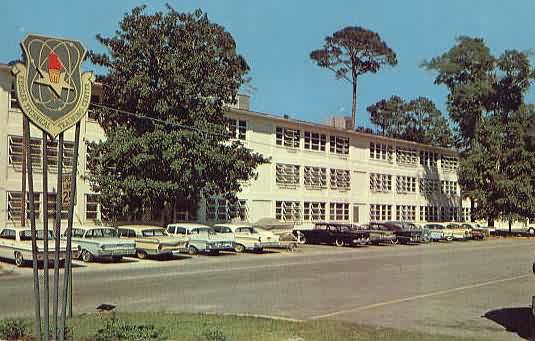
Typical 3 story barracks
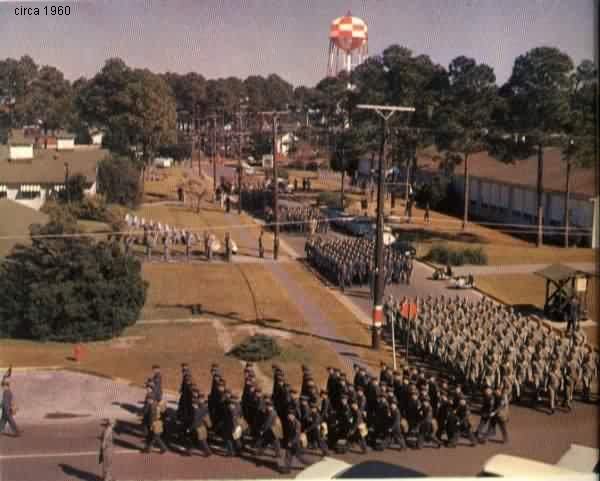
Marching to class or chow
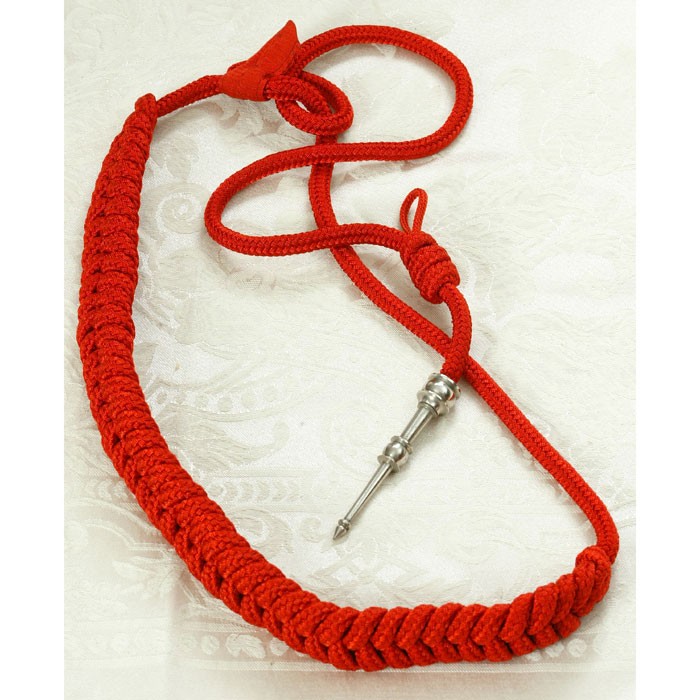
Red rope
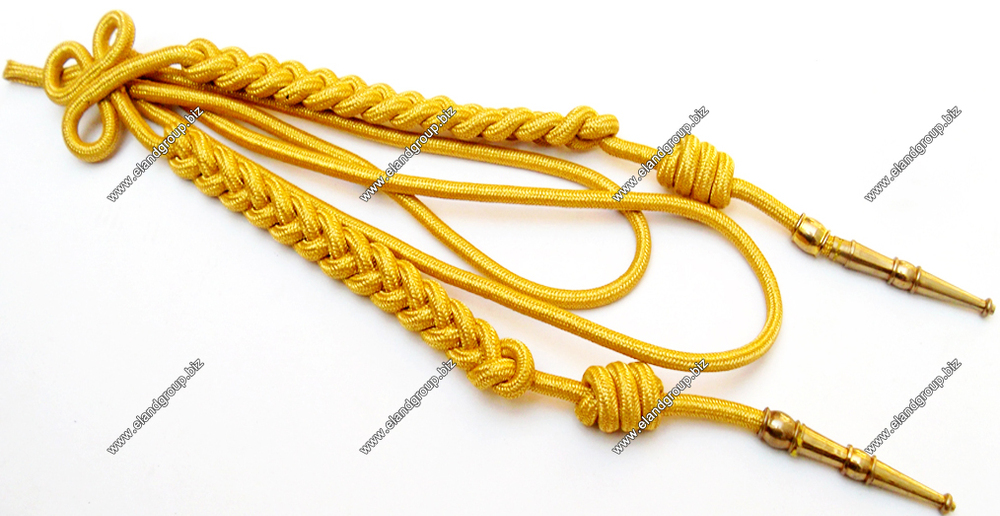
Yellow rope
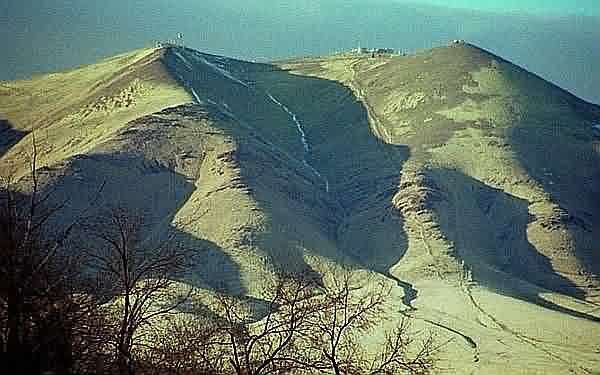
The Mountain
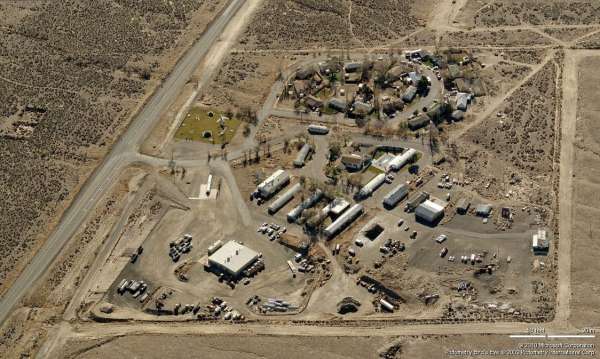
Aerial view of Winnemucca Air Force Station
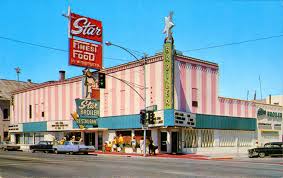
Star Casino, Winnemucca, Nevada

Being young and away from family, we all learned to be independent, but being a young man in the service, I imagine was very hard. I have a brother that joined the Air Force in 1965 and was there 13 years. He spent a lot of time in Japan and loved it.
Thanks Margaret. Yes, it was a bit rough, but you’ll get a sense of just how rough it was for me in the next two posts. Keep an eye out for them, and thanks for being a loyal reader.
Frank
Loved you destinations blog, I know we were in the same AF but my experiences were much different. I don’t remember doing even one sit-up or chin-up at tech school. I Had night classes, so during the day I’d lay around the pool, play basket ball or pass the time in the rec center. On Saturday nights we had dances with volunteer hostesses, and I even had a girlfriend in the little town outside the base. After tech school, I was sent to a SAC base in El Paso, and that was like dying and going to heaven. I had friends in El Paso, New Mexico and Juarez.
Hi Pete,
Yes, it seems we were almost in two different services, albeit stationed at the same base. I never went to the pool, rec center, nor did I attend the dances. With my upbringing I was much like a fish out of water. Didn’t dance, drink, and really didn’t know how to enjoy myself. One weekend I ended up finding a Pentecostal church in Biloxi and went to a Friday night service just to see how it compared to ours. Bad experience, as the membership descended on me and tried to “save” me (again). Never went back.
For the rest of my time at Keesler I concentrated on my leadership role in my squadron and stayed out of trouble. With my assignment to Winnemucca all that would change–and not for the better.
Check out my upcoming blogs to see how I fared with my newly found freedom.
Thanks for reading.